
By Mekonnen Teshome
Road Traffic Crashes Are Public Health Crises
(Nairobi, Kenya : July 16, 2024) : Bright Oywaya was a young banker with a big dreams to triumph over before she faced serious injuries in a car crash 27 years ago. But now, she is struggling with physical disability and its shocks and needs people’s assistance with almost every movement of hers.
Currently, Bright, a Kenyan In-country Road Safety Advocacy Consultant of the Global Road Safety Partnership (GRSP), says that it is unfortunate that she had that road traffic crashes in 1997 and never walked since then. “And I am paying bills of hospitals for 27 years and its economic, health and social impacts are enormous.”
Daniel Otunge, Deputy Executive Director of ScienceAfrica, strategy and projects development, coordination and management, also holds up the same view that road traffic crashes are public health crises affecting individuals, families and communities.
“They are poverty-inducing crises with impacts felt for generations and are significant barriers to education and obstacles to global poverty alleviation efforts,” Daniel added.
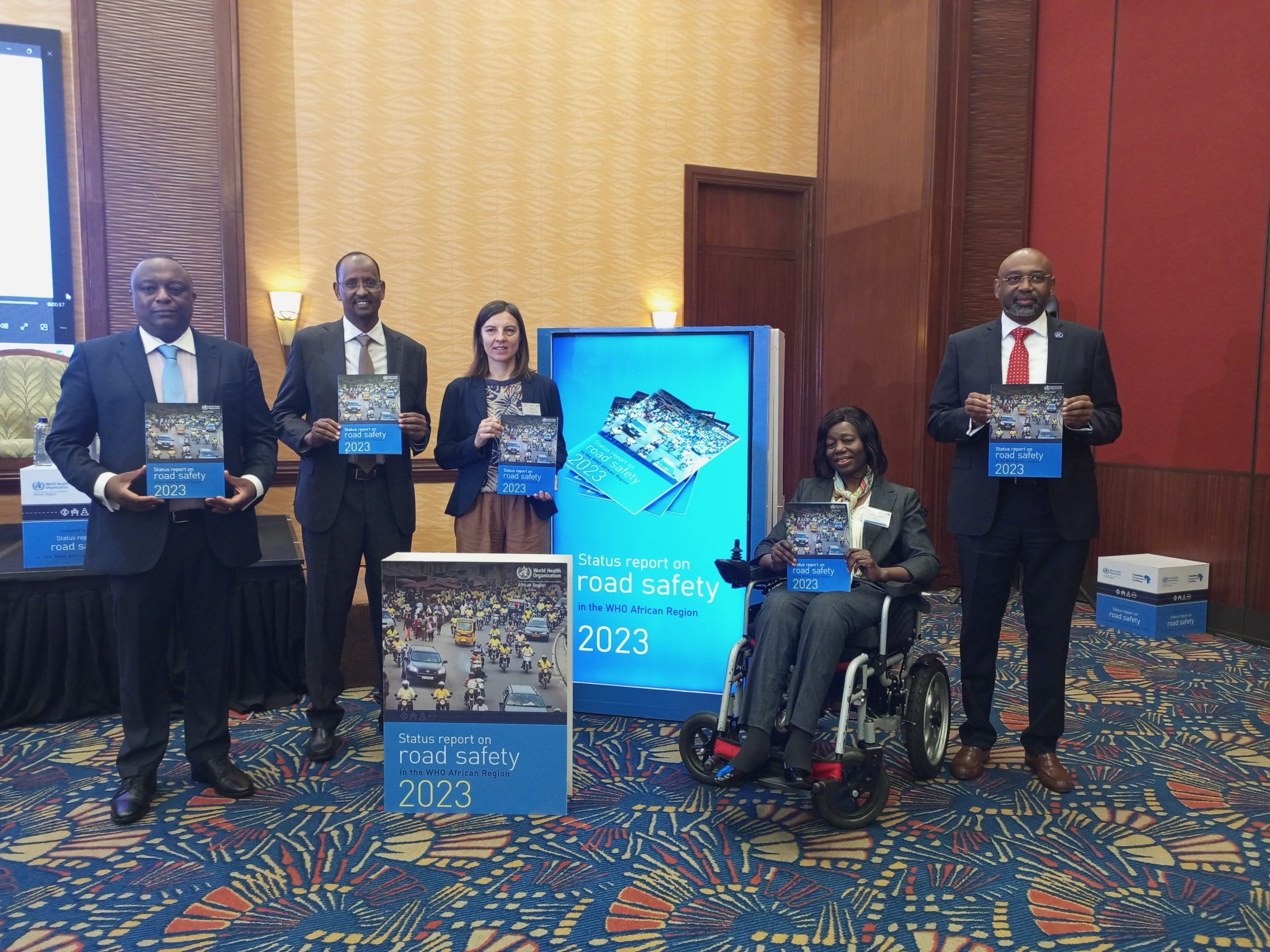
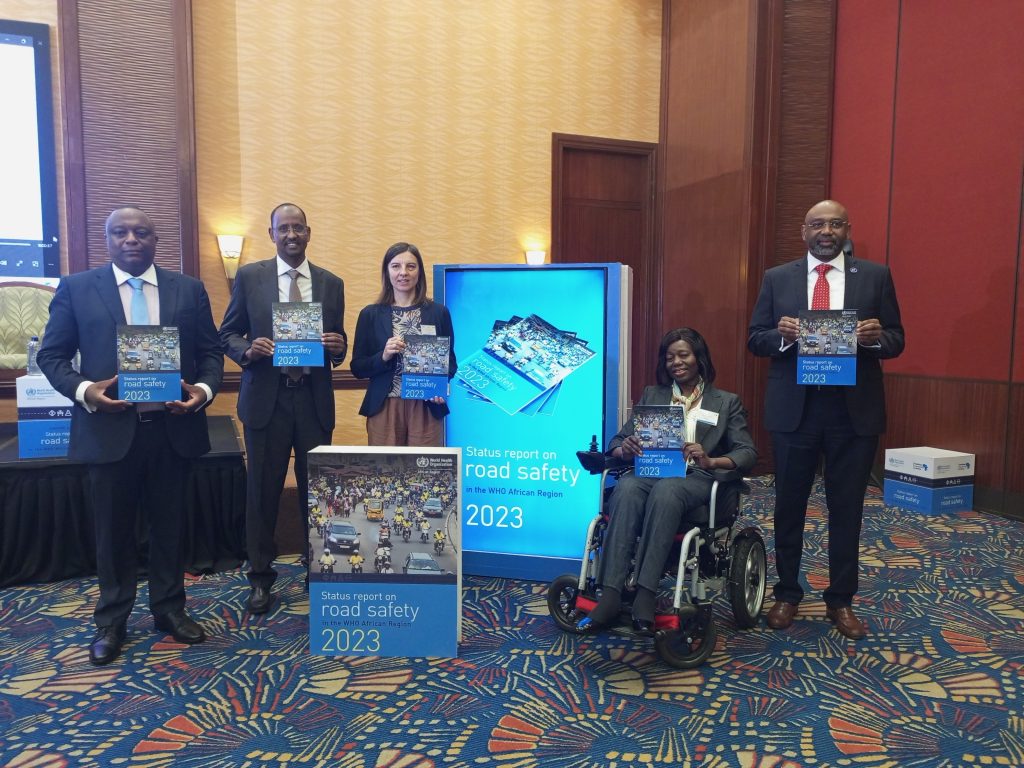
This was expressed today, July 16, 2024, in Nairobi, Kenya when the World Health Organization (WHO) launched its “Status report on road safety – 2023 in the WHO African Region” and holds a “Road Safety Reporting Training For African Journalists” in collaboration with ScienceAfrica.
Africa Road-related Fatalities Increasing
The African region recorded a 17% increase in road-related fatalities between 2010 and 2021, according to the WHO Status report on road safety 2023 for the African region – the latest update. Africa accounts for nearly one-fifth of all road deaths globally, despite being home to only 15% of the world’s population, and 3% of its vehicles, it says.
Kenyan National Transport and Safety Authority Director General George Njao says that despite the encouraging efforts the Kenyan government is undertaking to tackle road safety challenges there are gaps in building a sustainable and total traffic safety management system I Kenya.
“Cognizant of the enormous economic and social impact of traffic injuries and deaths, the Kenyan government has developed a Road Safety National Plan and gearing towards its implementation under the direct leadership of President William Ruto.”
WHO representative in Kenya Abdourahmane Diallo on his part has underscored that for African countries need to invest and improve thier transport infrastructure and promote safety education to address the burden of road crashes and their impacts.
As to Diallo, enhancing road safety consciousness and strengthen policy reforms, enforcement of existing legislation as well as working on data collection are key to minimizing road fatalities in Africa.
Dr Matshidiso Moeti, WHO Regional Director for Africa, was also quoted as saying that the findings of this report point to a serious public health concern for African countries, with hundreds of thousands of lives being lost unnecessarily.
“As WHO, we’re committed to working hand in hand with countries to tackle this preventable threat and continue to fully support all efforts to make our roads safer for motorists and pedestrians alike.”
WHO Africa team leader for Violence and Injury prevention Chiara Retis said that strengthening post-crash care and rescuing victims are areas that African countries need to work on and they have to encourage motorists to use safety belts and helmets to reduce fatalities in the continent.
The WHO’s report states that road traffic death rates in the past decade have increased significantly in the African region, with almost 250 000 lives lost on the continent’s roads in 2021 alone.
On the other hand, global rates fell by 5% during the same period, a new World Health Organization (WHO) report shows.
The report attributes the rise to multiple factors, including inadequate road safety laws and standards. No country in the region currently has laws that meet the best practice standards for the five key road safety behavioural risk factors: speeding, drink driving, non-use of motorcycle helmets, seatbelts and child restraints.
Few countries have made progress to establish transport systems that cater to alternate modes of transport, such as bicycles, motorcycles or pedestrians, as well as efficient public transport. These so-called multimodal transport systems have been determined to be more equitable and environmentally-friendly, and safer for road users.
“Males aged between 15 and 64 years are the main victims of road traffic crashes. Vulnerable road users such as motorcyclists, cyclists and pedestrians are worst affected, with road-related deaths of motorcyclists doubling in the past 10 years.”
Currently, most road traffic data systems in Africa capture only road-related deaths, excluding information about injuries and their severity, including medium- and long-term consequences such as disability.
Post-crash care services in the region are also inadequate or unavailable in most countries; fewer than one-third have services that meet recommended levels of access to pre-hospital care, emergency care, and treatment and rehabilitation services.
Currently, Africa is one of the fastest growing markets for used vehicles. Since the 2013 Status report, total vehicle registration has almost doubled, while two- and three-wheel vehicle registration has tripled. Only 13 countries have national strategies to promote walking and cycling.
Although there has been progress to introduce laws governing safety equipment in vehicles, pedestrian protection remains largely unaddressed. Road infrastructure safety ratings are notably low, with only a small percentage meeting acceptable standards for various road users, the report says.
The Solutions
To achieve the United Nations General Assembly target of halving the global number of deaths and injuries from road traffic crashes by 2030, WHO recommends concerted efforts to implement a range of interventions to strengthen national road safety strategies in Africa.
These include policies that promote sustainable transportation systems, improved legislative road safety frameworks, investment in data management systems, improved post-crash response, and research tailored to the continent’s unique challenges.


