Former President of Nigeria Dr. Goodluck Ebele Jonathan who is also AATF Africa Ambassador for Agricultural Technologies has called on African governments to prioritize investment in agricultural biotechnology Research and Development (R&D).
Goodluck pointed out that African nations need to give due attention to invest in biotechnology as the continent is currently struggling with pressing challenges in agriculture including climate change, pests and diseases as well as declining soil fertility.
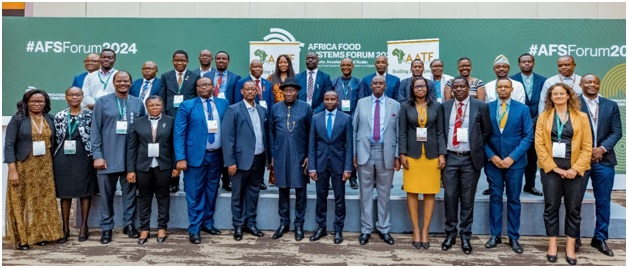
This week, he was speaking to African Ministers from six countries, including Rwanda, Malawi, Mozambique, Zambia and Eswatini during a ministerial roundtable. The African Food Systems sideline event convened in Kigali, Rwanda on 4 September 2024 to discuss the recommendations made by researchers on the role of political leadership in enhancing integration of modern biotechnology in Africa’s agricultural systems.
Goodluck, at the occasion, indicated that trust building is critical to integrating and utilizing Science, Technology, and Innovation (STI) for Africa’s agricultural development.
“Trust is a crucial element, particularly in innovations including biotechnology aimed at enhancing food security, environmental sustainability, and economic development,” he said. He noted that several African Governments had developed robust systems and policies, leading to the creation of transformative technologies in some countries.
“Our experts have the capability to develop technologies that will pass international health, safety, and environmental standards. We therefore need to trust our scientists, the institutional mechanisms and the regulatory frameworks,” he stated, adding that the idea of trust should extend to farmers by valuing their judgment and ensuring that technologies are delivered to them to make a meaningful difference in their lives.
Welcoming the Ministers to Rwanda, Hon. Dr. Ildephonse Musafiri, the Minister for Agriculture and Animal Resources, called for the need to define the national vision for STI for African countries. “Our countries need a clear, long-term vision for STI that aligns with regional development goals, unifies stakeholders and directs resources towards achieving specific outcomes,” said Dr. Musafiri.
He further reiterated the need for progressive policies that will support the vision of agricultural transformation including an enabling environment that allows STI to thrive. “The pathways towards that may require different actions that would entail the role of political leadership. Some of the issues that require engagement of political leadership include management of intellectual property rights, tax incentives for research and development, and development of facilitative regulatory processes,”he stated.
While presenting the researchers’ recommendations to the Ministers, Dr Canisius Kanangire, Executive Director of AATF, said Africa’s agriculture has the least integrated biotech applications due to inadequate investments for research, development and commercialisation of products. He noted that Africa’s agriculture requires investment from national budgets
“There is a need to increase funding for research and innovation through direct funding from national budgets on which private financing can leverage for greater and scalable impacts and research sovereignty,” said Dr. Kanangire.
He requested the Ministers to prioritise biotechnology capacity strengthening to train more local experts and provide incentives to undertake biotechnology entrepreneurship.
The call to action to the Ministers emanated from a three-day convening of African researchers who met in Kigali, Rwanda between 28-30 August 2024, where they deliberated on the state of agricultural biotechnology research in Africa. The researchers explored challenges and made recommendations for improvement.
In response to the researchers’ recommendations that countries need to increase investment in research, development, and commercialization, the Ministers also proposed strengthening extension services to manage misinformation on biotechnology.
They further called for the conservation of Africa’s traditional germplasm and improved coordination of research across various institutions to help meet the target of allocating 10 percent of the national budget to research and development.