

By Mekonnen Teshome
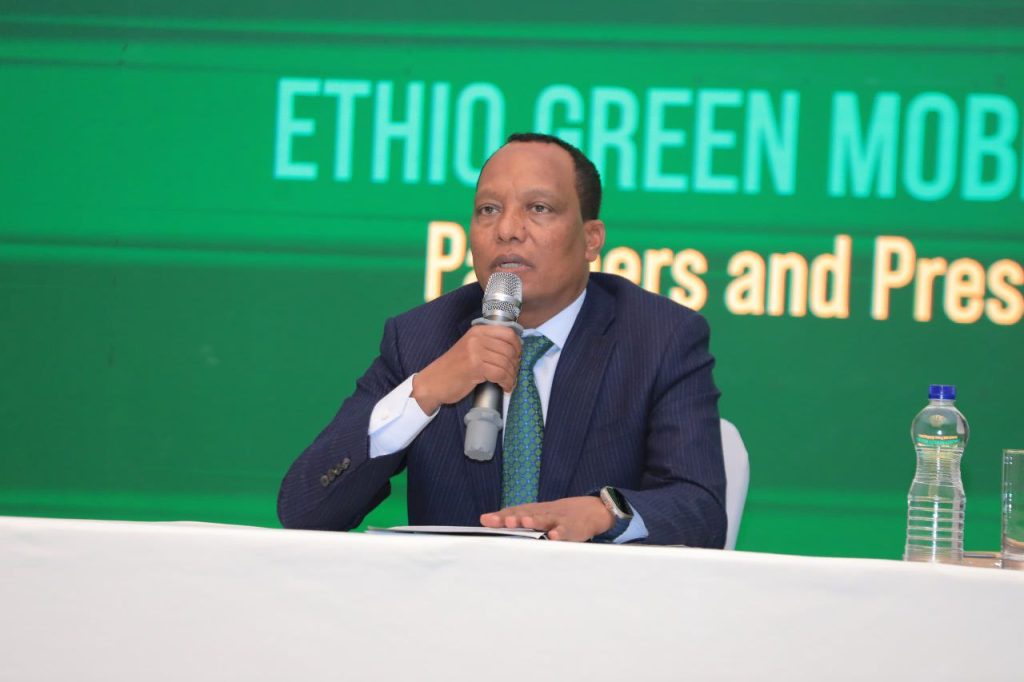
Addis Ababa, November 23, 2025 — Ethiopia is focusing on building a green economy by developing a transport and logistics system that supports the use of renewable energy, according to Dr. Alemu Sime, Minister of Transport and Logistics.
In collaboration with Power Africa, the Ministry is organizing the second Ethiopian Green Mobility 2025 Exhibition and Bazaar. The event will take place from December 18 to 21, 2025, at the Addis Ababa International Convention Center.
Minister Alemu Sime provided details on the preparations and expected outcomes of the upcoming exhibition, emphasizing its role in advancing Ethiopia’s green economic development. He highlighted that the green transformation initiated under the leadership of Prime Minister Dr. Abiy Ahmed is steadily gaining momentum across the country.
The green economy initiatives in Ethiopia have also contributed to the country being selected to host the 32nd Conference of the Parties (COP32) on global climate change, further underlining its commitment to environmental sustainability.
In the transport sector, extensive efforts are underway to promote vehicles powered by natural gas and other renewable energy sources, which are seen as key to reducing emissions and supporting sustainable mobility.
The Ethiopian Green Mobility 2025 Exhibition and Bazaar is expected to play a significant role in accelerating the green economy. It will feature a wide range of manufacturers and technology providers showcasing electric and other renewable energy-powered vehicles. International organizations and research institutions active in the sector will also participate.
Additionally, the event will include discussions addressing challenges and solutions in the transport and logistics sector, fostering collaborative strategies for a sustainable future.
Ethiopia is aggressively advancing its vision for a greener future through its National E-Mobility Strategy, aiming to revolutionize the country’s transportation sector by embracing electric vehicles (EVs). Central to this bold initiative is the outright ban on importing new gasoline and diesel vehicles—a decisive step to reduce fuel dependency and curb greenhouse gas emissions. The strategy not only seeks to encourage widespread EV adoption but also emphasizes building a sustainable ecosystem by expanding public charging infrastructure, offering attractive incentives for private investors, and exploring domestic manufacturing of EVs and batteries.
Cities like Addis Ababa are already integrating electric vehicles into their public transportation fleets, reflecting the government’s commitment to sustainability while reaping economic benefits, including saving precious foreign currency otherwise spent on importing fossil fuels. Ethiopia plans to leverage its abundant renewable energy resources to power this growing EV fleet, further minimizing environmental impact and ensuring a clean energy transition.
Key elements of the strategy include stringent vehicle import restrictions, tax breaks, and other incentives designed to accelerate private sector investment. Infrastructure development is a priority, with efforts underway to expand both public and private charging stations across the country. Looking ahead, Ethiopia envisions becoming a regional leader in EV and battery manufacturing by capitalizing on its natural resources and fostering domestic industrial growth.
The expected benefits are multifaceted: significant reduction in fuel imports to boost economic resilience, mitigation of climate change through lower emissions, and the creation of new economic opportunities in manufacturing and green technology sectors. However, challenges remain, such as the current limited charging infrastructure, widespread electricity access issues in rural areas, and a general lack of public awareness about electric vehicles—all of which require targeted solutions to ensure the strategy’s success.
Ethiopia’s proactive approach places it at the forefront of green mobility in Africa, setting a powerful example for sustainable development that balances environmental goals with economic growth.


