
By Mekonnen Teshome
Addis Ababa, November 25: Weichai Holding Group Co., Ltd., the Chinese state-owned engine designing and manufacturing enterprise, yesterday has announced that it will commence equipping Addis Ababa’s city buses with natural-gas engines.
Weichai says that the replacement of the gasoline engines of the city buses will soon begin with one bus as a pilot conversion and this may take one or two months, however after the replacement and standard setting, testing and approval of the first one the company will only take five days to do a conversion on a bus afterwards.

Heads of the Chinese company pointed out that they will widely train Ethiopian technicians to do the conversion works and assist the Ethiopian government in technology transfer and building the related infrastructures.
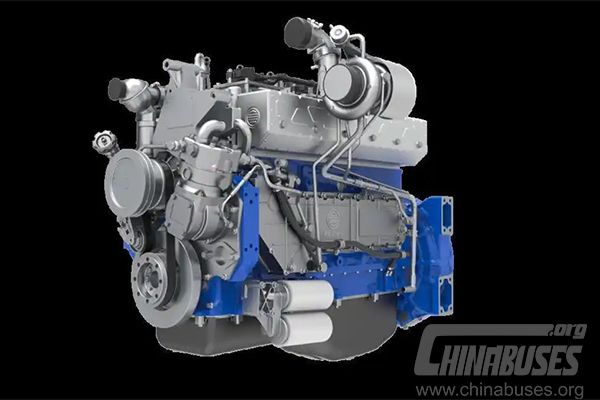
The buses will be fitted with WP10NG engine that delivers strong power, high reliability and continuously optimized NVH performance, giving local passengers a new, comfortable and efficient green-travel experience, the company said.
Ethiopian Transport and Logistics State Minister Bareo Hassen at the occasion said that driven by the global shift to low-carbon transport and the upgrading of urban transit, Ethiopia’s public-transport sector would accelerate its green growth activities.
He said that the present conversion of the buses to natural gas engine is part of Ethiopia’s green economy transformation effort and is a momentum into the county’s green mobility transition endeavors.
As to the Sate Minister, gas vehicles running on fuels such as compressed natural gas (CNG) and liquefied petroleum gas (LPG) are cleaner and more cost effective alternative to petroleum based transport.
In many countries today, CNG and LPG are increasingly used in buses, trucks, and heavy duty fleets as a transitional step toward cleaner energy systems.

Ethiopia’s Low Carbon Future
As Ethiopia works to expand clean transport infrastructure — from charging stations to potential natural gas refueling points — the government says events like Green Mobility 2025 are essential for building public awareness and attracting private investment.
“The transition to green mobility is not just an environmental commitment,” the Minister emphasized. “It is an economic transformation that will shape Ethiopia’s future.”
In October 2025, Prime Minister Abiy Ahmed announced that heavy trucks and vehicles operating on gas would be encouraged through tax exemptions and policy support, while the import of diesel powered trucks has been banned effective immediately.
The government views gas vehicles running on fuels such as compressed natural gas (CNG) and liquefied petroleum gas (LPG) as a cleaner and more cost effective alternative to petroleum based transport.
Globally, CNG and LPG are increasingly used in buses, trucks, and heavy duty fleets as a transitional step toward cleaner energy systems.
By shifting to gas powered alternatives, Ethiopia aims to cut its dependence on imported petroleum, which remains the backbone of the country’s transport sector and one of the largest drains on foreign currency. The policy is also intended to reduce vulnerability to international fuel price fluctuations while opening investment opportunities in vehicle supply chains, fueling infrastructure, and maintenance services.
The announcement marks a major policy shift, positioning gas as a bridge fuel to support Ethiopia’s long term ambitions for a more sustainable and resilient transport sector.
Africa Adopting Natural Gas Mobility
Several African nations are taking advantage of their ample natural gas reserves to introduce gas-powered four-wheel vehicles to the roads.
Nigeria, with substantial natural gas reserves, has approved the widespread use of vehicles powered by compressed natural gas (CNG). Vice-president Kashim Shettima disclosed after the National Economic Council meeting on 20 July that, “We will also pursue vigorously the mass deployment of CNG-powered vehicles and establishment of autogas conversion plants/kits in all States in the short-term”.
The announcement came just weeks after a Nigerian automobile manufacturer, Innoson Vehicle Manufacturing, began commissioning vehicles to run on CNG – including intra-city buses, heavy-duty trucks and passenger cars.
The developments point to both policy-level and private-sector commitments in Nigeria leveraging its more than 200 trillion cubic feet of natural gas base to cut carbon emissions and air pollution from the transport sector.
This is not exclusively happening in Nigeria, with the latest transportation sector trends showing a similar shift in major natural gas-producing countries in Africa.
Egypt leads the charge with its Clean Fuels Initiative, launched in 1995 to combat air pollution and which pointed to natural gas as a solution. Today Egypt boasts over 260,000 CNG-powered vehicles, with ongoing efforts to grow that number. The North African country added 61 refuelling stations between July 2022 and March 2023, with plans for up to 1,000.
Down south, Tanzania concluded talks with investors in a $42 billion liquid natural gas (LNG) project in May and is keen to apply natural gas to the transport sector.
According to works and transport minister Makame Mbarawa, the government is considering a subsidy programme for CNG vehicles. In remarks featured in The Citizen, Mbarawa said this will “attract more people to convert their cars to CNG”.
This is alongside an ongoing project valued at US$65 million that seeks to power 8,000 cars and rapid transit buses and supply 30,000 households in Dar es Salaam with CNG for cooking, by 2025
The Tanzania Petroleum Development Corporation in March licensed 20 companies to build CNG stations. Nine of those are expected to be operational by 2025.
Beyond the major natural gas-producing regions, other net natural gas-importing countries are witnessing a buzz of activity that could see more CNG-powered vehicles converted for use.
In Kenya, private sector initiatives are capitalising on the new market niche. Proto Gas (popularly known as Pro Gas) is one such company that has been undertaking CNG conversions in Nairobi since 2020.
Ethiopia is increasingly using natural gas vehicles (NGVs), including compressed natural gas (CNG) and liquefied petroleum gas (LPG), as a cleaner, more cost-effective alternative to petroleum-based fuels, driven by domestic gas production and a new import policy.
The government supports this transition by providing tax exemptions for natural gas vehicles and banning imports of gasoline and diesel trucks to cut foreign currency spending on fuel imports. This aligns with a broader goal of reducing dependence on imported fuel and achieving energy security.