By Mekonnen Teshome
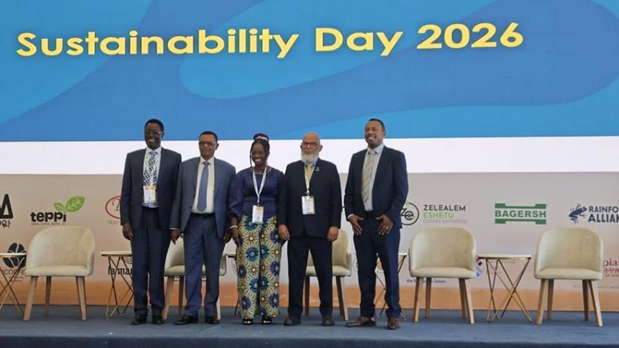
Participants from across Africa, Europe, North America, and South America gathered for the 7th African Fine Coffee Association (AFCA) Sustainability Week, held in conjunction with Rainforest Alliance’s annual high-level conference, to chart a new path for the future of coffee production.
The high-level forum brought together coffee farmers, exporters, traders, processors, policymakers, roasters, development partners, and industry leaders to explore strategies for enhancing productivity, strengthening cooperation among coffee-producing nations, and accelerating the adoption of regenerative agriculture.
The event focused on improving sustainability across coffee value chains, fostering stronger links between countries of origin and global markets, and addressing climate-related threats to production.
Ethiopia’s Coffee Sector at the Center
Speaking at the gathering, Deputy Director General of the Ethiopian Coffee and Tea Authority, Tagay Nuru, underscored the central role of coffee in Ethiopia’s economy and cultural identity.
“Coffee runs in the veins of Ethiopians,” he said. “It is an invaluable export commodity and one of our most treasured national assets.”
Coffee remains a major source of foreign exchange and provides livelihoods for millions of Ethiopians. According to Tagay, the country has made significant progress in improving quality and productivity through modern farming techniques, improved varieties, and market reforms.
“As regenerative agriculture represents the future of coffee, farmers must be supported throughout this transition,” he emphasized. “Strong collaboration among farmers, processors, policymakers, the private sector, and development partners is essential.”
He added that Ethiopia is expanding the use of climate-resilient coffee varieties to address environmental pressures, while reforms in the marketing system have increased export revenues and farmer incomes. Major export destinations include Saudi Arabia, Germany, and the United States.
Despite these gains, Tagay warned that climate change continues to pose serious risks, making sustained investment in resilient farming practices indispensable.
Promoting Regenerative Agriculture
Rainforest Alliance Ethiopia Country Representative, Denu Lema, highlighted the organization’s introduction of its Regenerative Agriculture Standard across Ethiopia and Africa.
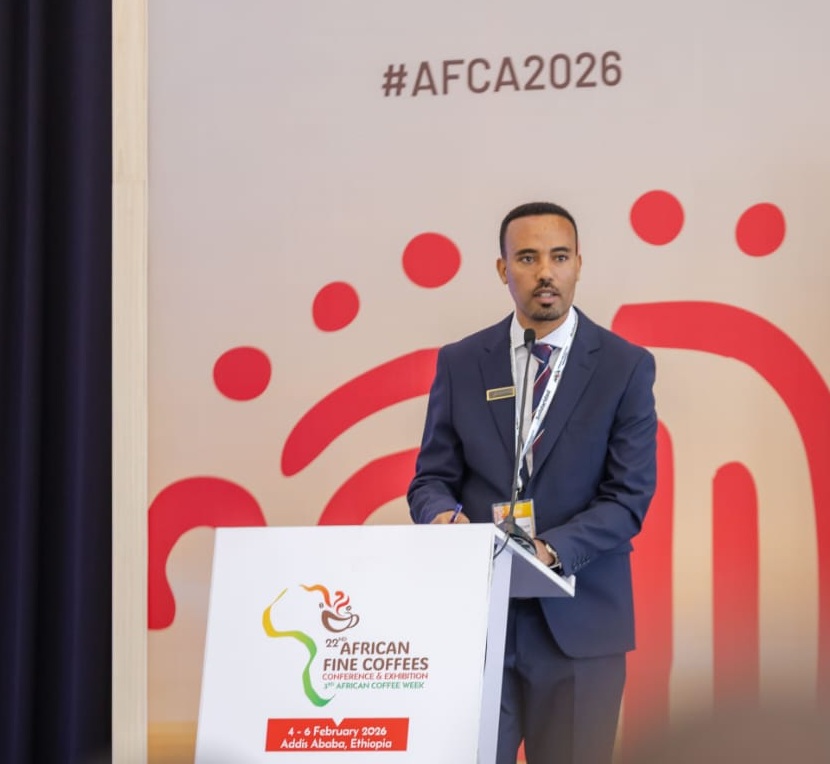
The initiative aims to strengthen sustainable farming systems while improving the livelihoods of farmers and forest-dependent communities.
“Regenerative agriculture is a holistic system that restores soil health, enhances biodiversity, and builds ecosystem resilience,” Denu explained. “It is a powerful tool for combating climate change and improving productivity.”
He noted that regenerative practices improve water retention, reduce dependence on synthetic inputs, and increase profitability. By sequestering carbon in the soil, such systems also help mitigate greenhouse gas emissions.
According to Denu, regenerative agriculture enhances soil structure, fertility, and microbial activity, preventing erosion and increasing biomass production. As sustainability becomes central to global supply chains, these approaches are gaining momentum worldwide.
Supporting Farmers Through Innovation
Leslie Agyapohg, Senior Manager for Producer Support in Africa at Rainforest Alliance, emphasized the importance of science-based standards and practical farmer support.
The new framework assesses soil health and productivity, identifies gaps in existing practices, and provides farmers with tools to enhance fertility, biodiversity, and long-term yields.
“Integrated soil, weed, and pest management, combined with organic composting, is becoming standard practice on certified farms,” she said.
She noted that the approach is data-driven and technology-enabled, relying on close collaboration between governments, NGOs, and private-sector partners.
“Regenerative agriculture goes beyond sustainability,” Leslie said. “It focuses on restoring ecosystems, improving water retention, and strengthening biodiversity, while ensuring economic viability for farmers.”
She called for greater investment in carbon credit schemes, expanded farmer awareness programs, and policies that link environmental protection with social and economic development.
Key outcomes of regenerative practices, she explained, include increased soil organic carbon, improved nutrient cycling, reduced erosion, enhanced climate resilience, and stronger rural livelihoods.
“Healthy soil holds more water, reduces runoff, and protects water sources,” she added. “When people and nature thrive together, agriculture becomes truly sustainable.”
A Call for Collective Action
Senior Director for Impact Programs in East and Southern Africa at Rainforest Alliance, Julius Ng’ang’a, described Sustainability Day as a call to move beyond preserving the planet to actively restoring it.
“This platform enables stakeholders to implement strategies that improve farmer incomes while promoting traceable, high-quality coffee,” he said.
He stressed the importance of strengthening links between African producers and global buyers, enabling roasters to engage directly with farming communities and commit to long-term partnerships.
“African coffees are among the most sought-after in the world,” Julius noted. “Yet many buyers still perceive direct sourcing from Africa as complex. We must change this narrative.”
He also highlighted the role of climate-smart agriculture in helping farmers adapt to changing weather patterns, droughts, and shifting growing seasons.
“Targeted adaptation builds resilience and secures the future of coffee farming,” he said.
According to Julius, regenerative and climate-smart practices are fundamental to restoring ecosystems, strengthening livelihoods, and building a more sustainable global food system.
Toward a Sustainable Coffee Future
Experts at the conference agreed that recent gains in coffee productivity and quality are the result of coordinated efforts among governments, development partners, and the private sector.
However, participants emphasized that sustained collaboration remains essential to addressing climate risks, market challenges, and social vulnerabilities along the supply chain.
The AFCA Sustainability Day concluded with a renewed commitment to regenerative agriculture as a cornerstone of Africa’s coffee future—one that balances environmental restoration, economic resilience, and social well-being.
As stakeholders continue to work together, Ethiopia and the wider African coffee sector are positioning themselves as global leaders in sustainable, high-quality, and climate-resilient coffee production.