
WORLD WATER DAY 2023 “ACCELERATING CHANGE”
By African Demystifier
UNESCO highlights importance of scientific knowledge
UNESCO says that it contributes to the observance of World Water Day within the activities of its Intergovernmental Hydrological Programme (IHP), which worlds all year long to build the scientific knowledge base to help countries manage their water resources in a sustainable way.
The UN specialized agency indicated that the 2023, World Water Day observance focuses on accelerating change to solve the water and sanitation crisis, and UNESCO is the lead UN agency.
According to UNESCO, a new World Water Development Report is released each year on or near World Water Day, to provide decision-makers with tools to formulate and implement sustainable water policies. This report is coordinated by UNESCO’s World Water Assessment Programme (WWAP) on behalf of UN-Water. The annual theme for World Water Day is aligned with the focus of the report.
22 March, World Water Day
“World Water Day is held annually on 22 March as a means of focusing attention on the importance of freshwater and advocating for the sustainable management of freshwater resources. It is about taking action to tackle the global water crisis, in support of Sustainable Development Goal (SDG) 6: water and sanitation for all by 2030.”
UNESCO contributes to the observance of World Water Day within the activities of its Intergovernmental Hydrological Programme (IHP), which worlds all year long to build the scientific knowledge base to help countries manage their water resources in a sustainable way.
WASH in Schools
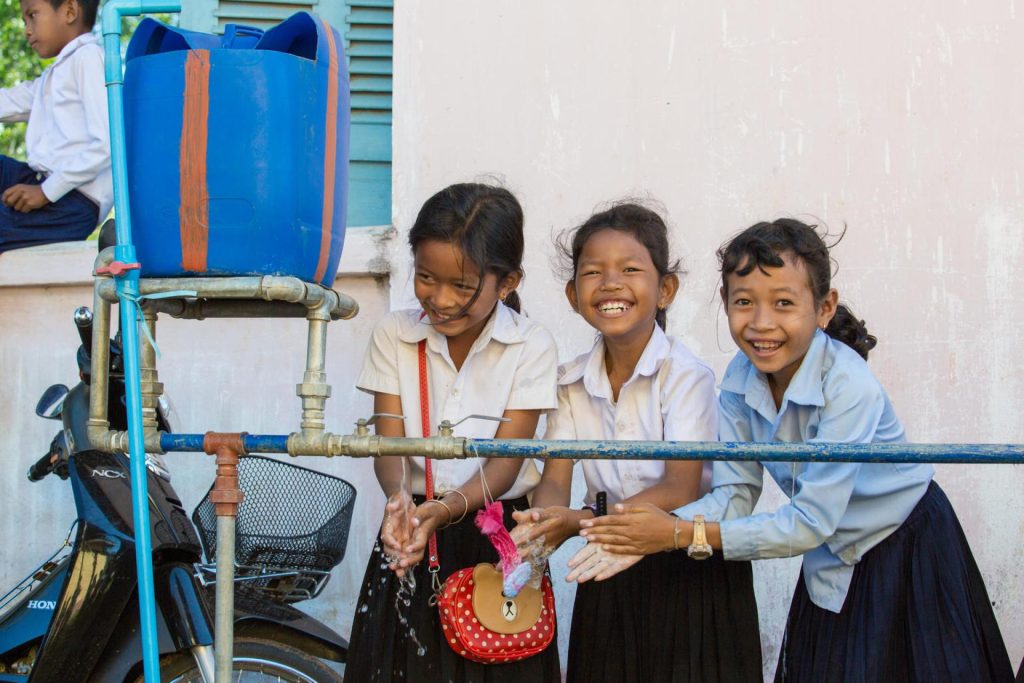
UNICEF also promotes that every child has the right to a quality education, which includes access to drinking water, sanitation and hygiene (WASH) services while at school. Children spend a significant portion of their day at school, where WASH services can impact student learning, health, and dignity, particularly for girls. The inclusion of WASH in schools in the Sustainable Development Goals (targets 4.a, 6.1, 6.2) represents increasing recognition of their importance as key components of a ‘safe, non-violent, inclusive and effective learning environment’ and as part of ‘universal’ WASH access, which emphasizes the need for WASH outside of the home.
The United Nations General Assembly adopted resolution A/RES/47/193 of 22 December 1992 by which 22 March of each year was declared World Day for Water, to be observed starting in 1993. States were invited to devote the Day, as appropriate in the national context, to concrete activities such as the promotion of public awareness through the publication and diffusion of documentaries and the organization of conferences, round tables, seminars and expositions related to the conservation and development of water resources.
The 2023 United Nations World Water Development Report (UN WWDR) shows how building partnerships and enhancing cooperation across all dimensions of sustainable development are essential to accelerate progress towards water goals and targets, and human rights to water and sanitation.
Partnerships and cooperation take place in almost any water-related endeavor. There is a long history of partnerships in water resources management, with both good and bad experiences. This report reviews these experiences, an highlights how enhancing positive and meaningful cooperation amongst the water, sanitation and broader ‘development’ communities is required to accelerate progress. It will be launched at the UN 2023 Water Conference, in New York, on 22 March 2023.
UNESCO’ IHP
The UNESCO Intergovernmental Hydrological Programme (IHP), founded in 1975 following the International Hydrological Decade (1965-1974), is the only intergovernmental cooperation programme of the UN system dedicated to water research and management, and related education and capacity development. It addresses national, regional, and global water challenges, by supporting the development of sustainable and resilient societies. Expanding a holistic understanding of water, improving technical capabilities, and enhancing human and institutional capacities are IHP’s main tools. IHP’s work supports sound, evidence-based water governance and decision-making drawing on transdisciplinary science and technology other knowledge systems.