By African Demystifier
Space Debris: Now-a-days, Scientists are calling for a legally-binding treaty to protect the Earth’s orbit from the dangers posed by space debris.
An international team of experts said there are around 100 trillion pieces of old satellites circling the planet that are not being tracked.
As the global space industry continues to expand, the team said there are fears that the low-Earth orbit could become unusable unless there are plans to tackle space junk.
Writing in the journal Science, they said there is an urgent need for global consensus on how best to govern Earth’s orbit to avoid the mistakes seen in the world’s oceans where human activities caused damage to marine species, with nearly 10% at risk of extinction.
Dr Imogen Napper, Research Fellow at the University of Plymouth and lead author on the paper, said: “The issue of plastic pollution, and many of the other challenges facing our ocean, is now attracting global attention.
“However, there has been limited collaborative action and implementation has been slow.
“Now we are in a similar situation with the accumulation of space debris.
“Taking into consideration what we have learnt from the high seas, we can avoid making the same mistakes and work collectively to prevent a tragedy of the commons in space.
“Without a global agreement, we could find ourselves on a similar path.”
Last week, more than 190 countries reached an agreement to protect marine life as part of the UN High Seas Treaty – after negotiating for nearly two decades.
Since the dawn of the space age in the 1950s, we have launched thousands of rockets and sent even more satellites into orbit. Many are still there, and we face an ever-increasing risk of collision as we launch more.
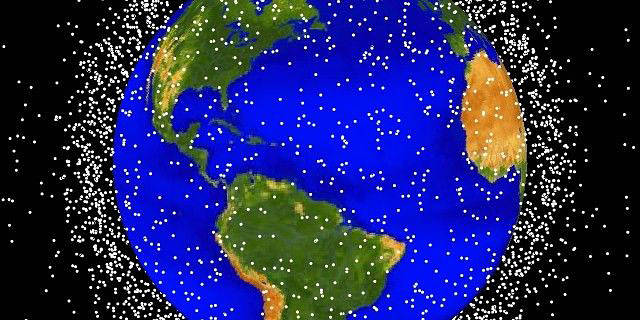
What is space Debris ?
Space junk, or space debris, is any piece of machinery or debris left by humans in space.
It can refer to big objects such as dead satellites that have failed or been left in orbit at the end of their mission. It can also refer to smaller things, like bits of debris or paint flecks that have fallen off a rocket.
How much space junk is there right now?
The United States Space Surveillance Network currently tracks more than 23,000 pieces of space junk that are larger than a softball. This includes about 3,000 defunct satellites that have been left to decay in orbit, according to the Natural History Museum(opens in new tab) of London.
However, most pieces of orbital debris are far too small to be tracked. Researchers estimate that there are more than 100 trillion untracked pieces of space junk in Earth orbit, according to the Science study. The vast majority of this untracked debris is likely less than 0.4 inches (1 centimeter) wide, according to the European Space Agency(opens in new tab) (ESA).
Why is space junk a problem?
Even tiny pieces of space junk can cause incredible damage. That’s because objects in orbit move incredibly quickly, typically reaching speeds of greater than 15,600 mph (25,200 km/h), or 10 times the speed of an average bullet shot on Earth. If two objects moving in opposite directions collide with one another in space, then the impact becomes even greater.
This means that even pea-size objects can become dangerous missiles in orbit. This was illustrated in 2016, when a small paint fleck collided with a window on the International Space Station, gouging a quarter-inch dent into the glass. (Fortunately, the window held).
Can space junk fall to Earth?
Yes, space junk frequently falls to Earth. On average, anywhere from 200 to 400 pieces of tracked space debris plummet through Earth’s atmosphere every year, according to the National Oceanic and Atmospheric Administration(opens in new tab).
Most of this free-falling junk is small enough that it burns up entirely in the atmosphere, never reaching the ground. Larger objects that can survive the fall (like satellites) typically splash down into the ocean, but not always. In August 2022, a charred, spike-like chunk of a SpaceX Crew Dragon spacecraft fell through the atmosphere and landed on a sheep farm in Australia.
The 10 foot seared spike from a SpaceX vehicle was found standing upright in a sheep farm in Australia. (Image credit: Brad Tucker)
Space junk incidents
On Feb. 10, 2009, a defunct Russian spacecraft crashed into a functioning U.S. Iridium commercial spacecraft, destroying both and adding more than 2,300 pieces of trackable space junk to orbit, according to NASA.
In March 2021, a piece of a Russian rocket collided with and destroyed a functioning Chinese military satellite.
In June 2021, a small piece of unidentified space junk slammed into the International Space Station’s robotic arm, damaging but not destroying it. Incidents are occuring more frequently as more space junk is added to orbit each year.
With the number of satellites in orbit expected to rise from 9,000 today to more than 60,000 by 2030, the authors said that a similar agreement needs to happen to protect the low-Earth orbit.
At the moment, the biggest danger space debris poses is to other satellites in orbit.
Collisions are rare at the moment, but as more satellites make it into orbit, it raises the need for a lot more collision avoidance manoeuvres.
In 2018, Surrey Satellite Technology’s RemoveDEBRIS mission practised grabbing a satellite with a giant net.
A year later, the European Space Agency performed its first satellite manoeuvre to avoid colliding with a mega constellation.
Meanwhile, UK-based Astroscale is planning the UK’s first national mission to remove space debris.
The authors said that while a number of industries and countries are starting to focus on satellite sustainability, they added this should be enforced to include any nation with plans to use Earth’s orbit.
They said measures should be included to implement “producer and user responsibility for satellites and debris, from the time they launch onwards”.
Dr Kimberley Miner, scientist at the Nasa Jet Propulsion Laboratory in California, US, said: “Mirroring the new UN ocean initiative, minimising the pollution of the lower Earth orbit will allow continued space exploration, satellite continuity, and the growth of life-changing space technology.”
Melissa Quinn, head of Spaceport Cornwall, said: “Satellites are vital to the health of our people, economies, security and Earth itself.
“However, using space to benefit people and planet is at risk.
“By comparing how we have treated our seas, we can be proactive before we damage the use of space for future generations.
“Humanity needs to take responsibility for our behaviours in space now, not later.
“I encourage all leaders to take note, to recognise the significance of this next step and to become jointly accountable.”