
By Mekonnen Teshome
The Ethiopian Education and Training Authority (EETA) announced that in its probe made this fiscal year , it has verified 900 educational credentials out of 18,000 found to be forged.
The Authority indicated that it has provided educational credential verification services for 18,000 clients who requested for the service during the current budget year.
This was announced at a discussion forum where the Education and Training Authority held this week with stakeholders in the area of integrated higher education licensing, license renewal, monitoring and control.
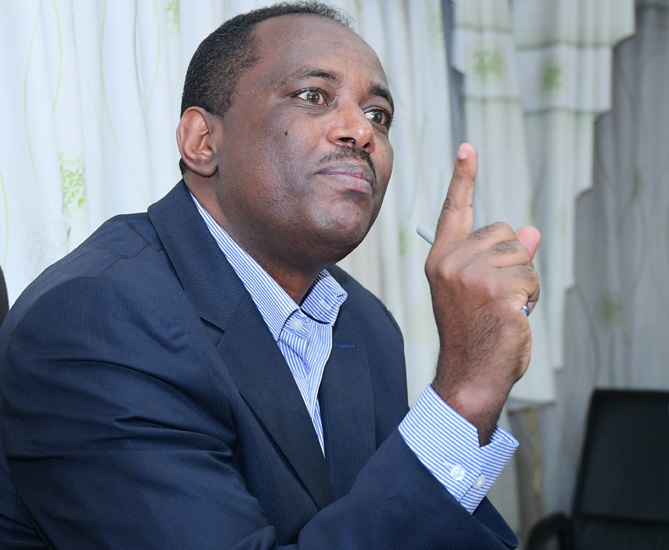
Director General of the Authority, Ambassador Shiferaw Shigute in his message on the forum, stated that the prevalence of fake education certificates is getting worse.
Therefore, he stated that it requires a collaborative effort to ensure the quality and relevance of educational and training activities.
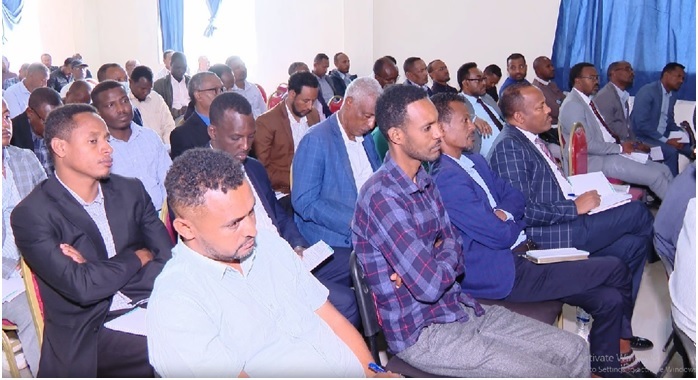
He also explained that fake educational credentials are becoming rampant, issued from an unrecognized institution, people get diplomas of unaccredited fields of study, and trained without a cut-off point or get credentials from an institution that are not accredited.
Ethnic competition and Educational Quality
Last year, In 2022, the Ministry of Education decided to give the Ethiopian Secondary School Leaving Examination (SSLE) at Universities not in high schools as it was given earlier.
Abebaw Yirga Adamu writes for University world News : “Although there is no official statement from the ministry regarding this placement approach, invigilators and supervisors believe that this is a strategy used to minimise any ethnic sentiment which was one of its major challenges in the past five years.”
This clearly shows the serious impacts of the politicisation of ethnicity on education and the level of ethnic segregation in Ethiopian society, he stated.
“It also shows the development of favouritism based upon ethnic allegiance – even at the expense of issues of national importance such as education. It is unfortunate, but the placement implies that, in this case, even the academics are not trustworthy.”
According to Abebaw Yirga Adamu, the strategy is costly and has some drawbacks such as disrupting the academic calendar of public universities, mobilising students, and context-specific planning (for example, accommodation for invigilators), but it has been lauded by the academic community and society at large.
Only 3.3 percent of the total students who sat for the 2021/22 grade 12 national exam managed to score 350 and above to be able to join the Ethiopia public universities and the others failed to score the minimum for University entrance due to the new approach of giving matriculation exam curbing the ethnic completion and cheating of exams even by government people.
A study made on civil servants in the Southern region of Ethiopia exposes 3,200 employees recruited in government institutions using forged credential
Forged credentials have been there for long
In May 2019, we had a report based on a study conducted for the previous six years that showed a total of 3,200 civil servants are found recruited in government institutions in Southern region of Ethiopia with fake university credentials. This is indicated in a report by the ruling party owned media FBC, which quoted public service and human resources development bureau of the region.
The then human resources development bureau of South Regional State , indicated that legal measure was taken against those found working as civil servants in the region using fake university degrees, diplomas and certificates.
“In order to tackle the problem, the Higher Education Relevance and Quality Agency of Ethiopia is currently working to introduce a modern database next month, to allow institutions verify authenticity of degrees, diplomas and certificates before recruiting employees,” then the report stated.
Education and Quality Challenges
Concerning Eduction quality in Ethiopia Wondwosen Tamrat wtites that improvement in this area has included reforms in the areas of producing university graduates with a balanced set of cognitive and non-cognitive skills and having higher-order thinking skills such as critical, creative and problem-solving thinking, and a high degree of computer literacy.
“As a result, universities have started shifting their focus towards non-cognitive skills – though success on this front is still limited and dependent on individual institutions rather than on system level interventions. The direction of the reform also includes improving campus environments, especially in the recently established universities, to properly develop and use ICT for academic and research purposes.”
While the Ministry’s development of a 10-year (2020-30) digital action plan is expected to respond to this concern, its full implementation is not easy given the time and huge resource the ambitious plan requires, Wondwosen states.
According to him, additional reform areas envisage improving the quality of education in primary, secondary and preparatory education, in order to increase the quality of education in higher education, and the need for strengthening quality assurance enhancement programmes in universities, in general, as well as in distance education and online learning.
“The poor quality of education at lower levels still continues to affect the type of students at universities. The ministry’s effort to improve lower levels of education and initiatives such as the introduction of elite boarding schools may be a step in the right direction, but more time is needed to bear the expected results.”