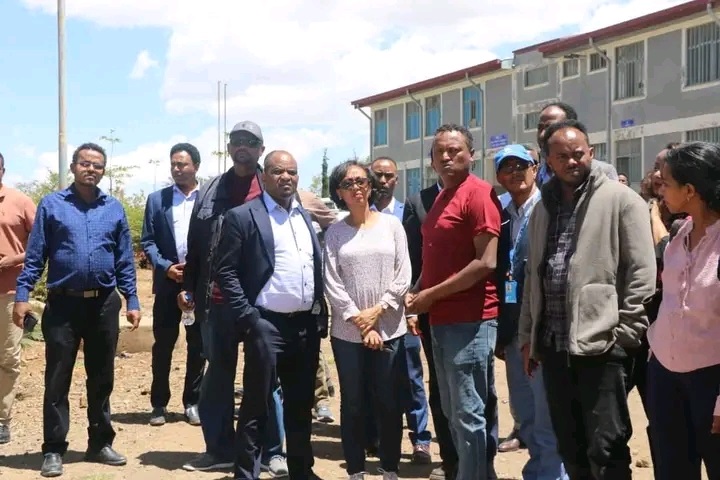
Ethiopia’s disarming
Since the Ethiopian government announced successfully disarming of regional militias as part of its push to restore stability in the country since last Sunday the move has been met with controversy and protests in Amhara state, where civilian lives were lost last week.
Prime Minister Abiy Ahmed has been working to eliminate regional militias in Ethiopia as part of a wider effort to combat ethnic violence and restore order in the country.
“This decision is implemented for the sake of Ethiopia’s unity and for the people’s peace,” Abiy said, referring to the exercise.
The announcement signaled a significant step forward in this effort.
Amhara, Ethiopia’s second-largest state, has been particularly resistant to the government’s efforts to disarm regional militias.
It has been opposed to the abolishment of special forces across Ethiopia, while its proximity to the Tigray region, where the Tigray People’s Liberation Front (TPLF) waged a two-year war against the Ethiopian National Defense Forces until last November, has heightened tensions.
The government’s push to mop up regional militias in Amhara resulted in protests that turned violent.
The clashes claimed civilian lives, and there were reports of property damage and looting.
The government responded with a heavy security presence which has been criticized by some as heavy-handed.
Critics of the government’s disarmament efforts argue that it has led to a power vacuum that has allowed other armed groups to fill the void.
Others point to the risk of further violence and instability as the government’s push to disarm regional militias continues.
Despite the challenges, the government has remained resolute in its commitment to disarm regional militias and restore order in the country.
The prime minister has reiterated his government’s commitment to peace and stability, stating that the disarmament process is an essential step towards achieving lasting peace and security in Ethiopia.
Ethiopia’s disarming of regional militias has been met with controversy
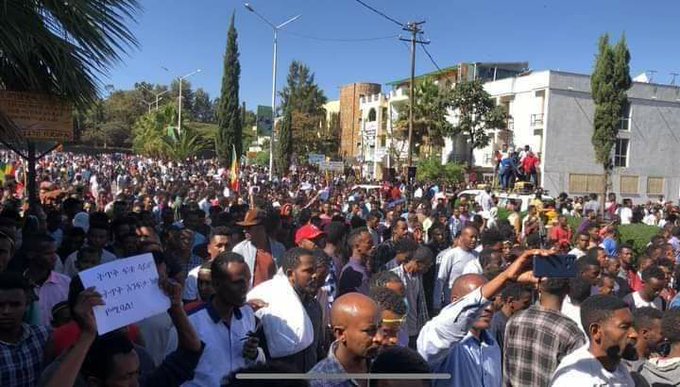
The disarming effort triggered a huge opposition in Amhara.
Dr Dessalegn Chanie, an Ethiopian Federal MP and former leader of the National Movement of Amhara (NAMA) told al-Jazeera that there had been no adequate discussion to assure the locals of their security.
“Currently the people of Amhara are facing lots of threats, especially threats from the Tigray Liberation Front. Unless the TPLF is disarmed and the soldiers demobilised, it creates a security risk and that is why our people are opposing it,” he said on Tuesday.
“In principle, we support a unified national army… (but) our people are demanding that we should have a security guarantee so that the Tigrayans do not attack us for a fourth time. According to the Pretoria agreement, TPLF was to be disarmed but there is no clear evidence that disarmament has been done.”