
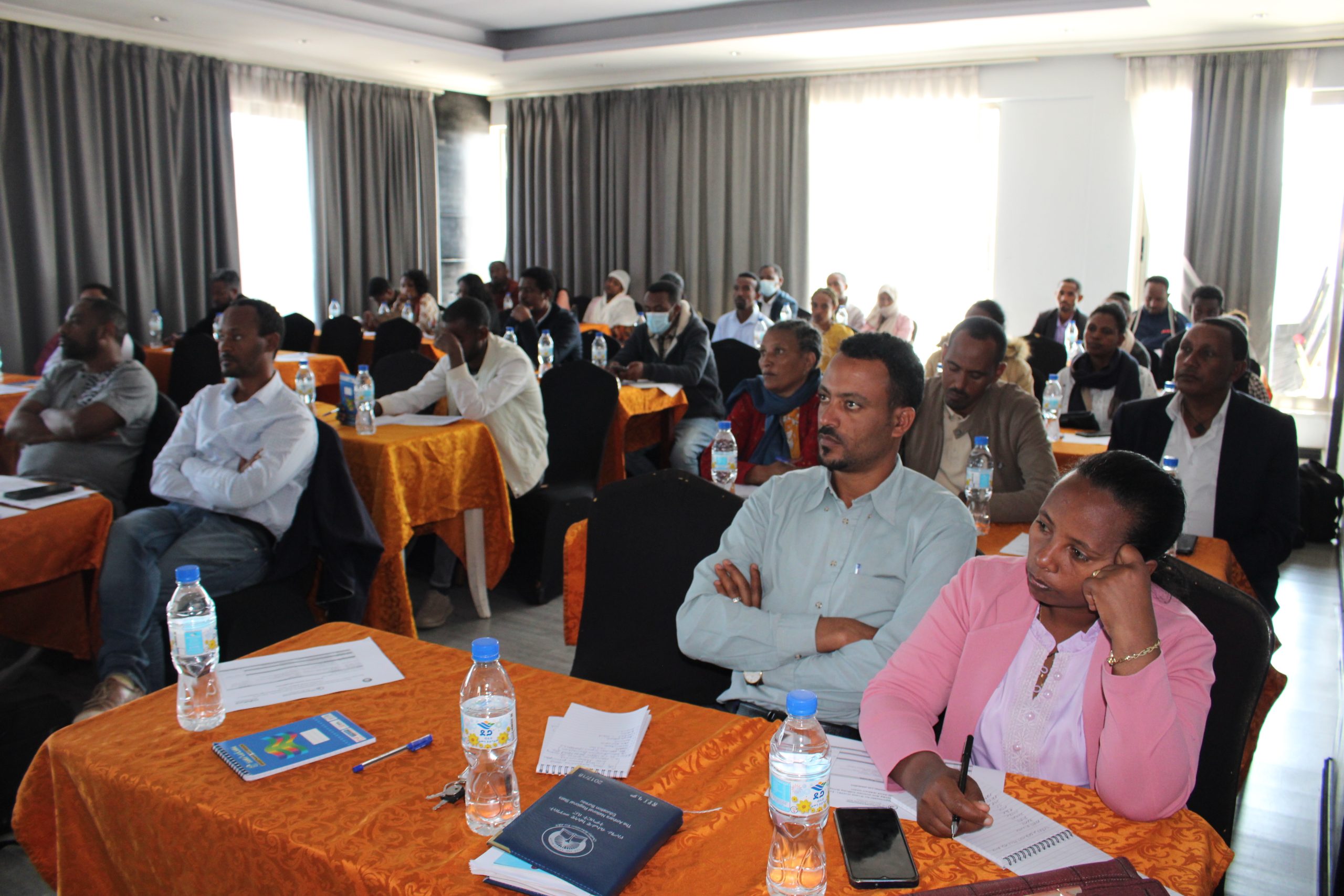
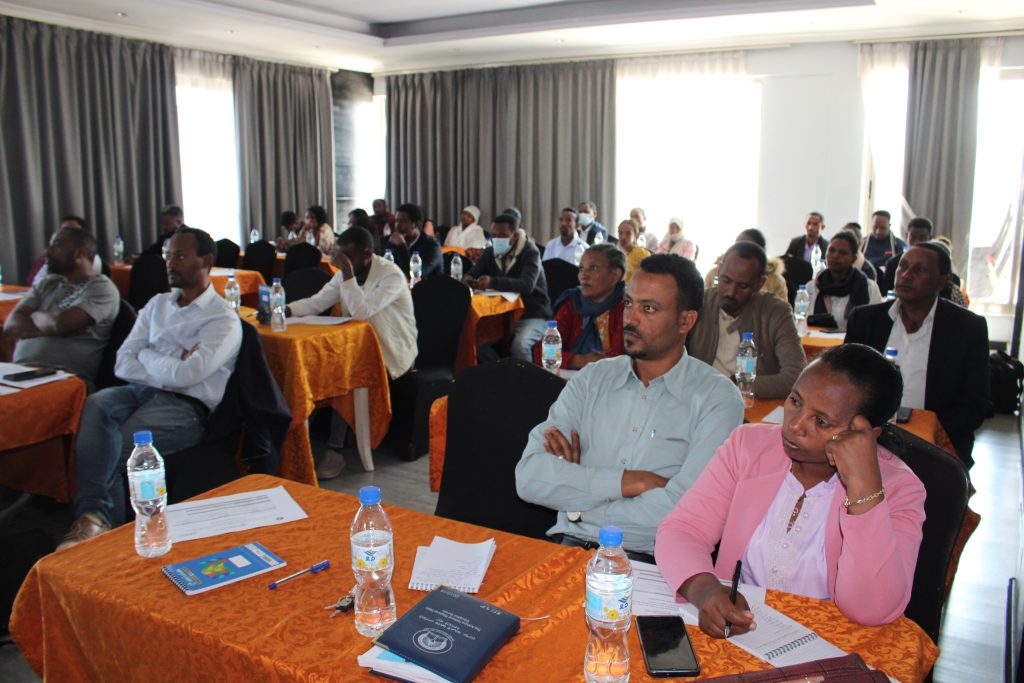

(Addis Ababa, Ethiopia, November 2023): Ensuring the provision of effective childcare services to women is vital to improve their economic wellbeing as it increases their participation in the labour market, childcare and women empowerment experts said.
This was stated at a bi-annual review meeting of the ChildFund-Ethiopia held with its stakeholders in collaboration with its partners as part of its project “The Growth and Economic Opportunities for Women (GroW) – East Africa” themed : Reducing Women’s Care Burden and Improving their Economic Wellbeing Through Establishment of Community-based Childcare Centers on 10th November 2023 in Addis Ababa.

Briefing participants at the occasion, Dr. Tefera Darge, the Principal Investigator for the GroW project and a lecturer at the School of Public Health, Addis Ababa University, indicated that the baseline findings of the project research show that childcare burdens are highly limiting the labour market participation of destitute mothers.
Baseline findings show inadequate Childcare services
In addition, Dr. Tefera said that due to the childcare burden the food insecurity among the destitute mothers is very high, which is more that 95% and their participation in decision-makings is also very low, they also experience high intimate partners violence as well as they face high prevalence of depression because of their childcare burden.
According to Dr. Tefera, the study also reveals that the prevalence of stunting among the target children is very high and they are experiencing poor Early Child Development (ECD) as a result of the women’s very low economic status.
The experience in the use of childcare centers among the target 629 women, having children from 12 to 36 month old, in Adama and Debre-brhan towns is only 1.1 per cent, Dr. Tefera said, adding that most of the women are jobless or are only engaged in irregular job mainly due to childcare.
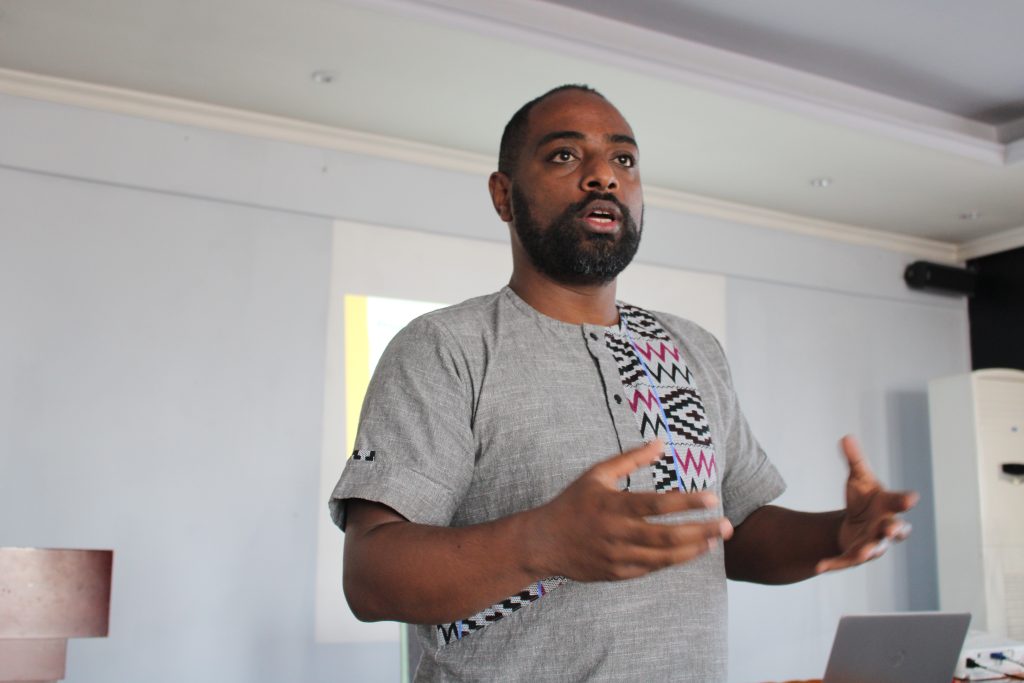
ChildFund International Early Child Development (ECD) Specialist Mr. Natan Tilahun on his part says that available evidences show that lack of childcare services affects women’s employment and economic opportunities, adding that “limiting their productivity and the type of employment women can engage in, preventing them from taking more stable and lucrative opportunities.’
According to Mr. Natan, women face structural and systemic barriers which hinder their access to services like education, finance, technical support, health services, and social protection, productive resources such as land and water, and other opportunities including employment, markets, decent work, training, and access to information and innovations.
Therefore, various intervention activities have been undertaken by ChildFund-Ethiopia to address these challenges of the destitute women including the establishment of 16 childcare centers, providing Early Child Development services for about around 300 children, organizing over 320 women in Self Help Groups to help themselves extricate from the abject poverty as well as the economic and social challenges they are facing now.

Mr. Michael Tesfaye, a childcare expert at Child Fund-Ethiopia, as well indicated that the qualities of the currently available childcare centers, that fulfill only 69 % of the required requirements need to be improved. “Government offices such as health, education, and women and children’s affairs have to play a crucial role in improving the quality of the centers,” he said.
Stakeholders should join hands to enhance quality of childcare centers
The expert pointed out that, based on the ChildFund requirements, the overall quality of the childcare centers is 63%, the average quality of the ChildCare Workforce (CCW) c is 63%, the indoor environment of the centers is 58% and the quality of the outdoor environment of the centers is 68%.
He also advised that parents and communities should be involved in resource mobilization to equip and sustain the project activities, strengthen the ECD management committee to address partially met and unmet indicators and, in addition, enhancing the quality of regular coaching and monitoring activities is vital.

Mr. Tesfaye Fekade , a Women Economic Empowerment (WEE) expert of the ChildFund-Ethiopia, says the project also encompasses three empowerment dimensions – Economic Empowerment, Social Empowerment and Leadership/Personal Empowerment.
The project aims at increasing women’s decision-making power at the household and community levels, creating harmonization at home, developing their financial self–reliance, enhance children school enrolment and increasing the number of meals and nutrition at home, he said.
Moreover, he underscores, the project focuses on increasing women’s consciousness and assertiveness on matters that affect them, developing their management, entrepreneurship and leadership skills, create access to financial resources, increasing their participation and decision-making power at all levels and enabling oovercome social and cultural barriers.
The expert has given his opinion that stakeholders need to work further to ensure mmarket linkage for the members of the women Self Help Groups (SHGs) , assist them in getting land at the market centre, link with different service providers; MFI’s, banks, etc, engage them in urban agriculture and in getting trainings on health extension packages and the like.
The initiative seeks to spur transformative change to advance gender equality in the world of work, with one of its thematic areas, it aims to “Tackling Continued Labour Market Segregation and Employment Gender Gaps.” These include skills building and work readiness programs for women to increase entry, retention and advancement in under-represented sectors, and enhancing the effectiveness of government procurement programs in achieving women’s economic empowerment.
Moreover, it its second thematic area “Reducing and redistributing women’s unpaid care work”, it embraces scalable childcare provisions, changing norms and public perceptions about unpaid care work, and technologies that reduce and redistribute unpaid care work.
The project is a partnership between the Bill & Melinda Gates Foundation, the William and Flora Hewlett Foundation, and Canada’s International Development Research Centre (IDRC). It also aims to promote sustainable alliances between practitioners and researchers, support Southern-based institutions through organizational support and global connections, and connect development agencies, policymakers and data providers to a knowledge and evidence hub to inform their implementation and to inform policies for impact at scale.
The Growth and Economic Opportunities for Women – East Africa (GroW) –EA seeks to provide evidence and practical tools and guidance to inform public and private sector investments on women’s economic empowerment.