Artificial Intelligence ( AI ) is advancing molecular modeling and simulation becoming a critical tool for drug discovery and improvement of biotechnology researches.
Molecular dynamics simulations allow researchers to understand biomolecular systems and interactions at the atomic level and running accurate simulations requires immense computing power, according to Telegraph.
Artificial Intelligence algorithms help optimize simulations so they can run faster and longer. This provides richer dynamic insights into target proteins and receptors to aid drug design. AI simulation models also help predict the folding and stability of protein structures.
Biotechnology is an exciting field that is being transformed by artificial intelligence (AI). AI refers to computer systems that can perform tasks that typically require human intelligence, such as visual perception, speech recognition, and decision-making.
“For biotechnologists, AI provides powerful new tools to analyze complex biological data, discover patterns, and make predictions. This allows biotech companies to accelerate research, reduce costs, and develop innovative solutions. Let’s explore some of the key ways AI is impacting biotechnology.”
Data Analysis
One major application of AI in biotech is analyzing large datasets. Biotechnologists now routinely generate vast amounts of data from high-throughput experiments like DNA sequencing and drug screening. Manually analyzing all this data is impossible.
Artificial Intelligence algorithms can find patterns and insights in massive datasets very quickly. For example, deep learning algorithms can classify tumor cells in pathology images and predict drug response from gene expression data. AI dramatically enhances biotechnologists’ ability to extract knowledge from big data.
Automation
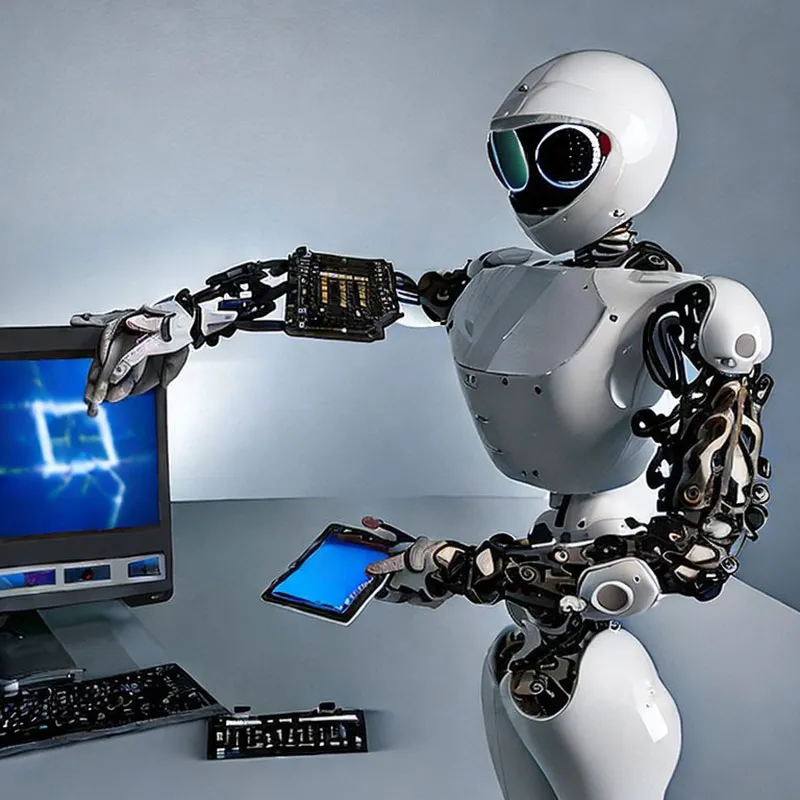
Biotech firms are using AI to automate repetitive experimental tasks. For example, robotics guided by computer vision can automate lab experiments like DNA sequencing, cell culture, and sample preparation. This boosts throughput and productivity.
AI is also being used for synthetic biology – automating the design and engineering of biological systems like metabolic pathways. Overall, the automation capabilities of AI enable biotechnologists to focus more on innovation and discovery.
Personalized Medicine
AI is enabling major advances in personalized and precision medicine. Machine learning can analyze individual genetic profiles together with clinical data to better predict disease risk and response to therapies. This allows treatments to be tailored for each patient. AI-powered mobile health apps also allow individuals to monitor their health and wellness in real-time. The rise of AI-driven personalized medicine promises to revolutionize how diseases are prevented, diagnosed, and treated.
AI and Drug Discovery
Drug discovery is being accelerated by AI technologies. Sophisticated machine learning models can analyze massive chemical databases to identify promising compound structures.
Artificial Intelligence can also screen virtual drug candidates by predicting binding affinities and drug-target interactions. This radically expands the scope of testable drug candidates and speeds up the drug design process. Startups are harnessing AI to develop new medicines faster and more efficiently than ever before.
From data mining to molecular modeling, AI is transforming biotechnology. It provides biotechnologists with powerful tools to accelerate research, reduce costs, and enable discoveries.
The future of biotech will be driven by integrating human creativity and AI’s data-crunching abilities. This symbiosis will open up exciting possibilities for improving human health and the sustainability of our planet. The biotechnology revolution is here – fueled by the power of AI.
AI and Biotechnology
Artificial intelligence (AI) is already widely used in biotechnology to solve a variety of problems. These include, for example, drug discovery , drug safety , functional and structural genomics , proteomics , metabolomics , pharmacology, pharmacogenetics , and pharmacogenomics , among many others . Future advances in this domain depend critically on the ability of biotechnology researchers to use advanced AI solutions effectively.
The biotechnology industry currently relies heavily on data storage, filtering, analysis and sharing. Biotechnology companies and various healthcare organizations around the world already maintain huge databases.
Drug manufacturing, chemical analysis of various compounds, sequencing of RNA and DNA, enzyme studies, and other similar biological processes all require strong support from AI software solutions to move faster and reduce manual errors.
It is important to emphasize at the very beginning that all the successful AI we are describing today relies entirely on digital technology to function. Digitalization is therefore the very first step towards any AI application. In many cases,
AI systems are integrated with other digital technologies such as sensors, actors (cyber-physical systems (CPS), often just called robots), and technology to enable the automation of tasks and the collection and analysis of data.