

5th Generation Su-30 Fighters
The Ethiopian Air Force (EAF) announced that it has acquired Russian Sukhoi Su-30K combat aircrafts and Akinci Unmanned Aerial Vehicles (UAVs) from Turkey as it continues with modernisation efforts.
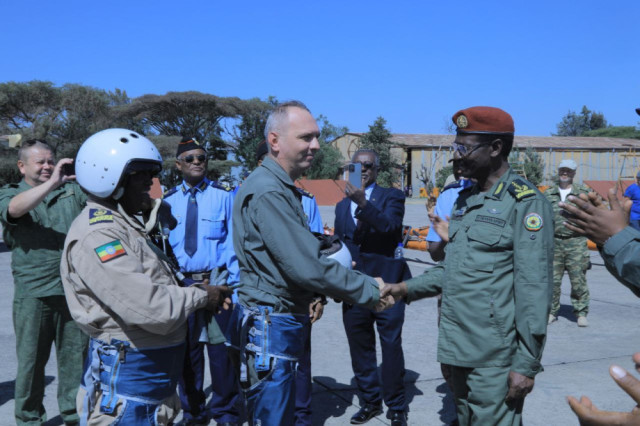
The Ethiopian National Defence Force said the Su-30K aircraft were introduced into service during a ceremony on Tuesday 16 January.
In a televised official event, Chief of General Staff, Field Marshal Birhanu Jula, said that acquiring the Su-30s and UAVs is crucial to preventing attacks on Ethiopia. He added that efforts to build a capable air force will continue.
Appearing in the state TV, Commander of the Ethiopian Air Force, Lieutenant General Yilma Merdasa, also said the service is being strengthened with modern manpower, weapons and combat infrastructure and the new Su-30s are able to destroy enemy targets both in the air and on land.
Two Su-30Ks (2401 and 2402) were seen during the induction ceremony. It is believed that these are part of a batch of 18 (ten Su-30MK and eight Su-30K fighters) manufactured for the Indian Air Force and delivered between 1997 and 1999. These were subsequently returned to Russia in 2007 and replaced by more modern Su-30MKI models.
In 2011, the 18 Su-30Ks were transported to the 558th aircraft repair plant in Baranovichi, Belarus, where they were stored for the purpose of further resale. In 2013, Angola acquired 12 of these, with delivery from 2017 to 2019. These were upgraded to Su-30SM standard, giving them the ability to fire anti-ship and air-to-air missiles.
It appears Ethiopia has acquired the six remaining Su-30 Ks, with deliveries of the last four still to come.
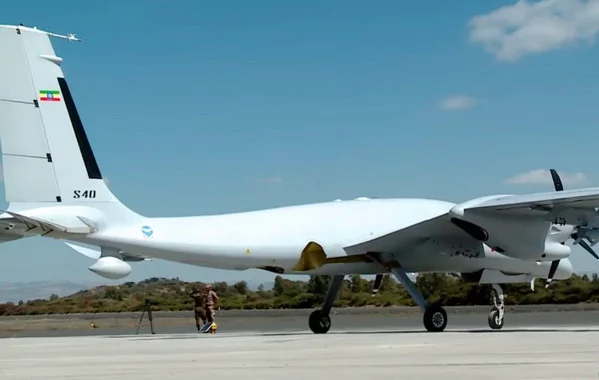
” It is unclear how many Akincis Ethiopia has acquired. Based on the video, it appears Ethiopia’s Akincis are in A model configuration with two 450 hp engines,” the Defense Web indicated.
The Akinci can reach an altitude of 11 000 metres and has a 25 hour endurance. It can be armed with a variety of weapons – the Ethiopian aircraft have been seen with underwing MAM-L missiles manufactured by Roketsan.
Sukhoi Su-30 : Supermaneuverable Two-Seater Aircraft
The Sukhoi Su-30 is a twin-engine, two-seat supermaneuverable fighter aircraft developed in the Soviet Union by Russia’s Sukhoi Aviation Corporation. It is a multirole fighter for all-weather, air-to-air and air interdiction missions.
The Su-30 started as an internal development project in the Sukhoi Su-27 family by Sukhoi. From the Su-27UB two-seat trainer, the Su-27PU heavy interceptor was developed. The design plan was revamped and the Su-27PU was renamed to Su-30 by the Russian Defense Ministry in 1996.
Of the Flanker family, the Su-27, Su-30, Su-33, Su-34 and Su-35 have been ordered into limited or serial production by the Russian Defense Ministry. Later, different export requirements split the Su-30 into two distinct version branches, manufactured by competing organisations: KnAAPO and the Irkut Corporation, both of which come under the Sukhoi aerospace group’s umbrella.
KnAAPO manufactures the Su-30MKK and the Su-30MK2, which were designed for and sold to China, and later Indonesia, Uganda, Venezuela, and Vietnam. Due to KnAAPO’s involvement from the early stages of developing the Su-35, these are basically a two-seat version of the mid-1990s Su-35. The Chinese chose an older but lighter radar so the canards could be omitted in return for increased payload. It is a fighter with both air supremacy and attack capabilities, generally similar to the U.S. F-15E Strike Eagle.
Akinci Unmanned Aerial Vehicles (UAVs)
Akıncı is a high-altitude long-endurance (HALE) unmanned combat aerial vehicle (UCAV) being manufactured by the Turkish defence company Baykar. The first three units entered service with the Turkish Armed Forces on 29 August 2021.
The aircraft has a 5.5+ ton maximum takeoff weight (MTOW), of which over 1,350 kg (2,980 lb) is payload. Akıncı is equipped with two turboprop engines of either 450 hp (460 PS; 340 kW) or 750 hp (760 PS; 560 kW), as well as electronic support and ECM systems, dual satellite communication systems, air-to-air radar, collision avoidance radar, and advanced synthetic-aperture radar.
One Of The Oldest Air Forces In Africa
The origins of the Ethiopian Air Force has been traced to (then Ras) Haile Selassie witnessing a show of the British Royal Air Force in November 1922, in Aden. Having never seen an airplane before, he was captivated by this demonstration of their power and abilities, and spontaneously asked if he could go up in one of the biplanes, proclaiming that it was “very fitting that he, as regent of Abyssinia should be the first Abyssinian to take flight in an aeroplane.”
As a result of this experience, he advocated the development of the Imperial Ethiopian Air Force. This small air arm began with the delivery of a Potez 25-A2 to the capital Addis Ababa on 18 August 1929. A Junkers W 33c followed on 5 September.
The Ethiopian Air Force was organized by Mishka Babitchef, the first Ethiopian pilot, who was of Russian descent.
On 31 March 1930, three of the biplanes from Ethiopia’s air arm played a dramatic role in a battle between Haile Selassie (not yet crowned Emperor) and conservative forces seeking to oust him. During the Battle of Anchem, biplanes were effectively used to give Haile Selassie’s forces the upper hand.
A few transport aircraft were also acquired during 1934–35 for ambulance work. The air force was commanded by Colonel John Robinson (African-American, took command May 1935), recruited by Haile Selassie, and who remained until the Italian occupation of Ethiopia when the small air arm ceased to exist.