


The United Nations Office for Disaster Risk Reduction (UNDRR) defines Anticipatory Action (AA) as a form of disaster risk management that involves taking action before a predicted hazardous event occurs, to prevent or reduce its impact.
I have decided to file this opinion piece highlighting the benefits of Anticipatory Actions as part of effective disaster risk management efforts and to send messages for our African experts and leaders ahead of the 37th AU Summit to be held here in Addis 17th – 18th February 2024 .
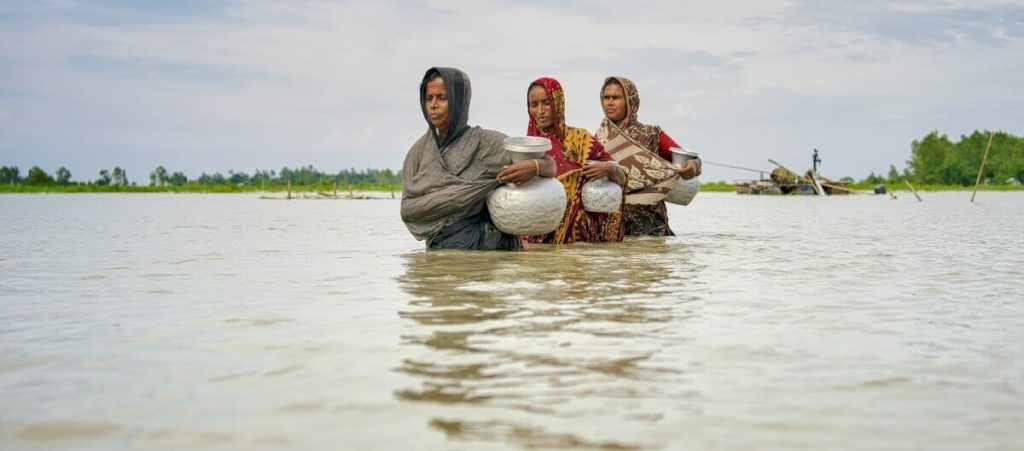
World Facing Unparalleled Natural Disasters
This is owing to the fact that our world is facing irresistible natural disasters including climate change, biodiversity loss, and extreme whether events, drought, flooding, heat waves, conflict and war and many more.
According to the World Health Organization (WHO), flooding from March – May 2023 in parts of Somalia, Ethiopia and Kenya displaced over 400,000 people, causing hundreds of injuries, 297 deaths, and the disruption of health services. Nearly 60 million people in IPC3+ are in a state of crisis characterized by elevated levels of acute food insecurity; a 30% increase compared to the first quarter of 2023. 9.3 million people are in IPC phase 4 and over 83 thousand in IPC phase 5 (South Sudan and Somalia).
Over 16.8 million people displaced due to conflict, drought, and flooding while others from June to August 2.3 million have been displaced due to drought alone in the Horn of Africa.
On September 8, a magnitude 6.8 earthquake struck western Morocco, killing at least 2,900 people and wounding 5,500. A magnitude 6.3 earthquake rocked western Afghanistan on October 7. And this was followed by another earthquake on October 15, killed almost 3,000.
River levels and wet lands across the world including the Amazon rainforest highly affected and fell by record droughts and other water bodies dried up and storms caused flooding in Mexico, Hong Kong and Western Europe from September to November 2023.
Mediterranean Storm Daniel passed affected eastern Libya devastating large area and the effect of Typhoon Doksuri caused heavy rainfall and flooding throughout at least 16 cities and provinces in northeastern China in July.
Skepticism In Predictive Science
Scientific evidences prove that global warming a human-caused reality and is leading to large-scale climate crisis in today’s world. However, deliberate denials of Climate Change or what we call “skepticism” pervasive. Skeptics are not just holding their opinion for themselves, but they are bombarding people with misinformation casting doubts and confusion against the reality of global warming and climate change.
Therefore, I think there is a need for debunking climate misinformation and “skepticism” with the available scientific evidences and innovative communication methods.
Building Trusts About Meteorological Services
Given the various challenges of contemporary forecasts of weather and climate change, meteorological services and meteorologist have to face public misconceptions and mistrust with their profession. Ordinary people usually find it difficult to simply understand the science of metrology or weather forecasting and the huge values of prediction and anticipatory actions.
Therefore, metrological services and scientists need to adapt various mechanisms of simplifying the science and packaging the information they are giving to the public in a manner that ordinary people understand and make Met information very accessible and understandable. It is always good to work with able communicators and using visualization to tone down the scientific information to the level that is comprehensible by lay people.
It is also highly recommended that to connect contemporary meteorological weather forecast information with indigenous knowledge and methods to make the entre effort reliable, accurate and accessible to the people who are the end users of the services.
Creating A Sense of Anticipatory Action Among Public
Different pertinent literatures define Anticipatory Action (AA) as actions taken to reduce the impacts of a forecast hazard before it occurs, or before its most acute impacts are felt.
Anticipatory Action are mainly connected with the type of hazard people are facing and the available forecasts for the hazard. AA aims at reducing the potential impacts of forecastable hazards, designing actions based on forecasts or predictive analyses of when and where a hazard will occur and implemented before a hazard is impactful.
Global organization including the Red Cross Red Crescent Movement, Start Network, the World Food Programme (WFP), the Food and Agriculture Organization of the United Nations (FAO) and the United Nations Office for the Coordination of Humanitarian Affairs (OCHA) now a days have developed their own Anticipatory Action strategies and do implementations.
UN OCHA explains AA : “Anticipatory action is a set of humanitarian interventions triggered once a pre-agreed forecast threshold is crossed. Supported by pre-agreed finance, anticipatory action prevents or mitigates potential disaster impacts before a shock, or before acute impacts are felt. Acting early mitigates the shock impact and reduces humanitarian needs, helping to protect hard-won development gains and enhance resilience. ”
Enhancing Forecasting Capacity
Early response is activated by pre-agreed triggers based on the forecasted impacts of events like cyclones, droughts, flooding, or other hazards. The lead time that these predictions provide depends on the nature of the threat, the accuracy of the forecast, and the availability of data.
Advance planning draws in experts from diverse disciplines – like risk analysis, meteorology, logistics and delivery, both at the global and the local level. Potential disasters are predicted using climatic models and weather forecasts, complemented by risk information from various other sources, such as satellite images and demographic data. Impact-based forecasts combine analysis of the nature of the hazard with information about potential effects on people, particularly the more vulnerable.
As humanitarian organisations integrate forecasting and risk analysis into their programmes, there is a growing need for expertise that straddles the practicalities of humanitarian delivery with the technical understanding of forecasting – including the development of new professional profiles.
Securing Finance In Advance Is Vital
Anticipatory action uses forecast-based financing: funding that is secured well in advance, along with a response plan that is activated by predetermined triggers. Once the trigger threshold is reached, the funding is immediately available and the assistance activities can begin, without delay. This means that obstacles to reaching a quick decision can be avoided during the critical early stages of the crisis.
The Need For Investment In Monitoring, Evaluation And Learning (MEL) Systems
As more A-A initiatives come online the need to evaluate and compare these becomes more critical, but larger initiatives also mean more resources are available for MEL. Greater investment in MEL is needed to ensure evidence is produced to a high standard and can be used to make improvements to the design and delivery of A-A on the ground.
Developing A Common Analytical Framework For A-A Evaluations
Implementing agencies need to agree a common analytical framework by which to undertake and ultimately assess A-A, and a set of principles that encourage methodological rigour in testing the appropriateness of early actions. This will encourage coherence and quality in the evidence base.
A starting point and critical step is for agencies to start sharing evaluation reports and the data and methods on which they are based.
IGAD/ICPAC’s Standpoint of Anticipatory Action
According to , IGAD Climate Prediction and Applications Centre (ICPAC) Anticipatory Action approach presents a fundamental shift in how we tackle disasters requiring a leaning towards more proactive approach as opposed to traditional reactive approach to disasters.
ICPAC in its communiqué made available in its website indicated that it is organizing a joint multi-stakeholder Anticipatory Action workshop this month towards establishing a regional guiding framework for implementation of Anticipatory Action in the IGAD regionin collaboration with AICCRA and other key partners.
“The workshop seeks to convene key actors and stakeholders across the AA value chain with the aim of consolidating regional knowledge and experiences, creating a common understanding of AA and establishing a unified framework for advancing adoption and implementation of AA in the region, “ it added.
The workshop is to build awareness and sensitization about the integral role of AA in mitigating disaster impacts in the region and an understanding of what is needed to adopt AA across the region. It also aims at fostering cross-sectoral, multilateral and multi-stakeholder implementation of AA.
ICPAC has given the back ground that Climate related risks in the past decades have increased in frequency and magnitude due to climate change and other risk drivers, and these have led to complex emergencies negatively affecting millions of people over the horn of Africa. The compounding risks due to climate extremes, COVID-19, and conflicts have resulted in cascading and transboundary impacts including loss of livelihoods and assets, increasing number of food insecure population and human displacement over the region.
“The fifth IPCC report that was recently released provided a timely reminder of the need to address current and future climate risks in a collaborative and transformative manner. The reality of this crisis is being felt by millions of people in the region on a regular basis, mainly due to the now frequent and intense drought and floods compounded by other risk multipliers.”
Anticipatory Actions Into The DRR Actions
Two fundamental and coinciding shifts in the Disaster Risk Reduction (DRR) paradigm provide an opportunity for the adoption and integration of Anticipatory Actions into the DRR workflow as we know it, the communicate states, ICPAC underlines.
“The two fundamental shifts are: unprecedented push for establishing and improving early warning systems propelled by technological advancements and and a shift from reactive to proactive disaster management strategies aimed at protecting life, property and development gains in the face of increased frequency and intensity of disasters coupled with reduced resources for response. “
It says that technological advancements promise improved modelling and projection of weather and climate and their respective impacts. The promise of Anticipatory Action is the leverage early warning information to mitigate impacts of disasters.
The workshop will bring together experts and practitioners in the area of Anticipatory Action (AA) from member states and partners such as WFP, Anticipation Hub, IFRC, AICCRA among others. Key sectors include National Meteorological and Hydrological agencies, National Disaster Management Authority, National Drought Management Authority, academia and research institutions.