(Photo: Mekonnen Teshome)
Education
“Children Are In Schools But They Are Not Learning. Africa Is In Learning Crisis and Poverty,” Dr. Obiageli Ezekwesili
Addis Ababa, Ethiopia (February 13, 2024): Human Capital Africa (HCA), a continental foundational literacy and numeracy education non-profit organization, based in Abuja, Nigeria, urges African leaders to recognize the scale of the learning crisis in the continent that 9 in 10 children in Africa can’t read and can’t do basic mathematics.
Africa Is In Learning and Education Crisis and Poverty
Former Nigerian Education Minister and Founder and CEO of Human Capital Africa (HCA) Dr. Obiageli Ezekwesili said Africa’s poor quality of education at foundational level deprives small children their future of learning not helping them able to read and do simple mathematics at the age of 10 and this would hinder them from achieving their full potentials in their future life.
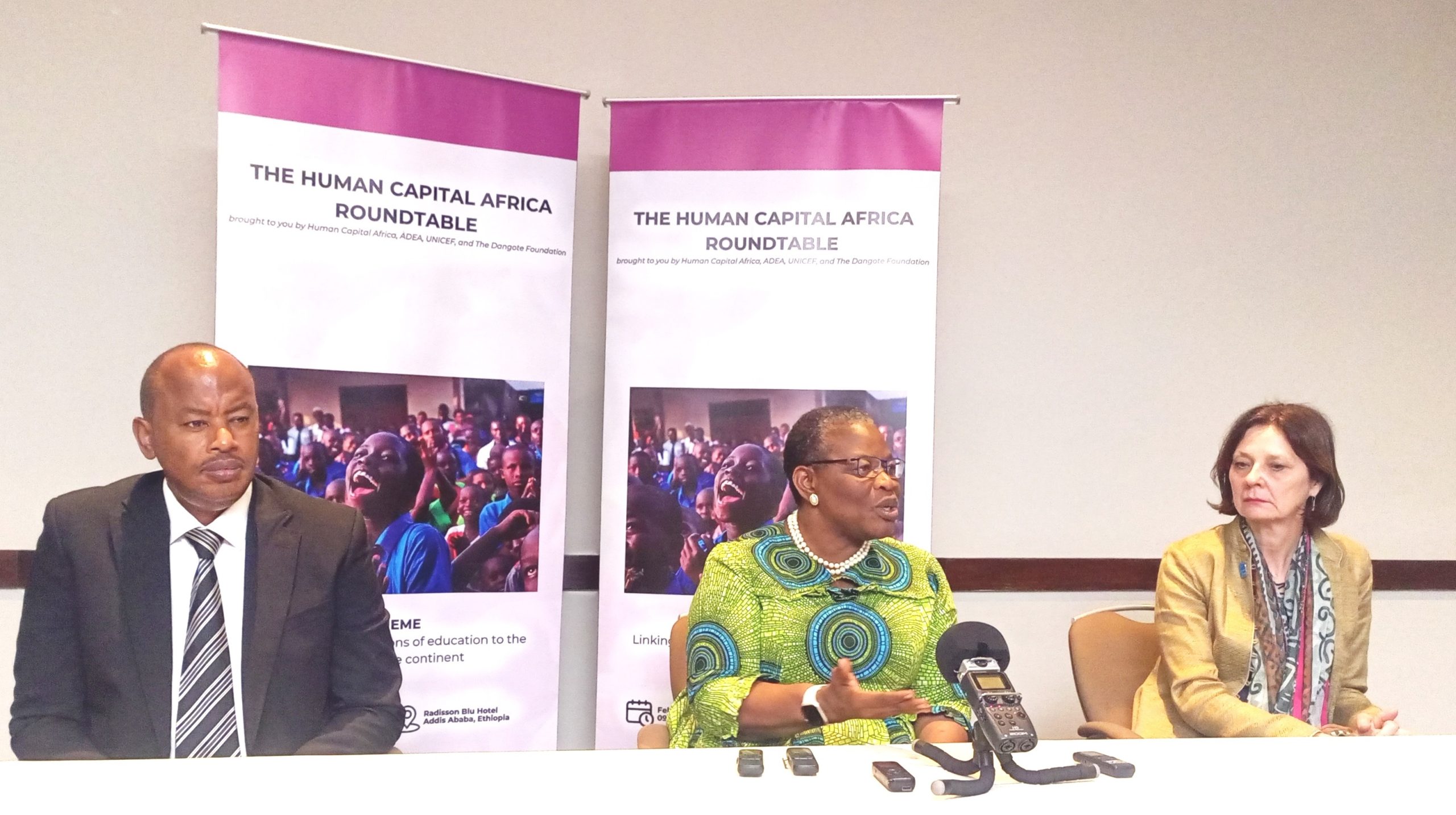
Dr. Ezekwesili who was also former Nigerian Minister of Solid Minerals and Vice President of the World Bank, Africa Region, was speaking in a press conference in Addis Ababa ahead of the 37th African Union “Year of Education” Summit scheduled to be held 17th – 18th February 2024 in the Ethiopian capital Addis.
The CEO who cited the “The State of Global Learning Poverty: 2022 Update” of the world bank and partners, indicated that Africa has been facing a reading crisis for over a decade, and because of the COVID-19 pandemic, it only seems to be worsening.
Dr. Ezekwesili who was briefing Ethiopian journalists in Addis Ababa alongside heads of African Youth Voices and the Association for the Development of Education in Africa (ADEA) said: “If children are not able to read to get a certain numerical concept before the age of 10, they are going to be completely unable to accomplish much in life.”
She that the three organizations urge all Heads of State meeting at the African Union Summit to Collectively commit to all children reading with comprehension and doing basic mathematics by the age of ten and acknowledge that as a continent it is unacceptable that nine (9) out of ten (10) of our children are unable to read with understanding and do basic maths by age 10.
They also called for the commitment of African leaders to measuring learning outcomes regularly, reliably and comparatively – routinely collecting, and using evidence and data to make decisions necessary to improve outcomes in the classroom and Commit to implementing cost effective evidence based solutions to accelerate learning outcomes, and prioritise budget allocations for these interventions – structured pedagogy & teacher numbers, teaching materials at 1:1 ratio, teacher guides and training.
Executive Secretary of ADEA, Albert Nsengiyumva also stressed: “We have all understood the challenge we face, we must now ensure that our concerns are shared as widely as possible and that Heads of State hear our message in the context of all the challenges facing the continent. They must consider the impact that failing to address the learning crisis will have on all of our other continental priorities. We know what is required – now we have to drive implementation systemically, not on a project basis, and at scale.”
Mr. Nsengiyumva said that African leaders need to recognize that existing scarce budget resources can be utilised to drive improvement in foundational learning through these interventions, without significant additional funding commitments, enabling national development priorities and delivering long term pay-offs.
Deputy. Regional Director, UNICEF ESARO Lieke van de Wiel on her part pointed out that the low literacy rate on the continent can be attributed to a few things including lack of adequate teacher training and overall investment in training, where teachers teach what they were taught as children rather than keeping up with the evolution of education, access to tools and reading resources for children as a result of poverty, and poor school literacy programs and curriculum planning.
The regional director underscores that addressing the tide against the longer-term learning crisis will require collaborative efforts of all stakeholders and focusing on key policy commitment of national governments.
Proper and Evidence-based Approach for Education Quality
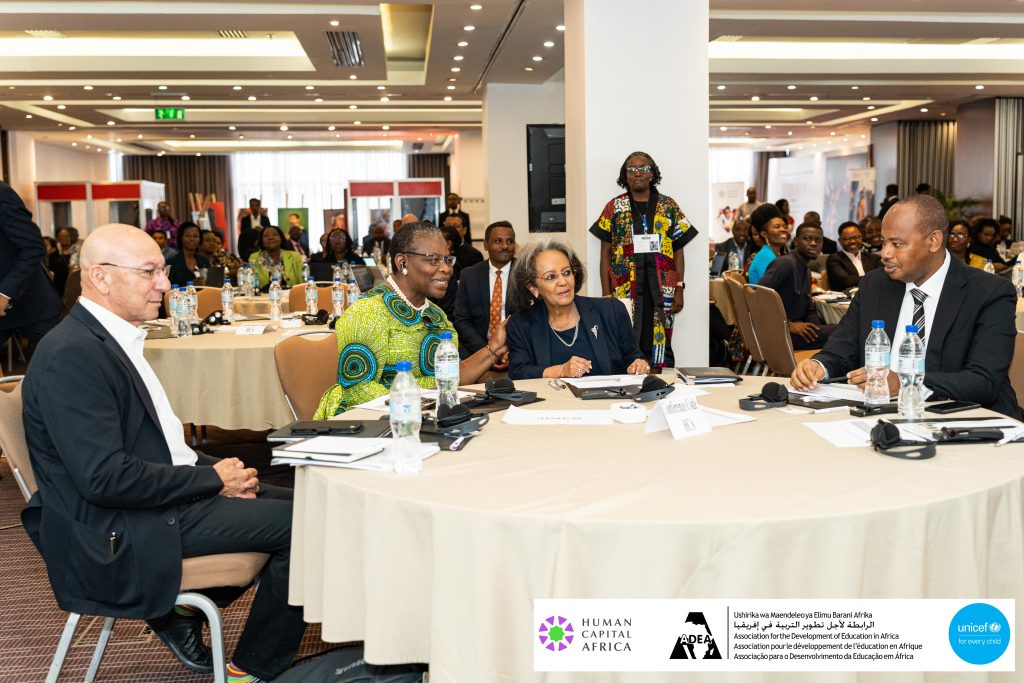
Speaking at the Human Capital Africa summit on Foundational Learning held earlier to the press conference here in Addis, Dr Oby Ezekwesili emphasized the fundamental requirement for better use of data, and expanded collection of data and evidence to ensure that the interventions implemented by government are targeted and effective.
“If there is a proper evidence-based approach then the incremental cost of doing the right things at foundational levels will be negligible compared to the outcomes that it will achieve throughout the education system,” she underlined.
She added: “The integrity of the foundation of education is something that we must embrace as a continent. Our leaders must become Chief Learning Officers to demonstrate the leadership required to overcome this challenge. This group here today is focused on ensuring that the most influential voices on our continent say that this crisis must be fixed.”
According to the World Bank and partners supported study, learning poverty has increased by a third in low- and middle-income countries, with an estimated 70% of 10-year-olds unable to understand a simple written text.
“This generation of students now risks losing $21 trillion in potential lifetime earnings in present value, or the equivalent of 17% of today’s global GDP, up from the $17 trillion estimated in 2021,” the report stated then.
The State of Global Learning Poverty Update report has shown that prolonged school closures, poor mitigation effectiveness, and household-income shocks had the biggest impact on learning poverty in Latin America and the Caribbean (LAC), with a predicted 80% of children at the end-of-primary-school-age now unable to understand a simple written text, up from around 50% pre-pandemic.
The next-largest increase, the report indicated was, in South Asia, where predictions put at 78% the share of children that lack minimum literacy proficiency, up from 60% pre-pandemic. Emerging data measuring actual learning levels of children in reopened school systems around the world corroborate the predictions of large learning losses.
“In Sub-Saharan Africa (SSA), increases in learning poverty were smaller, as school closures in this region typically lasted only a few months, but stand now at an extremely high 89%. In all other regions, simulations show increases in learning poverty.