By Mekonnen Teshome
Who is Dr. Mandefro Nigussie?
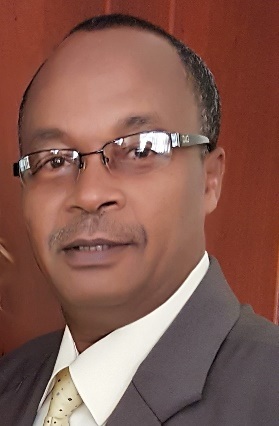
Mandefro Nigussie is currently leading the Agriculture Transformation Institute (ATI) of Ethiopia as its CEO. The ATI is a strategy and delivery-oriented government agency established to help accelerate the growth and transformation of the agriculture sector. Prior to joining ATI, Mandefro was the state minister for Agricultural Development Sector of Ministry of Agriculture, Director General of Ethiopian Institute of Agricultural Research and Deputy Regional Director of Oxfam America Horn of Africa.
Mandefro has led the development of several agricultural policies, programs and projects in the areas of advocacy, relief, development, markets and marketing systems, digital agriculture.
He also published various articles in books, journals, proceedings, and research reports in the area of crop sciences, marketing and entrepreneurship, and biotechnology & biosafety. He has taught and supervised postgraduate students in different universities, and he is also a fellow member of the Ethiopian Academy of Science and was a member of the Independent Science for Development Council (ISDC) of CGIAR.
He has also served as Board chair, and board members of various institutions. Currently leading the Agriculture Sector Policy Reform and Food System Transformation of Ethiopia. He holds BSc, MSc and PhD in Plant Sciences, Agronomy and Genetics and Plant Breeding, respectively. And also holds MBA.
In 2022, Mandefro was recognized by the Open Forum on Agricultural Biotechnology in Africa (OFAB) Africa as Champion of Biotechnology, among ten champions across 10 African countries, that have contributed organically to the promotion of biotechnology in Ethiopia.
Any reflections about your OFAB’s recognition and its impacts?
Recognizing scholars and researchers significantly contributes to motivating them to do their level best in their future professional endeavors and keeping them vibrant in their professional undertakings. Therefore, the championship recognition given to me by OFAB means a lot to me and to my family, colleagues and friends.
I have received various recognitions over the past three decades, from various professional societies including the Crop Science Society of Ethiopia (CSSE) , three times in recognizing the best research papers presented’, the other recognition for the work done in successfully introgressing sweetness genes (Sh2) to the Malaysian Sweetcorn varieties. as part of my research leading to PhD in Genetics and Plan Breeding I was also recognized by leading the best Mazie Breeding Team in East and Central Africa by CYMMYT (international Maize and Wheat Research Center).. The championships recognition I got from OFAB is another milestone in my professional journey.
I understand that the main purpose of recognizing scholars by OFAB is supporting scientific endeavors. I think, OFAB has recognized me for the small contribution I have made in making biotechnology useful and impactful at EIAR while I was the DG at the Institute.
I believe that Genetic research related to gene recombination provides an opportunity and a challenge. In most cases the general public mistrust and misconceptions new technologies and innovations. It is a fair frustration as the effects of the recombinants are not fully known and under such circumstances, researchers are responsible to educate the public about the new products and innovations. .
Your views regarding biotechnology, GMOs and Gene Editing?
Gene editing is a technique to generate new research results labeled as genetically modified organisms (GMO) with new DNA arrangements to either increase productivity, improve resistance to biotic and abiotic stresses and improve nutritional qualities and competitiveness, as well improve health
We do research with the rational of benefiting the people we serve by employing appropriate techniques and tools that can enhance efficiency and effectiveness of investments and products in agriculture, health, military, agro-industries.
The Sciences offer an excellent opportunity in the addition, deletion or transfer of important genetic traits from one organism to the other and within a plant of an animal to giving them a new features of disease and pest resistant or drought tolerant. Genetic modification offers excellent alternatives to harness genetic behaviors from a third organism if you could not make it with breeding of two verities.
Therefore, our scientific endeavors should always consider cultural and social aspects of our societies. This could be different somewhere. This is very important here in our continent, as people are usually doubtful to accept emerging technologies for some time. With a scientific intervention, we need to see the balance between the disadvantages of the new technology and the benefits it offers to the public and thereby strengthening our regulatory team.
Of course, mostly criticism against genetic engineering emanates from misconception and frustration of the unknown while as well as denying facts generated. Many people just reflect their intuitive apprehensions around genetic engineering; otherwise they could not produce scientific evidence for their claim. However, people are expected to substantiate their claims with proofs and evidences. We, in the scientific community often produce evidences for research work related to pests (diseases, insects, weeds, rodents and other pests) .
I rather believe that GMOs are safe and synthetic Chemicals are toxic for health and environment than planting GOMs .
We are also operating under a regulatory framework to ensure safety and security on health and environment. We need to pursue our scientific endeavors with regulatory mechanism, and we should not stop doing science with fear and anxiety. Either we get benefits taking some risks, or we simply sit down and avoid risks.
I think, these are the choices we have at our hands. We should also strike a balance of our attitudes towards the advantages and risks of genetic engineering related to agriculture, medicine, military and others. Generally, as a senior expert I see the science of genetic engineering as an amazing scientific advancement of our time and I am very concerned the benefit of GMOs and other stakeholders about its contributions in moving forward.
Are there any specific challenges or limitations that you encounter in your work, and how do you approach overcoming them?
There are many challenges in life during my study, research and leadership career. Such challenges are not unique to me but could happen during ones lifetime. In general we leave in a world where several challenges test your ability to withstand and pas from one challenge to another and in the developing nations, you might face additional challenges related to financial resources as well as time limitations as additional social responsibilities can compete with your time for study and writing as well as thinking.
I managed the challenges I faced by designing appropriate strategies as well as transfer the big challenges to the superpower. I never panic about challenges rather I really think about how I can change those challenges into opportunities for success.
As you solve a challenge, you must be sure that you are making progresses and there are many more challenges ahead to be solved as a researcher as well as a leader. I advise young scholars to stay determined to academic, research and management careers and tackle strategic challenges by employing science, technology and innovations. Learn every day from both your successes and failures and think about significant and sustainable solutions to solve challenges.
We also face challenges in providing products and services in research and development. For example, research results related to biotechnology, more specifically genetic engineering where the research results are relatively new could be a point of misunderstanding unless prior awareness is created and supporting policy instruments are in place..
New technologies could have opportunities and risks, but as I said earlier, we need to understand pros and cons before we take results of recombinant DNA to commercial use.
What can you tell us about your future plan?
As an old man in the agriculture sector, I would like to engage myself in teaching and coaching young scientists and leaders
I want to contribute to the human resource development especially in producing young and vibrant leaders and researchers in the agriculture sector. I have had practical long years of professional journey. I want young people to learn from my mistakes, strengths, and inspirations.