By Mekonnen Teshome
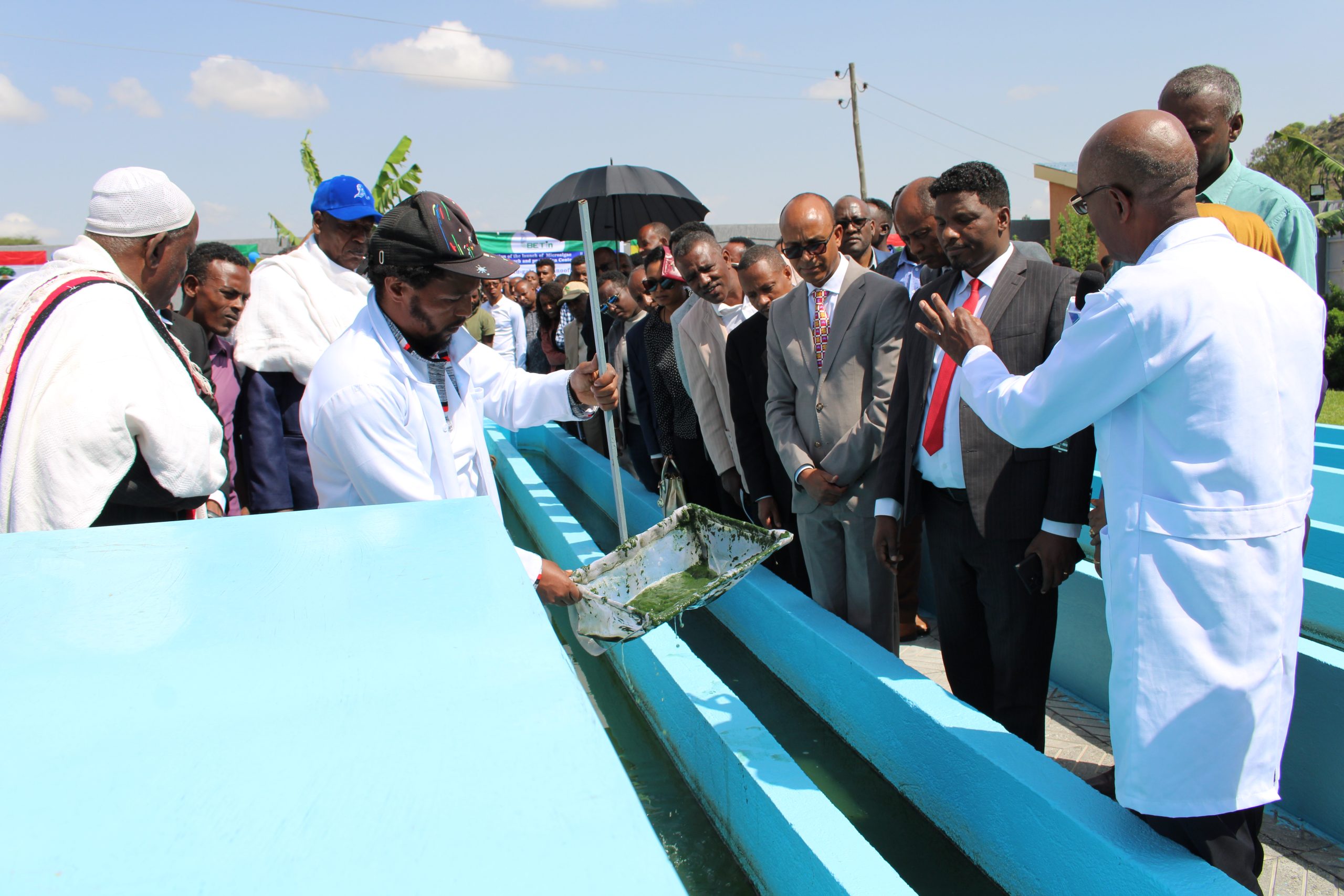
(Adami-Tull, Ethiopia) : Ethiopia’s first-ever Microalgae Spirulina field research and production center was officially launched yesterday at the Adami-Tull Agricultural Research Center.
The microalgae field research and production center erected by the Ethiopian Bio and Emerging Technology Institute (BETin) in collaboration with the Oromia Agricultural Research Center aims at addressing malnutrition among children in the country and boosting Ethiopia’s foreign currency earnings through export of the microalgae, government officials announced.
Microalgae Spirulina Production – A Long Awaited Dream In Ethiopia
Speaking at the inaugural ceremony yesterday, Director General of the Bio and Emerging Technology Institute (BETin) Professor Kassahun Tesfye indicated that the present launching of the Spirulina field research and production center has materialized Ethiopia’s long-awaited ambition to bring the only academic microalgae researches in the universities to real industrial production setting.
“Now we have practically demonstrated that Spirulina can be a real industrial product here in Ethiopia and what we need to do next is scaling up and expand the production of microalgae here with a wider involvement of the private sector and local communities,” Professor Kassahun underscored and congratulated the people and government of Ethiopia.
Now we have practically demonstrated that Spirulina can be a real industrial product here in Ethiopia and what we need to do next is scaling up and expand the production of microalgae in here with a wider involvement of the private sector and local communities
He also recalled that his institution began the microalgae research by building a small laboratory in Addis Ababa to produce pure microalgae seeds with an outlay of 8 million birr 4 years back with an aim of multiplying and expanding it to several production sites in Ethiopia.
According to Professor Kassahun, Ethiopia has a huge potential to produce and export Microalgae Spirulina. “Ethiopia is the home of Microalgae Spirulina and we are glad to welcome it to itsown home.”
Ethiopia is the home of Microalgae Spirulina and we are glad to welcome it to itsown home
Ethiopian Ministry of Innovation and Technology (MinT) State Minister Bayissa Bedada (Ph.D.) at the occasion pointed out that the development and production of the microalgae needs the concerted and collaborative effort of all research and academic institutions, scientists and local communities.
He said that about 35% of children under five years of age in Ethiopia are suffering from malnutrition as well as stunting and the launching of the microalgae production is a significant stride to tackle the health menace in children.

As to Dr. Bayissa, the launching of the microalgae production in Ethiopia is a huge signal that the country has an immense potential of development through exploiting its natural resources including its Spirulina and other bio-products.
The state minister expressed his satisfaction that the entire project , from inception to erection, was developed and designed by Ethiopian scientists.
Dr. Yeshurun Alemayehu, also MinT State Minister at the occasion underscored that the utilization of the country’s natural resources including Spirulina should be the get way for the realization of Ethiopia’s vision of prosperity and he called upon all stakeholders to join hands in making the country one of the top producers of microalgae.
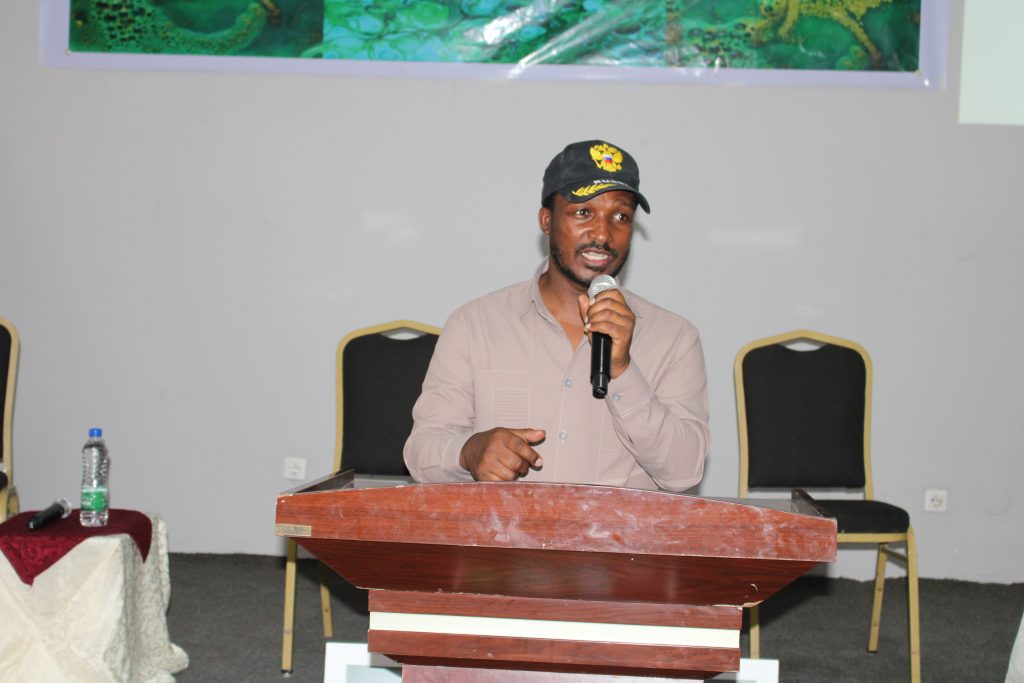
On behalf of the Ethiopia government, Dr. Yeshurun extended his appreciation to all researchers and the management of the Bio and Emerging Technology Institute (BETin) as well as MinT for their relentless efforts made to make the 1st ever microalgae research and production center in Ethiopia.
Government Ready To Support Investors In Microalgae Production
Official sources indicate that Ethiopia imports Spirulina from India, China and Ukraine , however this has to change. Ethiopia should be Spirulina exporter itself with the involvement of the private sector, Deputy Director General of the Bio and Emerging Technology Institute (BETin) Dr. Hailu Dadi underlined.
“For this to happen we are ready to support interested investors to engage in the production of spirulina in Ethiopia,” Dr. Hailu said and added “ what we have erected now is just a proto-type, we are finalizing to establish microalgae center of excellence, incubation centers and thousands of researches in the area.”
The Spirulina research and production center established at a cost of 8.2 million Birr is spearheaded by the leased researcher Dr. Habte Jebesa , a lecturer from the Addis Ababa university.
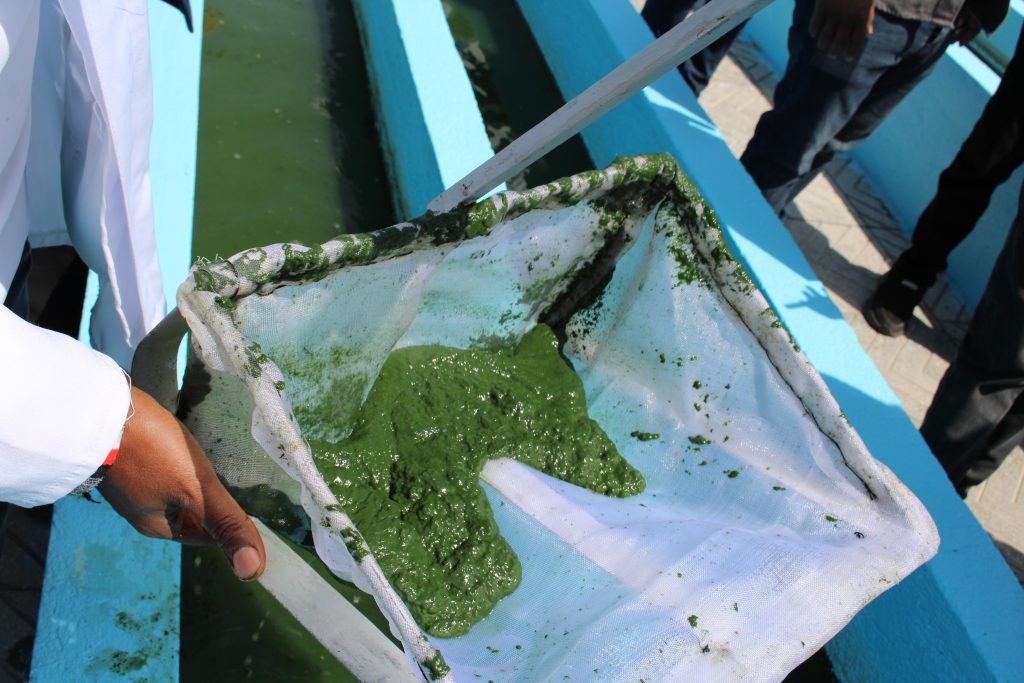
Dr. Habit said, currently, the new facility build at Adami-tullu can harvest more than 30 kg of microalgae (Spirulina) per month and it is envisaged to expand this to higher level of industrial production by replicating the new production technology developed full y by Ethiopian scientists.
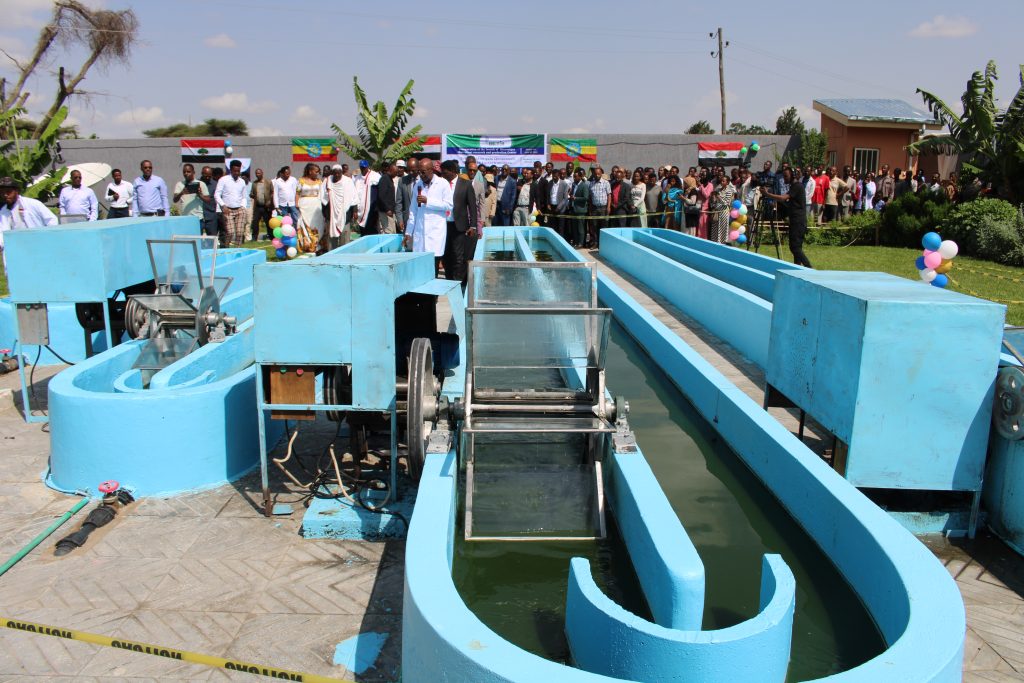
“ What is good about spirulina production plant is that it does not wait for years and months like other products, but once you start harvesting , you can produce get products every 24 hours and that means you are generating significant amount of money every day,” Dr. Habte said and urged local business people to invest in spiruila production in Ethiopia where the potential is vey huge and beneficial.
Spirulina contains more than 90 percent of the nutrients needed by humans and is the only microalgae in the world that contains five nutrients in a single cell, he said.
Spirulina (Arthrospira) is a blue-green algae found in alkaline Lakes around the world. It does not have a hard cell wall making it harder to digest, but a soft, easily digested cell wall made of a mucopolysaccharide .