
Filed By Mekonnen Teshome ( mokish03@gmail.com )
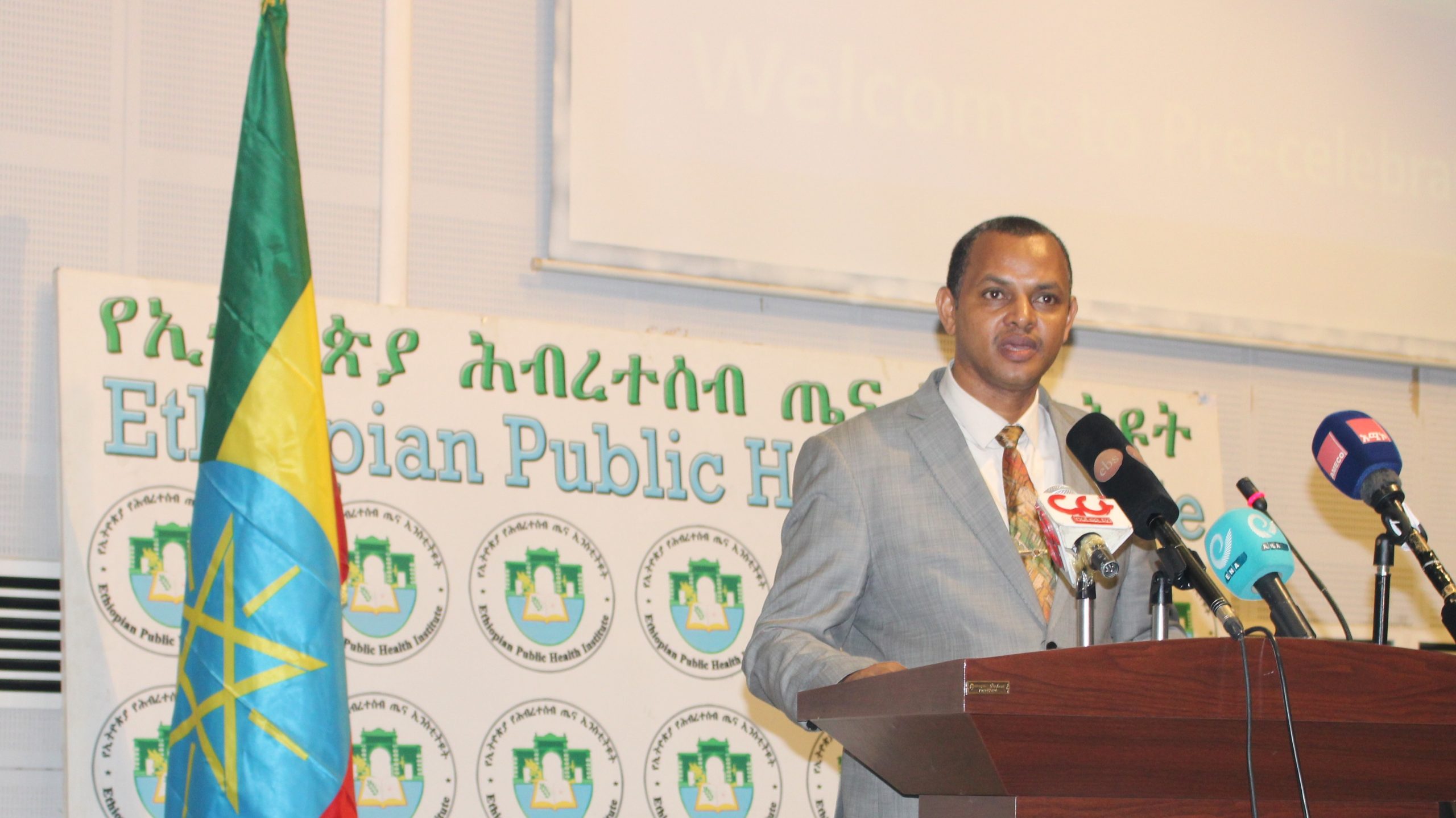
Professor Afework Kassu , a scholar of Microbiology and Immunology and an alumni of the Ethiopian Public Health Institute (EPHI) was addressing a pre-celebration event of the Centennial observation (100 years anniversary) of the institute on June 27 , 2024 at its premises and he has brought his memories of EPHI’s old days that he has experiences as a Master’s student and gives his suggestions on how to shape the future of the institution in the years ahead. Read his speech directly transcribed below:
“I am a beneficiary of the Ethiopian Public Health Institute…as a Master’s student”
Prof. Afework Kassu on Centennial Celebration of EPHI
Thank you, brother Dr. Masay, Director General of EPHI , Dr. Getachew, Dr. Saron , Dr. Melkamu, Deputy Director Generals ! Members of the Centennial Celebration Committee, Staff members and management members of EPHI, partners and stakeholders gathered in this hall for this celebration:
Let me start by congratulating all of us for the 100th year anniversary of the establishment of the current Ethiopian Public Health Institute, which has passed through many names over the past 10 decades.
Please join me in congratulating it. You know, existing after establishment in whatever structure and function, rendering services, existing for 10 decades is a lot for us in Africa, and probably in developing countries in general.
This institute, pioneer institute for us, is celebrating 100 years anniversary. In Ethiopia too, if you go and scan our governmental institutions, there are very few government institutions, public institutions in Ethiopia that have reached to the celebration of their 10th decades last year. If you go to our higher education institutions, our pioneer biggest institute, Addis Ababa University, is less than 8 decades. Maybe it’s first few years of 70s. If you go to bigger ministries, you don’t see big numbers.
So having that number, that year, in celebration is something for us, for the families of public health. When we celebrate, brothers and sisters, we have to look into our achievements of the past. In Amharic we say “ቱሩፋቶች። የመቶ አመት ቱሩፋቶች።” ⁄fruits of hundred years’ ∕ . This institute, as we all can imagine, in its early years of existence, might have passed through many ups and downs. If I pick one example, 70 years ago, 72 years ago, this institute was producing six different vaccines for Ethiopia. Who could have imagined? This institute, by then, was producing six different vaccines of public health importance for Ethiopia.
How many are we producing now? There are left is only one. The one left is saving lives in Ethiopia. So the public has contributions of this initiative in Ethiopia in infectious disease prevention and control, in the summation of public health knowledge, in human resource development, in provision of recommendations and ideas for policy and strategy of the country, the health sector and other multi-sectoral issues has been very immense.
We can imagine that and we can also tap into the collaborative endeavors, in the culture of EPHI in working with many partner institutions in-country, in Africa, and globally. Working with global organizations, development partners, has also been very exemplary. So when we celebrate, all of us, from our institutions standpoint, should look into our files and contribute to the organizing committee and together, contributions of this institution in public health, not only for Ethiopia, not only for Africa, but also for global health.
We are not putting those issues together. Probably in a book would give us something special which can be shared to our kids, the grandkids. These very rare institutions write books on their history, on the milestones achieved, on lessons for next generation. I hope, Dr. Getachew is still working on it, because we have some medical history writers in Ethiopia, we have academicians in different institutions, there are many seniors who passed through this institution as researchers, support staff members, leaders, collaborators.
I am a beneficiary of the Ethiopian Public Health Institute. Before it was named EPHI, when it was called the Ethiopian Health and Nutrition Research Institute as a Master’s student. That was the time our country was hit hardest by HIV, HIV was not alone by then. HIV and its friends may be tuberculosis and others were challenging us.
So the government of Ethiopia, in collaboration with the government of the Netherlands, developed a project called the ‘Ethiopia–Netherlands AIDS Research Project‘ (ENARP), we had the opportunity to do high-level researches in the laboratories of the EPHI, using the resources gathered from the company.
I still remember those golden years, two years, to be specific, where the foundation for my research, later research endeavors, were founded. I know many participants in this work. You can pick, we can now raise issues like that, exemplary engagements of you, connections of you, with the Ethiopian public Health Institute which can now have far-reaching implications in your better life or in the lives of many others. This institute for me, now is tasked with huge responsibilities, because we are living in a world where we are challenged by unforeseen issues.
The World Health Organization has been warning us with “disease X”, so the emergency preparedness is not only about the things we know right now, like typhoid fever and many others, but preparedness for unknown disease is a challenge to this institution. All of us working in collaboration, this institution has been reorganized with new orientations, new mandates by the government of Ethiopia last year, now rendering the duties and responsibilities kept in the various articles means our collaboration.
So my point is, while celebrating the past 100 years, we have to also now put together the best milestones from different collaborating institutions and partners so that we can get prepared for the foreseeable future, for the challenging future.
I think, we can do that while we celebrate our past, getting prepared for tomorrow is a very important point. That will be my assignment to take and to all of us.
This institute for me, now is tasked with huge responsibilities, because we are living in a world where we are challenged by unforeseen issues.
…let’s also get prepared for a better tomorrow. If we are prepared for better today, tomorrow won’t be that challenging for us.
As leader of the Armauer Hansen Research Institute, I will take the assignment to my institution to pinpoint and to identify specific areas of strengthened and collaboration in line with getting prepared for the future. Again congratulations, my brother DG, Dr. Mesay, Deputy DGs, the bigger extended families of EPHI for the last 100 years, because tomorrow is very tough, let’s also get prepared for a better tomorrow. If we are prepared better for today, tomorrow won’t be that challenging for us.
All eyes are on Ethiopia because of our history, because of the presence of this institute [EPHI]
All eyes are on Ethiopia because of our history, because of the presence of this institute, which lived for hundred years, Africa is looking at us, the global health community is looking at us. Learning from our past 100 years, we can give something as a lesson to the world. And also from our preparations for the years to come, we can give something to the world.
So let’s take that assignment, all of us, to our homes, when we move into the bigger celebration, together, starting from the pre-celebration today.
Thank you, my brother, Dr. Mesay, for the opportunity given to me to say a few words. Thank you colleagues for listening.