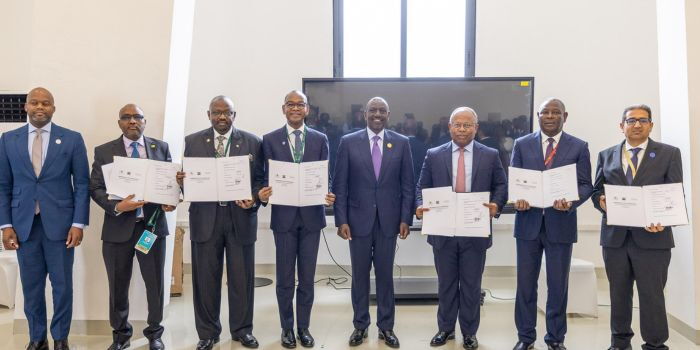
Kenyan President William Ruto said that the Africa Green Industrialization Initiative (AGII), which leaders first launched at COP28 and rooted in the 2023 Nairobi Climate Change Declaration has now transformed into a concrete action framework moving from “Conversation to Collaboration” with practical actions in generating $100 billion to realize the continent’s green industrialization.
As a culmination of the Nairobi Declaration Key players in the agreement include AfreximBank, Africa50, KCB Group, Equity Group, Stanbic Bank Kenya, Ecobank and the Africa Continental Free Trade Area (AfCFTA) Secretariat are joining hands to support Africa’s ambition to build green industries.
These institutions will spearhead renewable energy-powered industrial clusters, support new value chains in critical minerals, green fuels, and battery manufacturing, and align cross-border policies to boost intra-African trade under AfCFTA.
President Ruto witnessed the signing of a landmark agreement in Addis Ababa Ethiopia, on September 9, 2025, where African financial institutions and leading banks committed to mobilize up to $100 billion to accelerate the continent’s green industrialization.
“United with our financial institutions, our energy systems and our trade corridors, we can anchor inclusive and globally competitive green value chains, “the President said adding that in only a few months, the initiative has moved from conversation to collaboration.
Financial leaders also pledged strong backing for the initiative Africa50 announced a $313 million flagship energy transmission project in Kenya to unlock renewable power for industry.
African development finance institutions and leading banks struck the deal to channel renewable energy wealth into climate-smart industries, modern value chains and millions of jobs across the continent.
The framework complements the Accelerated Partnership for Renewables in Africa (APRA) headquartered in Nairobi, which targets 300 GW of renewable energy by 2030. With both AGII and APRA secretariats hosted in Kenya, the country plays a central role in shaping Africa’s green transformation.
The Addis Ababa agreement is more than just financial mobilization. It marks Africa’s resolve to chart its own course, asserting leadership in global climate action and turning ambition into opportunity.
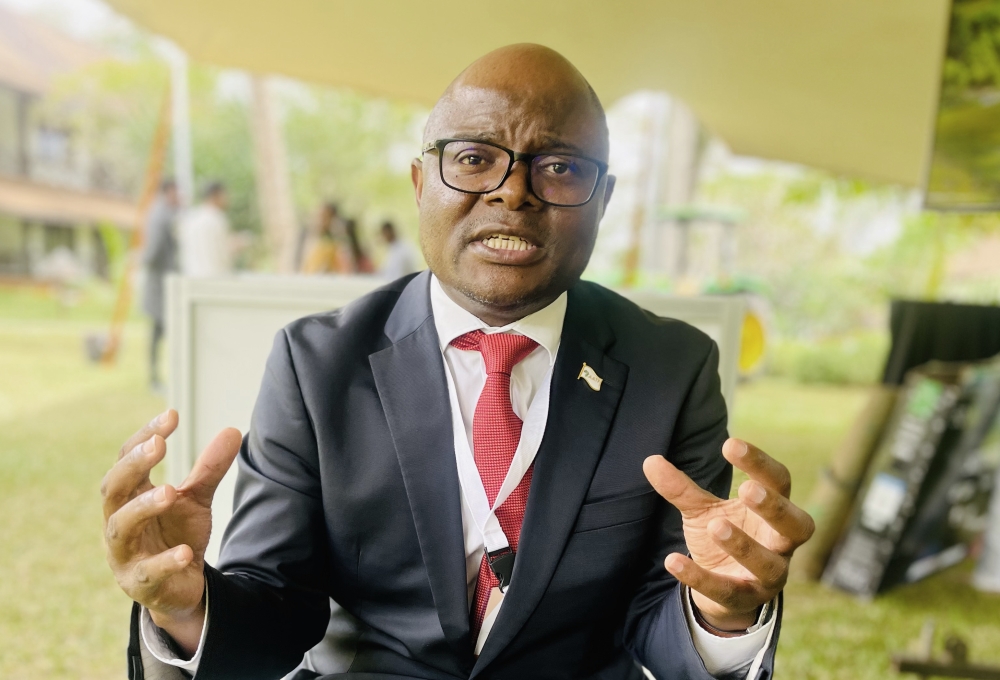
Commenting on the signing agreement, Climate Specialist and OFAB Project Manager with the African Agricultural Technology Foundation (AATF) Vitumbiko CHINOKO said that the initiative is “ investment magnet: this declaration is a statement that investors will leverage on to invest in Africa”. It also seeks more job creation and skills in Africa through the expansion of clean industrialization, he added.
As to CHINOKO, the initiative aims also to ensure Africa’s energy security through the focus on solar and other renewable resources by aligning government banks and development partners.
In addition, it is about channeling finance to renewable energy, clean/green development, and green infrastructure, leveraging Africa’s natural resources and renewable potential for industrial transformation as well as positioning Africa’s responsibility, taking matters of climate in its own hands.
The intended $100 billion will be generated through synergized global and local Private Public Partnership and blended financing and active involvement of private sector investors.
KCB Group CEO Paul Russo pledged support for renewable-driven growth.
“As a sustainable institution, we have prioritized green growth and deliberately focused on accelerating renewable energy-based industrialization, as envisioned by the AGII cooperation framework,” he said.
Equity Bank’s James Mwangi committed $1 billion of its recovery and resilience plan towards AGII projects.
Africa50 announced a flagship energy infrastructure project in Kenya, a $313 million public-private transmission line that will open up renewable power for industry.
The framework complements the Accelerated Partnership for Renewables in Africa (APRA), headquartered in Nairobi, which aims to deliver 300 GW of renewable energy by 2030.
Together, AGII and APRA position Africa not just as a supplier of raw materials, but as a hub of innovation, manufacturing, and sustainable trade.
With the secretariats for both AGII and APRA hosted in Kenya, the country is set to play a central role in steering Africa’s green transformation.
Africa is estimated to face an annual climate financing gap of between $200 and $250 billion. The $100 billion commitment, while not closing this gap entirely, represents one of the largest private sector-led climate finance mobilizations in Africa’s history.
AGII is an ambitious multi-stakeholder initiative that seeks to advance green industrialization and investments across the continent by “prioritising energy-intense industries to trigger a virtuous cycle of renewable energy deployment and economic activity, with a special emphasis on adding value to Africa’s natural resource endowments”, as stated ni the Nairobi Declaration.
The initiative presents a timely opportunity to leverage untapped potential of the continent to drive sustainable development. It is a strategic and collaborative framework that seeks to drive a pan-African transformation by supporting green industrialization across the continent.