African animal breeders and agro-ecologists spotlight the need for strengthening African-led science, agro-ecology, and indigenous knowledge systems to transforming the continent’s agriculture and ensure its food sovereignty.
The African researchers highlighted this in their study tilted : “Transforming Agriculture and Food Sovereignty in Africa – a heads up to the Africa Food Systems Forum 2025” and anchored by International Livestock Research Institute (ILRI).
“True transformation lies in empowering farmers, reclaiming and protecting genetic resources, investing in long-term innovation, and advancing policies that reflect Africa’s priorities rather than external agendas.This is not only a scientific undertaking but also a political and moral imperative, to safeguard livelihoods, preserve biodiversity, and secure sovereignty for generations to come,” they asserted in their study.
They also gave their recommendations that ILRI and other centers of the Consortium of International Agricultural Research Centres (CGIAR) should strengthen collaboration with local organizations such as Green Gold AgroVenture and field-grounded communication platforms like the “African Demystifier.”
They also gave their recommendations that ILRI and other centers of the Consortium of International Agricultural Research Centres (CGIAR) should strengthen collaboration with local organizations such as Green Gold AgroVenture and field-grounded communication platforms like the ‘African Demystifier ‘.”
“These partnerships would ensure that global research agendas are anchored in local realities, amplify farmer voices, and facilitate two-way knowledge exchange. By working closely with organizations rooted in communities, CGIAR can accelerate the uptake of innovations, co-create context-relevant solutions, and build trust among farmers.”
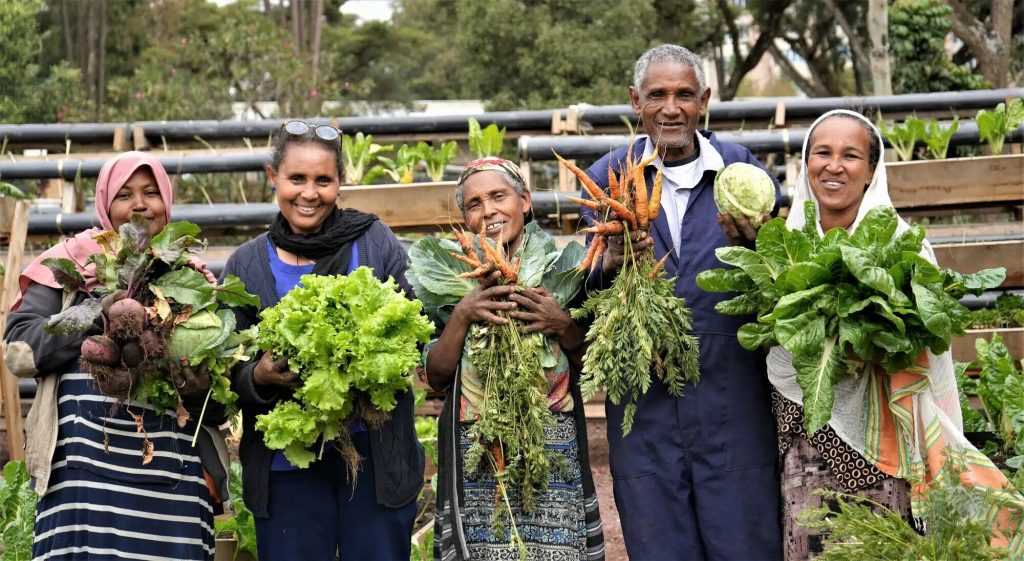
As to the researchers the approach would not only improve the visibility and impact of research but also help bridge the gap between high-level science and everyday farming practices, ensuring that technologies and policies truly respond to African needs and priorities.
Achieving food sovereignty in Africa requires shifting from donor-driven, top-down systems to African-led, inclusive, and agroecological approaches. Smallholder farmers, indigenous knowledge, and biodiversity must be at the core of agricultural transformation.
Moreover, this endeavor has to consider key pillars of transformation including African-led Science & Innovation – Develop low-input, location-specific technologies that leverage indigenous crops and livestock to move smallholders from subsistence to thriving systems and agro-ecology over CSA – Position agroecology as a cultural, ecological, and political movement, rejecting Climate-Smart Agriculture as a greenwashed, elite-driven concept.
Genetic Resources for Sovereignty – Build African-led breeding and conservation, autonomous seed and livestock banks, and connect gene banks to sovereignty-based programs and local Innovation Systems – Strengthen farmer-led breeding, community-based breeding programs, participatory extension, and ethno-veterinary practices should also be taken into account for Africa’s agricultural transformation.
Other pillars also includeHomegrown Investment – Secure sustained investment in digital agriculture, genomics, curricula reforms, innovation hubs, and inclusive capacity development, Inclusive Genetics Programs – Refocus breeding from research outputs to development impact, enhancing indigenous breeds and varieties while linking genetics to markets as well as Policy, Governance & Equity – Reclaim seed, land, and food sovereignty through inclusive policies and resist restrictive seed laws.
Breaking the Myths of Climate Smart Agriculture (CSA)
Climate Smart Agriculture (CSA) is often presented as a win–win solution for productivity, resilience, and emissions reduction. In practice, however, CSA tends to privilege capital-intensive interventions and elite interests, while sidelining the smallholders who produce most of the world’s food. Its emphasis on marginal emissions reductions frequently redirects scarce “climate finance” toward corporate technologies and large-scale projects rather than strengthening farmers’ livelihoods.
By contrast, agroecology and farmer-led innovation offer more transformative and justice-oriented pathways. These approaches center local knowledge, equity, and ecological integrity, building farming systems that are not only resilient to climate change but also socially inclusive and democratically governed.
Challenges for Agricultural R&D in Africa
Agricultural research and development (R&D) in Africa faces persistent challenges that undermine its ability to deliver transformative impact. Too often, donor-driven agendas overshadow African-led priorities, resulting in limited ownership and misalignment with local needs. National research and extension systems remain underfunded and weakly integrated, leaving critical gaps between knowledge generation and application on farms.
Moreover, much of the R&D focus has been on boosting productivity for global markets, with insufficient attention to food sovereignty, nutrition security, and culturally relevant diets that matter most to African communities. Addressing these challenges requires structural reforms that elevate African co-leadership in setting the R&D agenda, ensuring investments and innovations are rooted in local priorities, strengthen national systems, and build resilient, sustainable food systems
Advancing True Food Sovereignty
Advancing true food sovereignty in Africa requires an African-led agenda that places agroecology, indigenous knowledge, and the protection of local seeds and breeds at the center of food systems. This means investing in community seed banks and farmer-led breeding programs to safeguard seed rights, while also promoting the conservation and commercialization of indigenous crops and livestock that embody resilience, cultural heritage, and nutritional diversity.
Equally important is building equitable capacity in livestock selection and breeding, ensuring that farmers and communities—not external actors—drive genetic improvement and benefit from it. Together, these actions strengthen resilience, preserve biodiversity, and empower communities to shape their own food futures.
Long-Term Investment for Resilient Systems
Short-term projects alone cannot dismantle entrenched structural barriers in African agriculture. What is needed is sustained, long-term investment that builds systemic resilience and empowerment. This means prioritizing digital agriculture, genomics, and biotechnology as drivers of innovation; establishing hubs that connect universities, research institutions, the private sector, and farmers to accelerate co-creation and adoption; designing inclusive curricula and gender-equity approaches that ensure no community is left behind; and strengthening policy and governance frameworks that are aligned with Africa’s own priorities rather than external agendas. Together, these measures lay the foundation for transformative, African-led agricultural development.
Toward Impact and Scaling
Agricultural research in Africa must evolve beyond academic outputs to deliver tangible development impact. This requires co-creating solutions with farmers and communities to ensure local relevance and ownership, while strengthening innovation systems and extension services for effective delivery. Proven technologies should be scaled through farmer cooperatives and digital platforms that widen access and adoption. Embedding robust monitoring, evaluation, and learning systems will ensure research translates into measurable improvements in farmer livelihoods. Above all, building inclusive farmer–public–private partnerships is essential to link science with business and communities, driving sustainable transformation across food systems.
The Role of ILRI Livestock Genetics Program
ILRI can play a transformative role in African livestock development if its mandate is reoriented toward direct smallholder impact. This requires investing in the development of resilient indigenous breeds, applying genomics, AI, and data science to accelerate genetic gains, and establishing biobanks to conserve endangered African breeds. Equally important is the design of climate-resilient livestock systems that safeguard productivity against environmental and market shocks while strengthening food sovereignty.
To unlock economic transformation, livestock genetics must be integrated into value chains that enhance incomes, market access, and rural industrialization. Beyond research, ILRI and other R&D institutions should function as policy-technical bridges, aligning with and supporting national livestock strategies while ensuring that access to improved genetics is democratized for all farmers rather than concentrated in a few elite programs. This shift positions ILRI as both a scientific leader and a catalyst for inclusive, sustainable livestock futures in Africa.
Research By: Christian Tiambo, Winnie Nabatanzi, Huguette Nono, Christopher Omari, Sandrine Kuete, Ndaleh W. Nghonjuyi, Denis Zofou