Bahir Dar, Ethiopia – November 30, 2025 — Authorities in Ethiopia’s Amhara National Regional State have called for stronger collaboration among stakeholders to advance Early Childhood Development (ECD) and ensure children under seven achieve their full developmental potential.
The appeal was issued in Bahir Dar during the official release of a groundbreaking ECD baseline survey conducted by the African Center for Early Childhood Development (AfC-ECD). The study, the most comprehensive of its kind in the region, examines child development outcomes including play-based early learning, health and nutrition, child protection, safety, and other essential indicators, following internationally recognized standards.
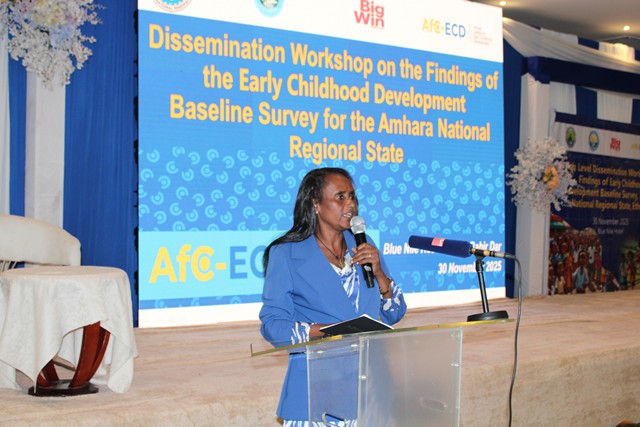
Opening the event, Dr. Mulunesh Desse, Deputy President and Head of the Regional Social Development Cluster, said Ethiopia must rethink its approach to maternal and child care, grounding ECD systems in scientific evidence. She emphasized the need for meaningful community engagement and highlighted successful ECD initiatives being implemented in Addis Ababa as models worth learning from. Dr. Mulunesh also expressed gratitude to AfC-ECD, regional government bureaus, and partner organizations for their role in completing the study.
Delivering welcoming remarks, Dr. Kebede Worku, CEO of AfC-ECD, described the release of the baseline survey as a “critical milestone” in efforts to improve child health, safety, education, and holistic development in the region.
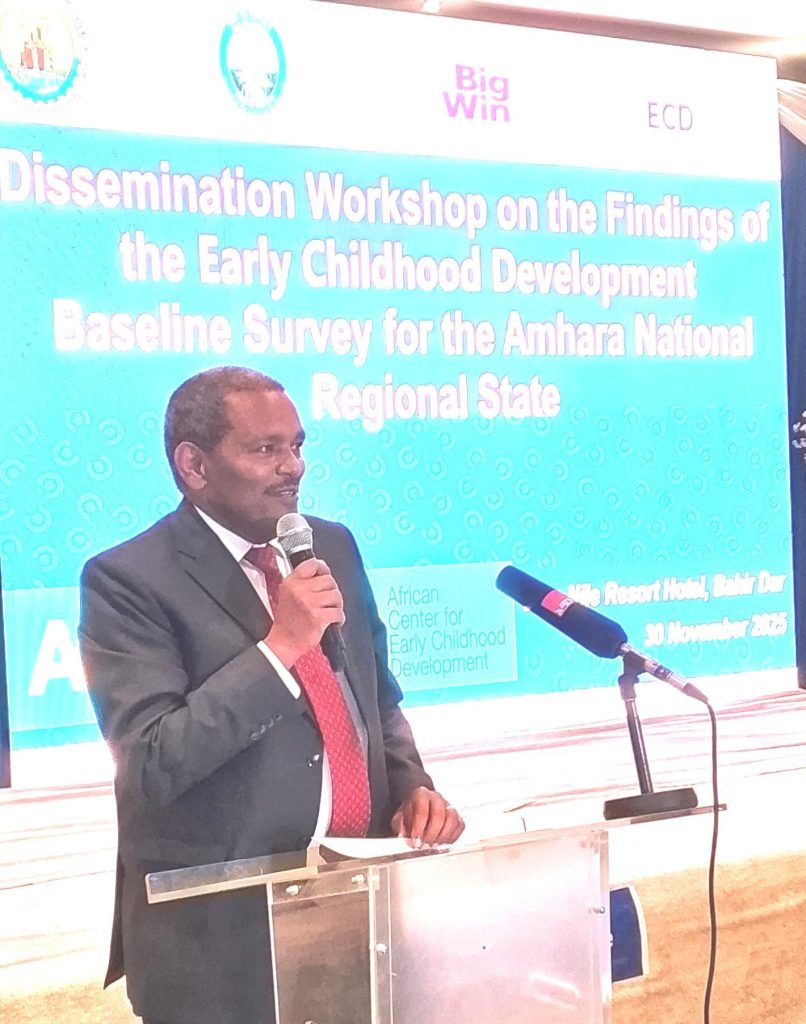
“The findings provide a solid foundation for evidence-based policies and strategies, giving us a deeper understanding of the current ECD landscape in the Amhara region,” he said. Dr. Kebede added that the results will guide the development of a comprehensive regional ECD strategic roadmap, support its implementation and monitoring, and strengthen accountability for children and families.
The forthcoming roadmap outlines key goals to ensure that all children—from conception to age six—have access to quality health services, pre-primary education, balanced nutrition, safety and protection, and responsive caregiving. Dr. Kebede underscored the need to integrate ECD services into the health system and expand door-to-door parental guidance and caregiver training.
The study, conducted in partnership with Bahir Dar University with financial and technical support from Big Win Philanthropy, provides critical, actionable evidence to inform policymakers.
Presenting the detailed findings, Dr. Sintayehu Abate, Senior Research Advisor at AfC-ECD, and Professor Netsanet Fantahun of Bahir Dar University, said the research covered major zonal towns and their surrounding rural districts, organized into six clusters.
According to the study, children in the region face significant developmental risks tied to malnutrition, limited early learning access, low levels of parental education, and weak inter-sectoral coordination. The data show that 21.7% of children under age three are developmentally off-track—more than four times the international benchmark of 5%. Delays are even more pronounced in rural areas (23.1%) and among low-income households (26.7%).
More than 6,000 participants took part in the assessment, which reviewed households with children under seven as well as preschool-aged children enrolled in early learning programs.
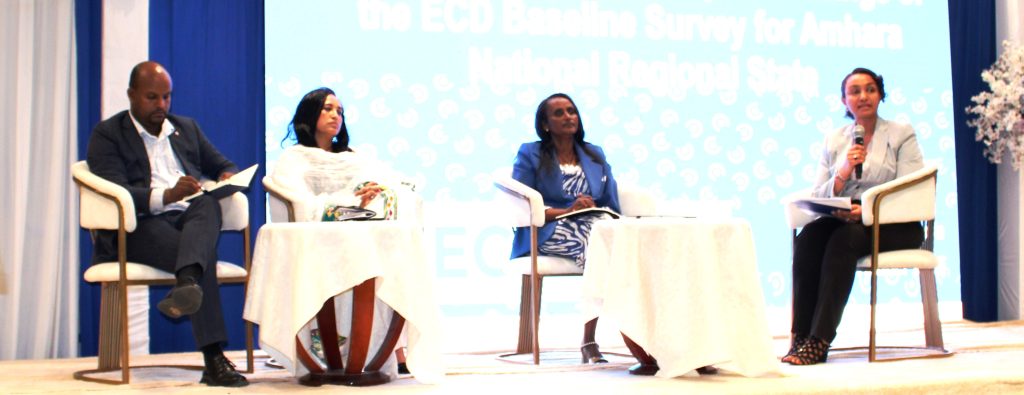
A panel discussion moderated by Dr. Meseret Zelalem, Deputy Executive Director of AfC-ECD, brought together senior officials from the regional Social Cluster, Health Bureau, Education Bureau, and the Women, Children and Social Affairs Bureau. The panel examined the region’s ECD challenges and identified priority actions to address them.
Researchers from Bahir Dar University applied internationally validated methodologies to evaluate service quality, parenting practices, and children’s developmental conditions.