Authority
By Mekonnen Teshome
The Ethiopian Wildlife Conservation Authority (EWCA) has finalized a two-week training for its experts on the operation of Unmanned Aerial Vehicles, Drones, for effective monitoring of national parks.
Speaking at the certificate hand-over ceremony EWCA Director General Mr. Kumera Wakjira, expressed that the training would enable the trainees to understand how powerful Unmanned Aerial Vehicles are for wildlife conservation and expressed his conviction that they have gained key understanding of piloting drone and the basic features of the equipment.
He pointed out that the training has helped the trainees to familiarize themselves with drone operation, the safety rules and regulations, how to use them for wildlife monitoring, patrolling, human wildlife conflict management, and the like.
The drone training was given both theoretically and practically on various topics for the last two consecutive weeks at Abjita Shalla Lakes National Park.
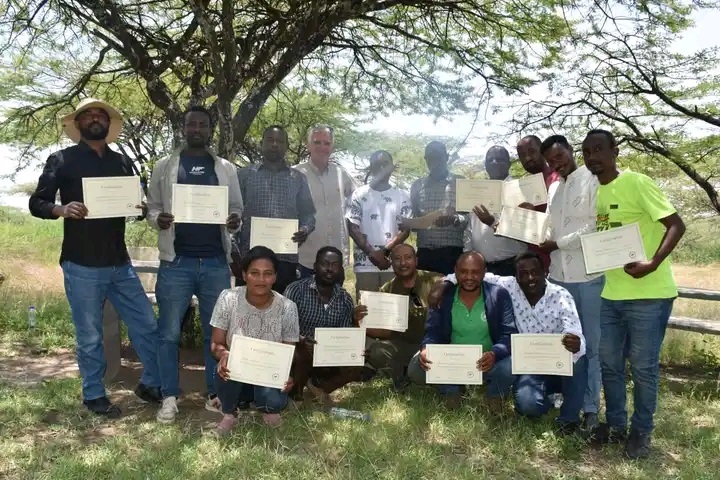
During this two-week training, basic flight skills of drones, advanced flight techniques, aerial photography, camera settings and composition, post-processing and editing, legal and ethical considerations, mapping techniques, flight planning and data collection, data processing and analysis, integrating drone data with GIS, mapping and monitoring wildlife habitats, and other related topics were addressed and discussed.
Finally, the General Director expressed his gratitude to the Gef 6 project team who facilitated the drone operation training, the financial support, and brining in the trainer, Mr. Justin, from African Bees.
Mr. Arega Mekonon, the manager of the Gef 6 project, on the other hand, stated that the training was the first of its kind in Ethiopia and was very important for ecological monitoring, law enforcement, human-wildlife conflict, and overall management purposes, and that it will be applicable and will continue.
Furthermore, trainees stated that the training provides a solid foundation for their work and wildlife management. They thanked the training organizer and the drone trainer in this way.
The trainer also on his part expressed and suggested that the trainees share and transfer their knowledge, as well as train others. He also stated that drone flying, safety, mapping, and integration with GIS help them improve and look at illegal activities, agricultural encroachment, illegal settlement in protected areas, wildlife management, and conservation planning,
Finally, trainees received certificates from the Director General and the trainer.