By Mekonnen Teshome
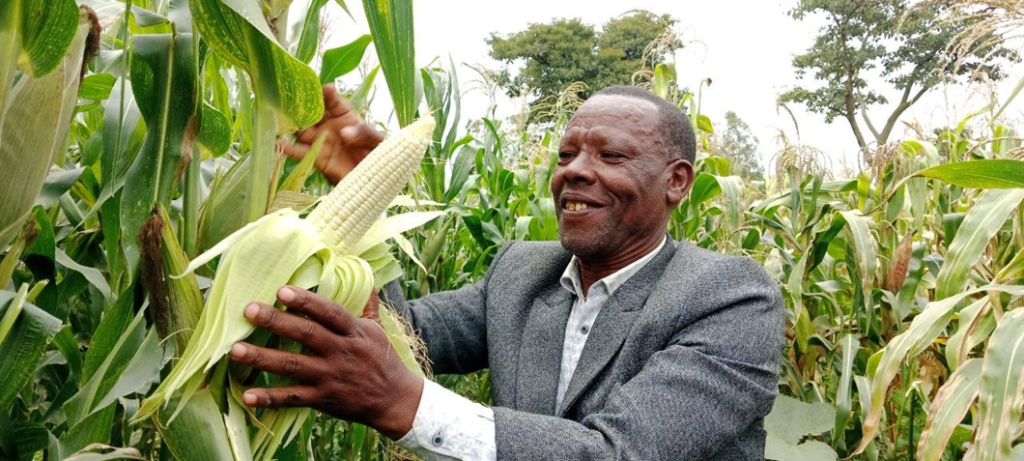
“I have never seen such a productive variety of maize in my entire life. It is really a blessing for my family and myself to access the seed of the TELA maize that enables us get a good money from the sale of the produce and consume very yummy and delicious maize Porridge,” says Mr. Kassa Kayemo, a resident in Bore Ejersa kebele, Dore Bafano Woreda, Hawassa Area of the Sidama Regional State in Ethiopia.
Chemical Free, Natural Pest Control
“The food staffs that we prepare from the traditional maize do not taste good, as the grain is highly exposed to the infestation of pests like Fall Army Worms [FAW] and Stem Borer Worms [SBW] and we feel the bad flavors in our food, however the TELA maize is enormously tasty ” Kassa told reporters.

He says that he is extremely glad and fortunate for harvesting 8000 kg maize from one hectare of his farm plot in the 2025 “Belg” season as he got the chance to plant the technologically advanced Genetically Modified (GM) “TELA maize” variety seed from the Ethiopian Institute of Agricultural Research (EIAR) as part of its on-farm trials of the variety in Ethiopia.
“We have been losing half [50%] of the production due to the devastating Fall Army Worms and Stem Borer Worms pests that infest our maize crops and we considered ourselves if we could harvest around 4000 kg maize from one hectare due to the infestation.”
Therefore, Kassa appealed to the EIAR maize researchers and the government of Ethiopia to sustainably continue the supply of the TELA Bt maize seed not only for him, but to the entire maize growing farmers in the country as he got significant benefit from it.
However, it seems that expediting the commercialization of the Tela Bt maize seed even after the Ethiopian government and the National Variety Release Committee (NVRC) approvals for the GM maize adoption to boost agricultural productions and ensure food security across the country due to the lengthy regulatory bureaucratic obstacles.
Tesfaye Disasa (PhD), a country coordinator for BMSS project at the Ethiopian Institute of Agricultural Research, indicate that despite the national commitment for technology adoption, the Ethiopian Environmental Protection Authority (EPA) is not properly discharging its responsibility is supporting and giving timely responses to letters summited to it from agricultural researchers.
“EPA takes several months and even more than a year to write back its responses to our letters. It is a pity to learn this reality while we have been expecting a proactive and agile regulatory activity from the authority,” Dr. Tesfaye pointed out.
EPA has grated its approval for the commercialization of the TELA maize following the necessary laboratory checks and series of on-farm demonstrations across major maize-growing agro-ecological zones. However, the agricultural research institute is still facing challenges to implement large scale maize cultivation due to stringent and old-fashioned preconditions.
One of the unviable expectations of the EPA is the issues of maintaining Zonation in the large scale cultivation of genetically modified Tela maize in the country.
In 2022, the then Director General of EPA in its letter addressed to EIAR demanded a precondition stating: “For wide cultivation, a specific cultivation area (zonation/modified maize cultivation belt) for cultivation of genetically modified maize need to be identified to avoid risk of cross pollination with conventional maize and to fulfill tracing and labeling requirements.” But, designating zones for various crops growing is no one’s duty; nobody knows whose agency’s responsibility is the zonation responsibility, even if it is workable, of course it is not, he said.
In connection with insecticide resistance management, EPA also noted “The ‘Refugia’ must be the same maize variety without the trait. Refugia are non-Bt maize planted to delay or prevent the development of pest resistance to the hybrid variety.
To this end, EIAR in its letter addressed to EPA also expressed that the precondition for maintaining Zonation during wide cultivation of the Tela maize has no legal background and it is also very impractical in Ethiopia where small holder farming is predominant.
Moreover, the idea of zonation is an old-fashioned abandoned by all counties across the world and appealed to EPA reconsider its recommendations so as to accelerate the wider adoption of the Bt maize in Ethiopia and contribute to the national food security and economic development aspiration.
The Only Things Farmers Need is the Seed
Despite the restrictive regulatory hurdles farmers in the Sidama and Oromia National Regional States who witnessed unprecedented yielding and productivity of the pest resistant Tela maize are still demanding the continued supply of the maize seed.

Simon Mengesha Chunora is also a farmer who lives in the Sama Egersa village, Dore Bafano Woreda, Hawassa Area of the Sidama National State, Ethiopia, and has been a maize farmer for over two decades and was also one of the farmers in Sidama who were selected for Tela maize farmers’ level environmental trial of ther TELA maize. He strongly agrees with farmer Kassa’s assertion that Tela maize is superior of all the maize varieties has ever known in his long years of farming activities.
For Simon, Tela maize is a game changer in terms of earning money, making agriculture more convenient and productive and ensuing chemical free agriculture sop that contributing to the human and environmental health. “I use to by pest control chemicals for over 2000 birr to protect the conventional maize variety from Fall Army Worms and Stem Borer Worms. But now, as Tela maize is pest-resistant, I dot need to bay chemicals for pest control and this significantly saves my money.”
At the Tela Bt maize is not exposed to infestation, I produced quality maize which has a value of 5400 Ethiopian Birr per quintal/100 kg/ while I used to sell the traditional one only for 3500 birr. As the variety is not attacked by worms, we get quality produce for market and for family consumption. “The food staff that we make from Tela maize at home “Dafeno”, “Hufissa”, “Qitta”, “Gefuma”, “Chancheneme” and the like are really very yummy and tasty as the maize is not infested by the pests.” Simaon said.
“We benefit not only from the TELA maize grain, but also from its straw fodder for our cattle. As the Tela maize is pest resistant, its stalk and dried stem is health and my cattle enjoy it very much.”
Simon says, as a result of his productivity due to the Tela maize his neighbors wanted to also grow Tela maize if they would get the seed and he appealed to the government to supply the seed of the Tela maize farmers including him.
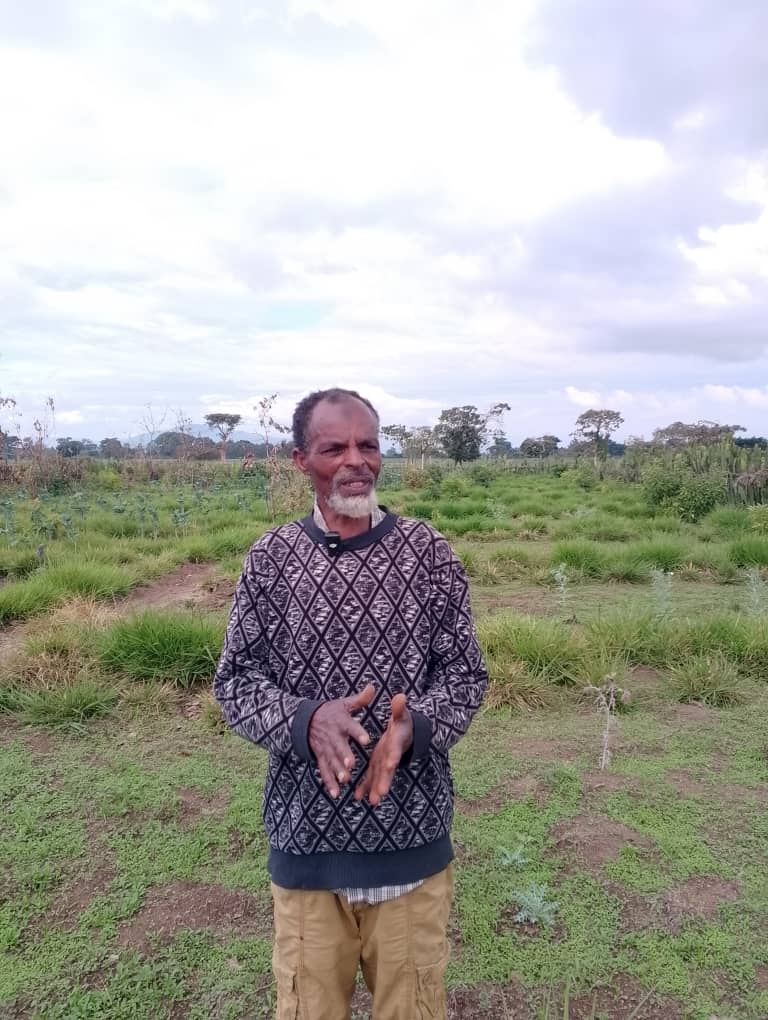
Mr. Kasim Dalu Daka is also a farmer living in Medo rural kebele, Dida Boke Woreda of the Shashemene town administration. He said that due to its pest resistant nature, he was able to get significant yield increment, twice higher than the conventional variety, from the Tela maize.
Moreover, he says, the TELA maize reduces the need for expensive chemical pesticide sprays, saving his production costs very meaningfully and it helped him to feed his family and sell the surplus. Therefore, he underlined, that farmers including himself should access the seed of the Tela maize and called for the EIAR to continue its efforts in supporting farmers in this regard.
True, under the Ethiopian law, farmers have all the right to access agricultural technologies and cultivate seed of their own choice. The 2013 seed proclamation of Ethiopia “it is essential to ensure that the supply of quality seed is made available to farmers, agro-pastoralists and other seed users”
Following several years of efforts, Ethiopia has approved the commercial release of genetically modified (GM) insect protected maize and farmers have the right to grow Bt maize as one of the alternatives.
Other farmers, can also grow the traditional varieties of maize and the country could preserve diverse genetic resources for the benefit of biodiversity conservation and protecting indigenous ones in various mechanism, of course Ethiopia is not the origin of maize genetic resources, but still can still do a lot to have diversified its maize varieties including the Bt one.
“The Zonation Requirement Violet Farmers Rights”
Experts are also expressing their concerns that the Ethiopian Environmental Protection (EPA) proposal of cultivating Bt maize and conventional ones in separation with zonation would hinder the Bt maize research and thereby denies farmers rights to cultivate the variety against the Ethiopian law that gives farmers the freedom to choose.
Although zonation has historically been promoted by some environmental groups as a way to ensure ecological safety, it is increasingly viewed as rigid and outdated. Coexistence, by contrast, offers a more flexible and economically viable approach, particularly in regions dominated by smallholder farming systems, as is the case across much of Africa
Globally, many countries—including those with stringent biodiversity regulations—have moved away from strict zonation policies. In the United States, for example, zonation is not mandatory; instead, the system relies on coexistence frameworks supported by market mechanisms, stewardship practices, and voluntary identity preservation. In such systems, producers of non-GMO or organic crops often bear the responsibility of maintaining product purity to access premium markets.
Zonation requires strict geographic separation between GMO and non-GMO crops, which can be both impractical and economically restrictive. Coexistence allows farmers to make production decisions based on market demand, price signals, and local conditions—thereby promoting efficiency and innovation.