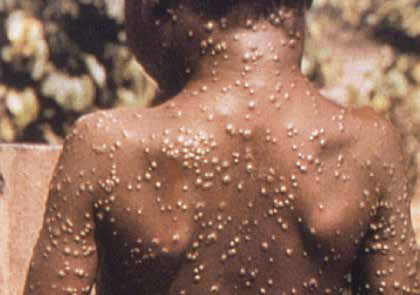
The Ethiopian Public Health Institute (EPHI) has confirmed that a 21-day-old infant has been infected with the Mpox virus, Ethiopian Ministry of Health said today in a statement.
The first-ever Mpox case was confirmed as the public health institute was doing a surveillance taking samples from suspected patients in Moyale City Administration, Oromia Regional State in Ethiopia.
The Health Ministry attributed the public health institute that the father of the 21-day-old baby boy had traveled to a neighboring country where cases on Mpox was confirmed. The geographic areas where he has been moving and individuals who had close contact with the person are being identified and monitored.

The baby and his mother have been quarantined going through further testing and they are in a good health condition so far, the statement indicated.
The Ministry of Health has been working hard to prevent the disease from entering the country and to contain it if it does occur in Ethiopia. An emergency response center has been established at the Ethiopian Public Health Institute to contain the disease.
Moreover, it indicated, special health facilities have been set up to quarantine suspected cases, and various health facilities have completed the necessary preparations to treat and provide appropriate services to those infected with the disease.
According to the statement, Mpox is a disease that is occurring in various African countries, and the Africa Centers for Disease Control and Prevention, headquartered in Addis Ababa, and the World Health Organization are working together to prevent and control the disease.
The Ministry of Health will continue to strengthen its work to prevent and control the disease in collaboration with these and other stakeholders.
“We urge anyone who has been in contact with individuals infected with the Mpox virus to immediately seek medical attention and seek appropriate medical care if they experience the following symptoms: rash, cough, fever, headache, fatigue, and back pain,” it said.
“We also urge everyone to practice good personal hygiene and wear a face mask when in close contact with patients with the above symptoms.”
As this disease has only been reported in a limited number of areas, our society can continue its normal life without panicking, the statement said.
The Health Ministry urges everyone to follow the latest information from it and the Ethiopian Public Health Institute to protect themselves and their families from this disease.