By Mekonnen Teshome
Addis Ababa, Ethiopia — Ethiopia may be known globally for constructing Africa’s largest hydroelectric project, the Grand Ethiopian Renaissance Dam (GERD), and for undertaking one of the most ambitious urban renewal programs on the continent. But the country’s leadership says its most consequential investment lies elsewhere: in its youngest citizens.
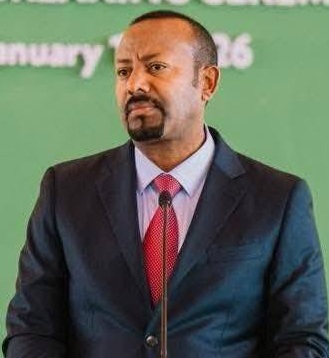
Speaking on 10 January 2026, Prime Minister Abiy Ahmed said Ethiopia’s long-term national transformation depends less on megaprojects than on sustained investment in Early Childhood Development (ECD). His remarks came during a national address marking the launch of Ethiopia’s new international airport.
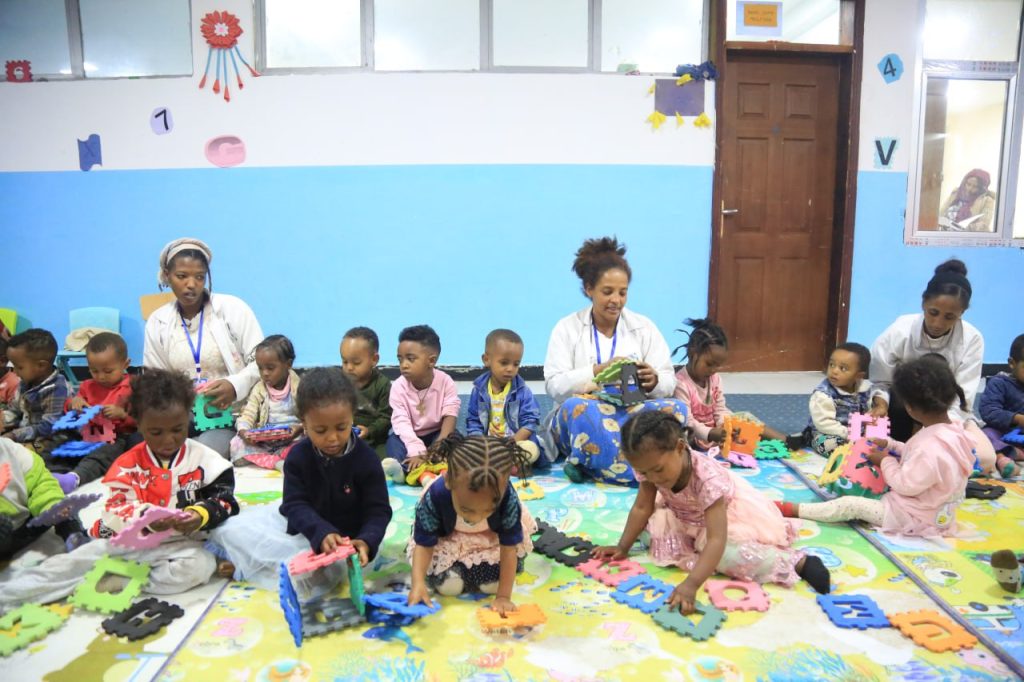
“Early Childhood Development is a focused and sustained effort centered on children,” the Prime Minister said. “Over the past five to six years, we have constructed more than 35,000 kindergartens across Ethiopia. We have also developed green public spaces to promote children’s physical well-being and social interaction, including more than 1,600 small stadiums for young children in Addis Ababa alone.”
According to the Prime Minister, these initiatives form the foundation of Ethiopia’s broader human development vision, aimed at nurturing cognitive, social, and physical growth from the earliest stages of life.
Transforming Urban Spaces for Children
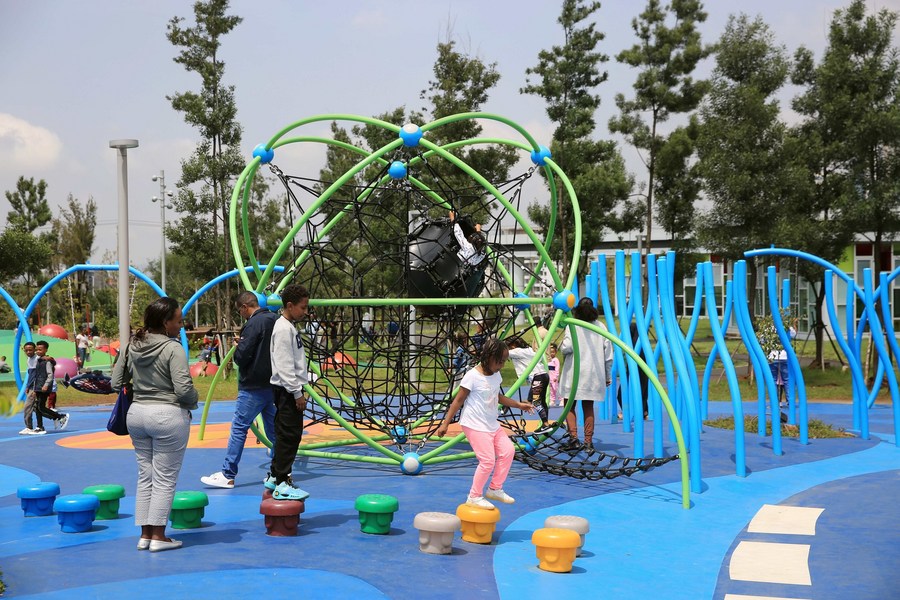
At the city level, the Addis Ababa City Administration is implementing a large-scale ECD program focused on reclaiming and redesigning public spaces for children. The initiative aims to construct 12,000 safe, inclusive, and sustainable playgrounds across all city neighborhoods by 2026.
By mid-2025, more than 2,113 playgrounds had already been completed, integrating green design, safety standards, and age-appropriate recreational facilities. City officials say the program is reshaping Addis Ababa’s urban landscape while improving children’s health, learning readiness, and social interaction.
These efforts are part of the broader citywide initiative known as “Children: The Future Hope of Addis Ababa” (FHOA)—a comprehensive, multi-sectoral ECD program launched in March 2021 under the leadership of Mayor Adanech Abiebie. The program brings together education, health, urban planning, and social protection sectors to improve outcomes for young children from birth to Six years old and their families.
Center of Excellence: A Regional Hub for Early Childhood Development
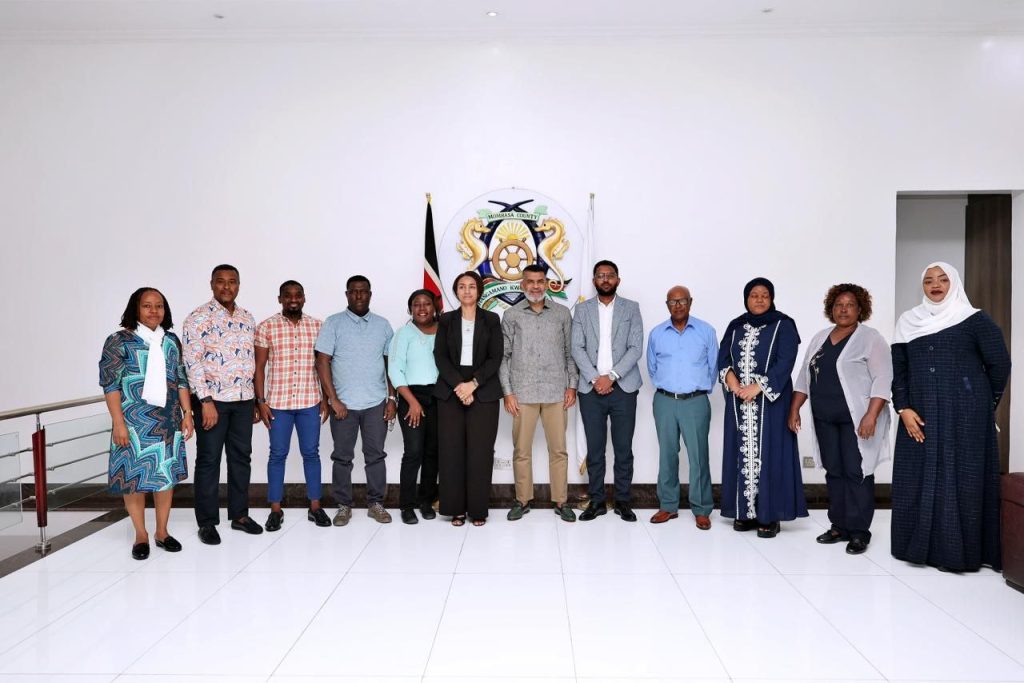
Ethiopia’s growing focus on early childhood has also positioned Addis Ababa as a regional center of excellence. Established in 2022, the African Centre for Early Childhood Development (AfC-ECD) serves as a research, policy, and technical support hub, strengthening ECD systems not only within Ethiopia but across Africa.
In January 2026, a delegation of AfC-ECD experts completed a technical mission to Mombasa County, Kenya, at the invitation of the county government. The visit, held from 11 to 14 January, focused on assessing existing early childhood services and preparing for a county-wide ECD baseline study.
The initiative aims to generate robust evidence to guide policy, investment, and service delivery for children during their most critical developmental years, with technical support provided by Addis Ababa’s AfC-ECD.
Scaling Up Evidence-Based ECD Nationwide
Within Ethiopia, AfC-ECD has accelerated the national scale-up of ECD programs through rigorous baseline surveys, workforce capacity building, and strengthened regional coordination.
Comprehensive ECD baseline surveys have been completed in Amhara, Central Ethiopia, and Sidama regional states. The surveys examined children’s cognitive, language, social-emotional, and physical development, as well as community engagement and the policy environments supporting early childhood services.
The research followed a methodologically rigorous approach, combining quantitative and qualitative tools and fully adopting digital data collection using Kobo Toolbox. Standardized training manuals, ethical protocols, and field operation guidelines were developed to ensure consistency and data quality.
In partnership with Bahir Dar University, Hawassa University, and Wachemo University, AfC-ECD trained 139 enumerators and supervisors, alongside 108 health extension workers, strengthening local technical capacity and ownership.
High-level regional kickoff events in Bahir Dar, Hawassa, and Hosaina brought together senior government officials, sector bureaus, academic institutions, community leaders, and development partners, reinforcing political commitment and cross-sectoral collaboration.
Data analysis has now been completed, and regional baseline reports are under preparation to inform planning, investment, and equitable service delivery.
AfC-ECD’s work has increasingly influenced policy and decision-making. In April 2025, the Dire Dawa ECD Baseline Survey Report was officially disseminated during a high-level workshop attended by federal and regional officials, religious leaders, media, and development partners. The dissemination included a full technical report, summary findings, and a policy brief tailored for decision-makers.
Similarly, the Oromia Regional State ECD Baseline Survey was reanalyzed and refined to improve data quality and usability for future programming and donor engagement.
The Center has also supported regions in developing ECD roadmaps, several of which are now finalized and awaiting endorsement. These roadmaps are being aligned with baseline findings to ensure responsiveness to regional needs.
Capacity Building
Investments in the ECD workforce have expanded significantly. Six training manuals—covering health and early childhood education—have been developed and translated into Amharic. Training-of-trainers programs have reached hundreds of health extension supervisors and pre-primary school leaders across multiple regions.
In Dire Dawa, cascading trainings have reached more than 220 frontline professionals, with further sessions planned.
Looking ahead, AfC-ECD is developing a comprehensive assessment to strengthen monitoring, evaluation, and learning systems nationwide—aiming to ensure that Ethiopia’s expanding ECD agenda remains evidence-driven, well-coordinated, and sustainable.
As Ethiopia continues to invest in major infrastructure and urban transformation, officials say the country’s most strategic investment is unfolding quietly—in classrooms, playgrounds, and communities where young children are given a stronger start in life.
For Ethiopia’s leadership, the message is clear: the nation’s future growth depends not only on concrete and steel, but on the human potential nurtured in its earliest years.