By Mekonnen Teshome
KIGALI, Rwanda (September 2, 2026) — Prime Minister of Rwanda Dr. Justin Nsengiyumva officially opened the landmark 20th edition of the Africa Food Systems Forum (AFSF) Summit in Kigali today, marking two decades of collaborative efforts to transform agriculture across the continent.
Addressing an assembly of political leaders, investors, researchers, smallholder farmers, and youth, the Prime Minister commended the gathering’s growth from a modest initiative into Africa’s flagship platform for policy, innovation, and agricultural investment.
Emphasizing the urgency of this year’s theme—“Investing in Africa’s Agri-Food Systems: Nourishing Nations, Growing Jobs, Building Resilience”—Dr. Nsengiyumva highlighted the sharp contrast between Africa’s vast natural resources and its persistent food insecurity. Despite possessing rich arable land, ample sunshine, and a vibrant youth demographic, the continent saw approximately 309 million people suffer from hunger in 2025, with over half the population experiencing moderate to severe food insecurity.
The Prime Minister called on leaders to urgently translate raw potential into widespread productivity and economic prosperity.
To address these challenges, Dr. Nsengiyumva urged a paradigm shift in how agriculture is perceived by both the youth and the private sector. He called on young Africans to view agribusiness not as a last-resort occupation, but as a dynamic, modern economy capable of providing dignified employment and entrepreneurship.
Simultaneously, he challenged private investors to move past the perception of agriculture as high-risk, pointing to vast opportunities across irrigation, digital services, logistics, and processing that yield strong returns throughout the value chain.
The Prime Minister reaffirmed Rwanda’s commitment to the Comprehensive Africa Agriculture Development Programme (CAADP), specifically backing its newly introduced Strategy and Action Plan for 2026–2035.
He noted that driving meaningful outcomes for everyday households requires continental alignment, joint resource mobilization, scaling proven innovations across borders, and expanding resilient infrastructure.
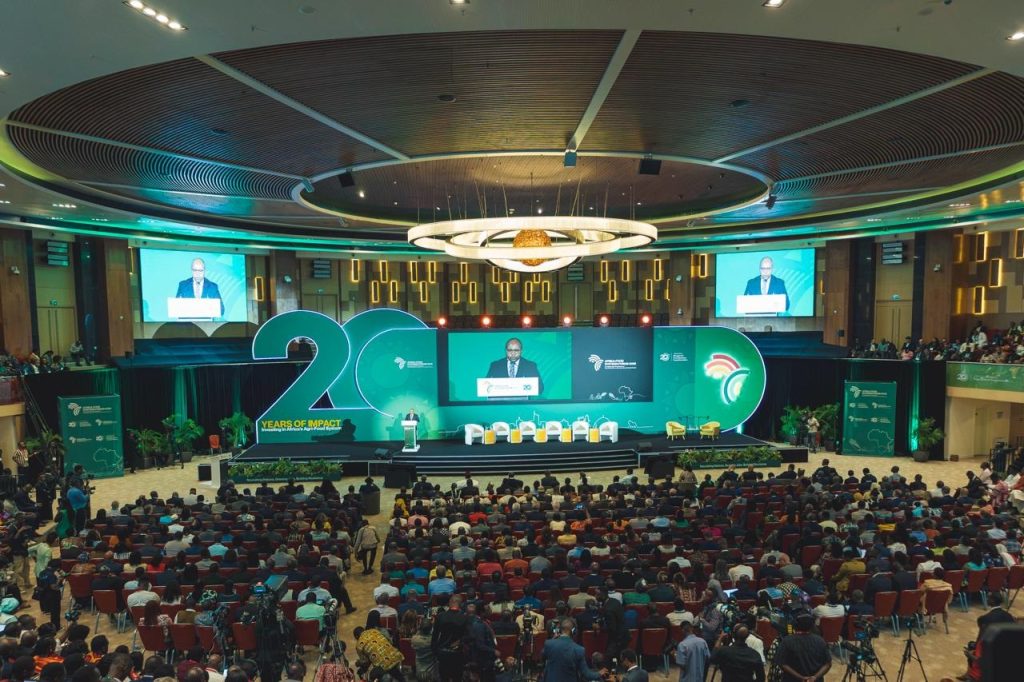
Concluding his address, Dr. Nsengiyumva posed three pivotal challenges for delegates to solve: converting ambitious pledges into finance-ready plans, strengthening interconnected supply chains rather than isolated segments, and scaling successful pilots across diverse communities.
The answers to these questions, he asserted, will decide how effectively the continent turns its agricultural vision into long-term resilience.
Speaking at the opening session, outgoing AGRA Board Chair and former Prime Minister of Ethiopia, Hailemariam Desalegn, marked the end of his leadership term by reflecting on two decades of forum impact and laying out an ambitious vision centered on high-value produce, technological adaptation, and youth innovation.
Central to Desalegn’s speech was a call for African agriculture to move beyond traditional subsistence farming. He urged nations to aggressively commercialize horticulture—focusing on vegetables, fruits, and high-value cash crops—and to build resilient supply networks.
By prioritizing perishable and high-demand produce, Desalegn argued, the continent can turn agricultural potential into an economic engine that drives both food security and commercial viability.
“Our journey was born from a simple yet radical conviction that Africa’s smallholder farmers were not a welfare problem to be managed, but an economic powerhouse to be unleashed,” Desalegn declared. He noted that empowering these farmers with the necessary tools, capital, and market access remains essential for economic transformation.
To sustain this transition, Desalegn stressed the need to engage younger demographics by modernizing the sector’s image and practical infrastructure. He pointed out that young people will only embrace agriculture if it is positioned as a modern, digital, and profitable enterprise. Expanding vegetable production, agribusiness entrepreneurship, and specialized processing facilities presents direct pathways for youth employment, placing tech-savvy innovators at the forefront of the agricultural revolution.
Concluding his address, Desalegn called for immediate private-sector leadership to translate existing policy frameworks into large-scale execution. He noted that while growth blueprints are established, substantial private investment is required to deploy cold-chain logistics, reduce post-harvest losses, and scale digital technologies to help Africa establish a high-value food system capable of competing globally.
In his keynote address, AFSF Managing Director Amath Pathé Sene reflected on twenty years of driving agricultural reform while laying out a bold mandate to pivot the organization from dialogue to direct execution. Sene highlighted the platform’s evolution from a simple ambition into a pivotal continental meeting ground where political leadership, smallholder farmers, entrepreneurs, and investors align science with policy. He emphasized that the true success of the platform lies in its human impact—the individual farmers, young innovators, and cross-sector partnerships enabled through two decades of collaboration.
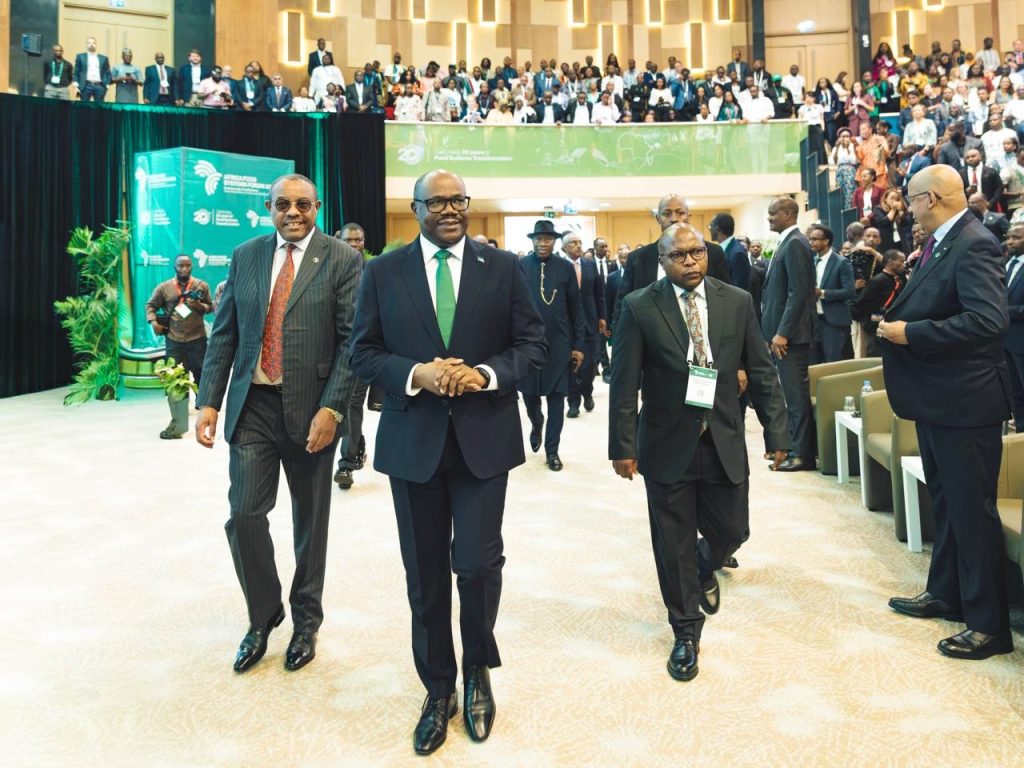
Addressing a distinguished delegation—including former Ethiopian Prime Minister Hailemariam Desalegn, former Nigerian President Goodluck Jonathan, and former Botswana President Mokgweetsi Masisi—forum leadership underscored the changing dynamics of the continent. Rapid urbanization, a booming youth demographic, technological advances, and accelerating climate threats require a fundamental shift in how food production and distribution are managed.
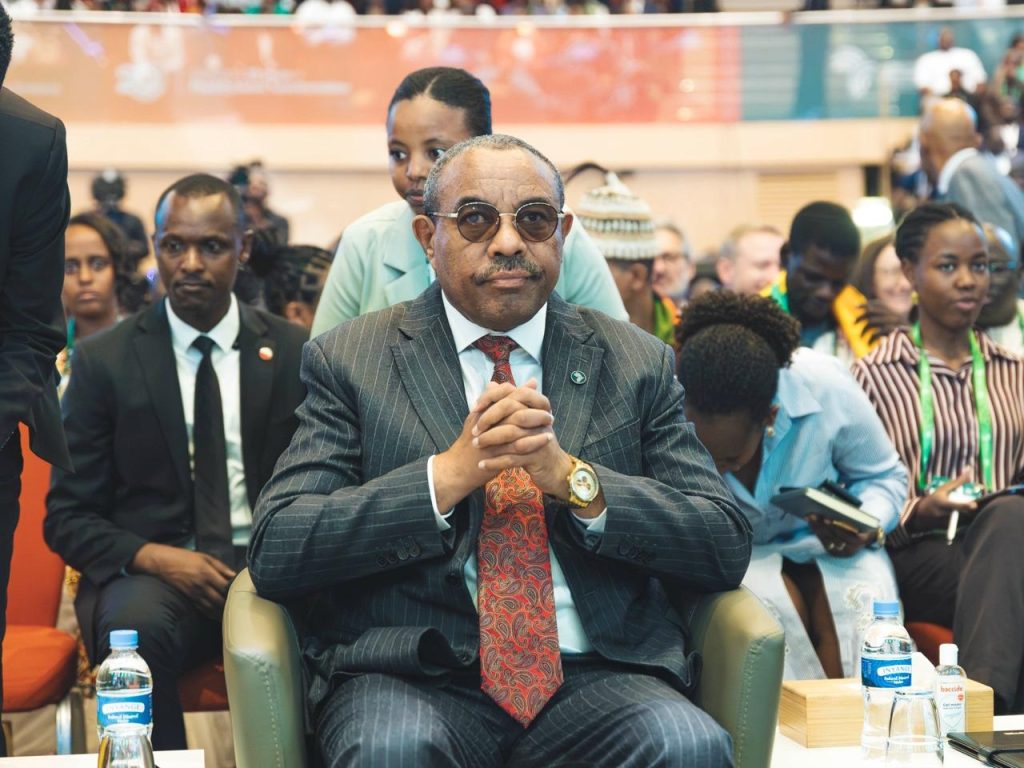
To meet these challenges, the AFSF announced a strategic transition in its operational focus. The organization is shifting its primary objective from an annual convening event to a year-round accountability and implementation platform.
Moving forward, the forum’s strategy will prioritize translating political commitments into concrete capital deployment, business development, and measurable job creation for young Africans.
Looking ahead, Sene challenged attendees to focus on speed, delivery, and institutional accountability. He concluded that the fundamental question facing the continent is no longer whether Africa can transform its agricultural ecosystem, but how quickly stakeholders can mobilize investments and partnerships to achieve food security.
The 2026 Africa Food Systems Forum in Kigali centers on the overarching theme, “Innovate, Accelerate and Scale: Delivering food systems transformation in a digital and climate era.” As the continent’s largest annual agricultural gathering, the event brings together over 5,000 delegates—including African heads of state, policymakers, and private investors—to focus on mobilizing capital through practical mechanisms like the Deal Room, which connects agribusinesses directly with investors.
This builds on the success of last year’s summit in Senegal, which showcased over $6 billion in potential investment programs.
This year’s agenda directly aligns with the African Union’s Kampala CAADP Strategy and Action Plan (2026–2035), a continental benchmark targeting $100 billion in agrifood investment and a 45% increase in agricultural output by 2035.
The framework establishes ambitious goals to triple intra-African agrifood trade, boost locally processed food to 35% of agrifood GDP, and halve post-harvest losses.
Overall, the forum highlights a broader strategic shift across Africa from simply increasing crop yields to creating sustainable jobs, driving industrialization, and improving rural livelihoods.