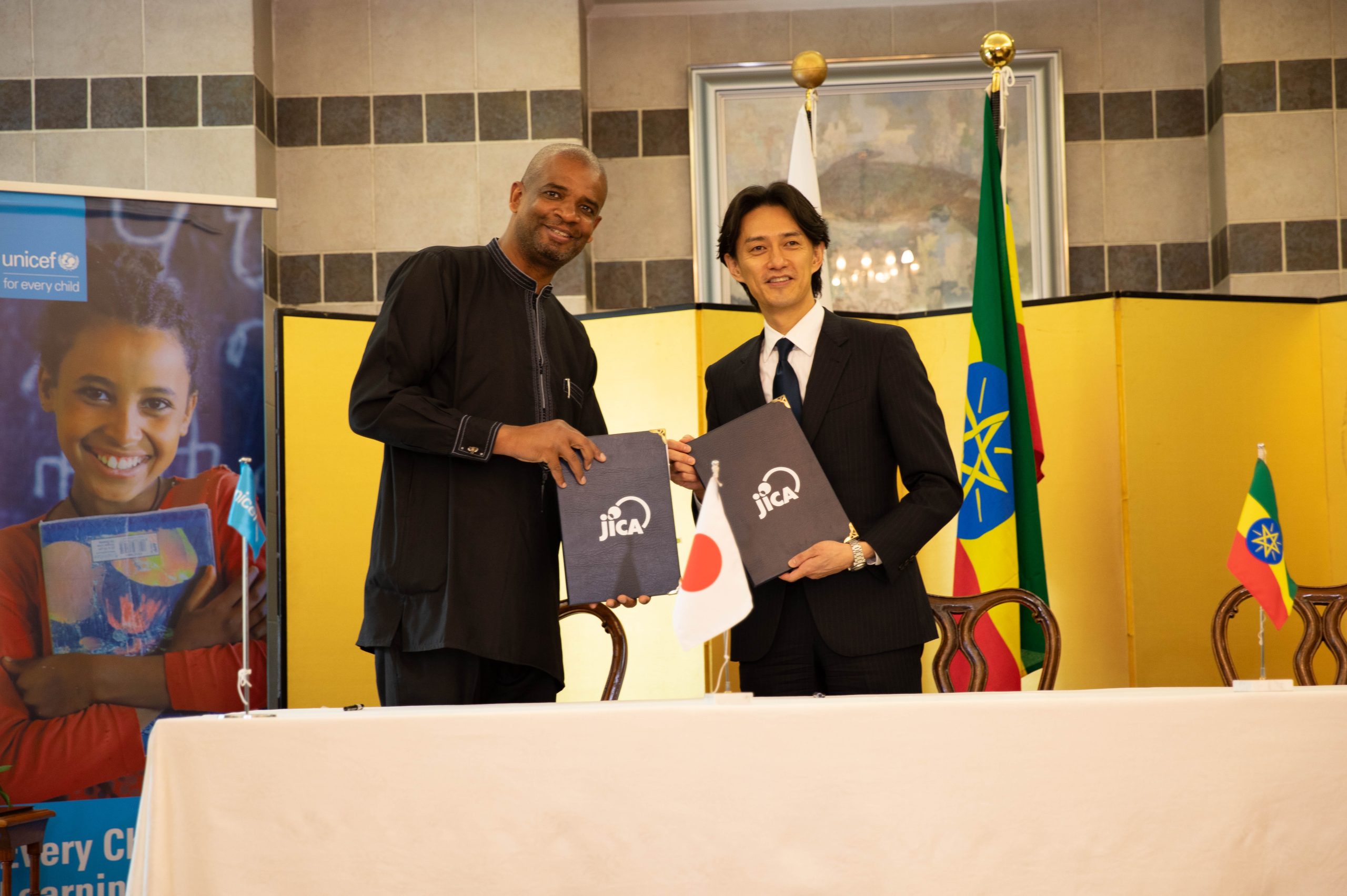
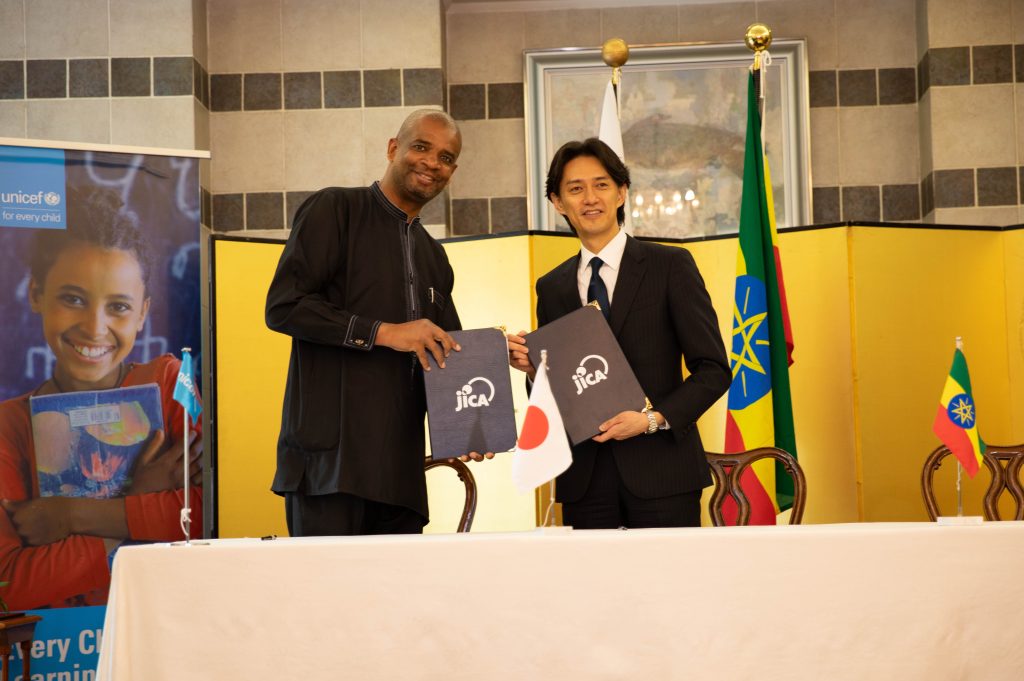
The Government of Japan, through its partnership with UNICEF, has granted $8.1 million (nearly 437 million Ethiopian Birr) to improve the lives of children with learning opportunities through quality education and provide water, sanitation, and hygiene (WASH) services
in conflict-impacted regions of Amhara and Tigray in Ethiopia, UNICEF indicated in a statement it sent to https://www.africandemystifier.com/.
According to Ms. Ito Takako, Ambassador of Japan to Ethiopia, Japan is committed to “Investment in People” in Africa, including Ethiopia. And this project will contribute to investment in especially children who will be future assets for this country, by offering a better environment for learning and developing their skills.
“This grant will primarily focus on restoring WASH services in schools, which is critical to improving their quality of life, health and well-being.” He added.
Due to the conflict in northern Ethiopia, over 4,600 schools in Amhara and nearly 2,000 schools in the Tigray region were reportedly damaged totally and/or partially leaving over 700,000 children (50 per cent girls) out of school due to the impacts of the conflict.
This funding aims to scale up the services for children by restoring and rehabilitating damaged
schools in Amhara and in Tigray regions and provide them with complementary WASH facilities with disability-friendly access.
UNICEF intends to adopt innovative and durable methods of technologies to build schools to provide
local and sustainable solutions. In addition, UNICEF aims to construct water supply systems, latrines and also conduct community conversations to promote sanitation and hygiene.
“UNICEF is extremely grateful to the Government of Japan for this generous contribution,” said
Aboubacar Kampo, UNICEF Representative in Ethiopia. “Children are the most vulnerable victims in any conflict and they are often forced to drop out of school due to lack of services. The restoration of education and WASH facilities in schools will help children survive, thrive, and reach their full potential.”
In both regions, the funding aims to reach over 12,000 students by constructing 136 classrooms aswell as nearly 47,700 community members with access to WASH facilities, including 34 latrines.