By Mekonnen Teshome (Opinion)
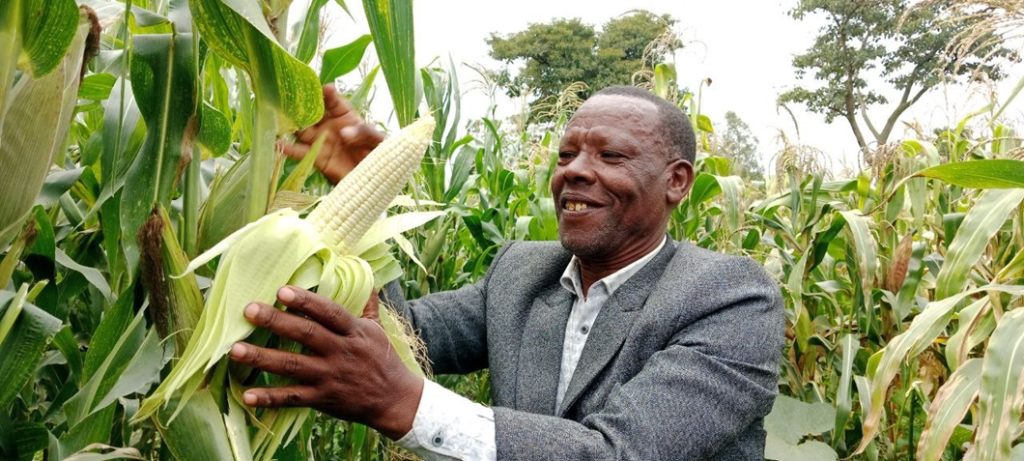
Ethiopia is increasingly exploring genetically modified organism (GMO) crops as part of its broader strategy to strengthen food security, boost agricultural productivity, and respond to climate-related challenges such as drought and pest infestations. The rationale is clear: improving yields of staple crops, reducing dependence on chemical pesticides, lowering foreign exchange expenditure on food imports, and supporting industrial growth—particularly in sectors like cotton.
Why Ethiopia Is Adopting GMO Crops ?
The adoption of GMO technologies in Ethiopia is largely driven by the urgent need to enhance food security and climate resilience. With millions facing undernourishment and recurrent drought, drought-tolerant varieties such as TELA maize present a promising solution to stabilize food production. Similarly, Bt cotton—engineered to resist pests—offers farmers a practical way to improve yields under increasingly difficult farming conditions.
Beyond productivity gains, GMO crops also contribute to environmental sustainability and economic development. Pest-resistant varieties reduce the need for chemical pesticides, lowering both production costs and environmental risks. Increased domestic output can ease reliance on imports, conserving scarce foreign exchange while strengthening local industries such as textiles. Meanwhile, ongoing research is advancing locally adapted solutions, including disease-resistant enset and improved maize and sorghum varieties tailored to Ethiopia’s agroecological conditions.
Why Many Countries Prefer Coexistence Over Zonation
Globally, many countries—including those with stringent biodiversity regulations—have moved away from strict zonation policies. In the United States, for example, zonation is not mandatory; instead, the system relies on coexistence frameworks supported by market mechanisms, stewardship practices, and voluntary identity preservation. In such systems, producers of non-GMO or organic crops often bear the responsibility of maintaining product purity to access premium markets.
Although zonation has historically been promoted by some environmental groups as a way to ensure ecological safety, it is increasingly viewed as rigid and outdated. Coexistence, by contrast, offers a more flexible and economically viable approach, particularly in regions dominated by smallholder farming systems, as is the case across much of Africa.
Zonation requires strict geographic separation between GMO and non-GMO crops, which can be both impractical and economically restrictive. Coexistence allows farmers to make production decisions based on market demand, price signals, and local conditions—thereby promoting efficiency and innovation.
Why Coexistence Is Better Suited for Ethiopia
Ethiopia’s agricultural landscape is characterized by small, fragmented, and dispersed farms. Under such conditions, enforcing zonation—often requiring large buffer zones and strict segregation—is both logistically difficult and costly. Coexistence, on the other hand, relies on flexible, farm-level practices such as staggered planting, buffer strips, and careful crop management, making it more adaptable to smallholder systems.
Importantly, coexistence preserves farmers’ autonomy. It enables them to choose between GMO, conventional, or organic farming based on profitability and market opportunities. Zonation, by contrast, risks imposing rigid production systems that may not align with farmers’ economic interests.
Coexistence also supports market diversification. It allows non-GMO and organic producers to maintain product integrity and access premium niche markets, while still enabling other farmers to benefit from improved yields and pest resistance through GMO adoption.
From a cost and efficiency perspective, coexistence frameworks—successfully implemented in countries such as South Africa, Brazil, and the United States—tend to be less expensive and more practical than the highly regulated and costly systems associated with zonation, as seen in parts of Europe.
The Practical Limits of Zonation
Zonation faces significant practical and economic challenges. Ensuring complete physical segregation between GMO and non-GMO crops is extremely difficult due to natural factors such as pollen drift, which can occur over considerable distances. This makes the concept of strictly defined “zones” difficult to sustain in practice.
Moreover, implementing zonation requires substantial investment in monitoring, enforcement, and supply chain control. These high administrative and operational costs can strain limited public resources, particularly in developing countries.
There are also market risks. Even minimal contamination can jeopardize organic certification and access to high-value export markets, especially in regions like Europe and Japan. As a result, zonation can create uncertainty and conflict among farmers, sometimes leading to disputes over land use and production rights.
A More Pragmatic Path Forward
Given these realities, coexistence offers a more balanced and pragmatic pathway for Ethiopia. It enables the country to harness the benefits of agricultural biotechnology—such as improved resilience and productivity—while preserving traditional farming systems and market diversity.
Rather than enforcing rigid geographic separation, Ethiopia would benefit from investing in clear coexistence guidelines, farmer training, and stewardship practices that minimize risks while maximizing opportunities. This approach not only aligns with the country’s smallholder-dominated agricultural system but also supports gradual, inclusive, and sustainable agricultural transformation.