

BY MEKONNEN TESHOME
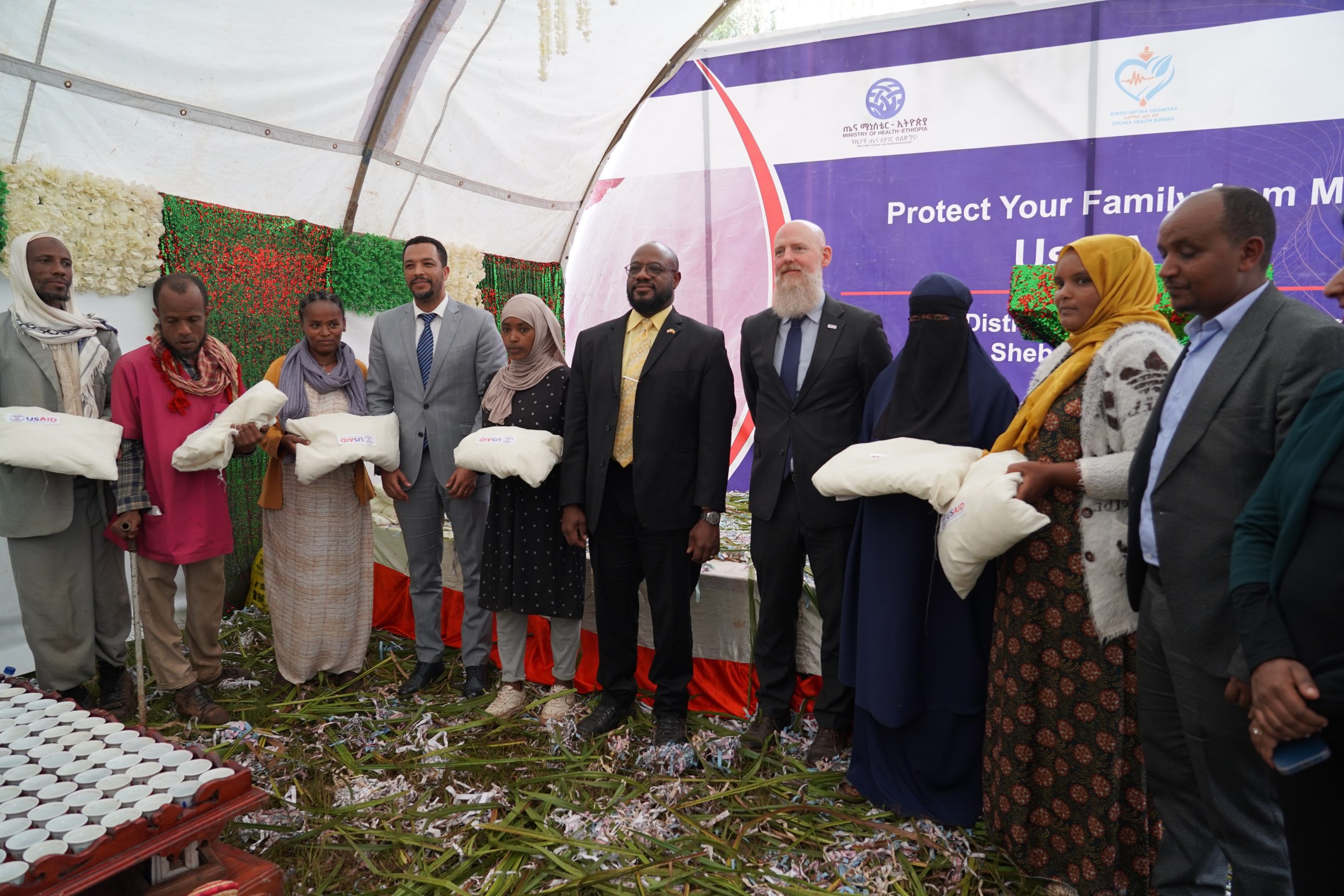
Addis Ababa, Ethiopia (August 23:2024) : The US Embassy in Addis Ababa said that it has distributed 1.6 million USAID -procured insecticide- treated nets to curb malaria spread.
Insecticide- treated nets considered to be effective to curb mosquitoes bites
“The United States distributed 1.6 million new generation insecticide- treated nets in 28 high risk areas, each infused with two types of insecticide and considered to be the most effective available against the mosquitoes that transmit malaria,” stated the Embassy Friday in a statement sent to African Demystifier.
According to the statement, the U.S. Ambassador to Ethiopia and the State Minister of Health helped to distribute approximately 85,000 insecticide-treated nets (ITNs) at the Shebe Sombo Health Center in Jimma Zone, Oromia Region on August 21, 2024 in response to a dramatic spike in malaria cases in Ethiopia over the last eight months.
After a decade of declining malaria cases, which saw the number of cases drop below one million in 2019, Ethiopia experienced a spike this year with cases reaching five million, it added.
“These nets are the best way to prevent the disease,” said Ambassador Ervin J. Massinga. The nets are expected to protect at least three million people.
The United States Agency for International Development (USAID) procured the nets, costing USD 7 million through the U.S. President’s Malaria Initiative (PMI) which has been working with the Federal Ministry of Health to fight malaria in the country since 2008. Malaria affects nearly 75 percent of Ethiopia, putting 75 million people – 69 percent of the population – at risk.
PMI has delivered 53.3 million mosquito nets to date and sprayed 700,000 homes annually since the program’s inception. PMI has delivered 9.4 million rapid diagnostic tests and 15.6 million fast acting malaria medicines since 2008.
In sub-Saharan Africa, ITNs have reduced malaria by 50 percent, a region accounting for 94 percent of all malaria cases and 95 percent of deaths. “These nets are the best way to prevent the disease,” said Massinga, “but there’s a catch,” he warned. “They only work if used consistently. You need to sleep under the nets every night,” he advised.
Ethiopia among fifteen countries most heavily impacted by malaria in the world
Ethiopia is among the fifteen countries most heavily impacted by malaria in the world. Malaria is highly seasonable and unstable in the country, so adults and children are equally at risk for infection and disease.
Because peak malaria transmission often coincides with the planting and harvesting season, the malaria risk is shared among older children and working adults in rural agricultural areas.
“If you use the nets consistently,” said the Ambassador, “we may gain the upper hand on what is currently a dramatic uptick in malaria cases here in Ethiopia.”
For 120 years, the United States and Ethiopia have partnered in health and education, agriculture and food security, science and the environment, and many other areas to improve the lives of all Ethiopians.
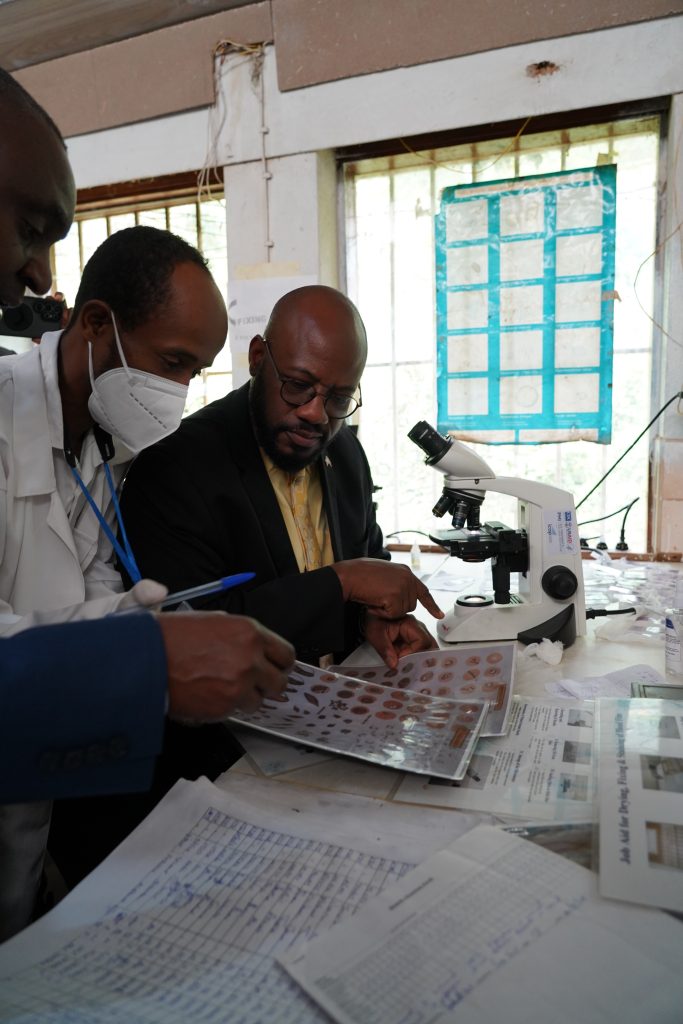
According to WHO, malaria is a life-threatening disease primarily found in tropical countries. It is both preventable and curable. However, without prompt diagnosis and effective treatment, a case of uncomplicated malaria can progress to a severe form of the disease, which is often fatal without treatment.
Malaria is not contagious and cannot spread from one person to another; the disease is transmitted through the bites of female Anopheles mosquitoes. Five species of parasites can cause malaria in humans and 2 of these species – Plasmodium falciparum and Plasmodium vivax – pose the greatest threat. There are over 400 different species of Anopheles mosquitoes and around 40, known as vector species, can transmit the disease.
This risk of infection is higher in some areas than others depending on multiple factors, including the type of local mosquitoes. It may also vary according to the season, the risk being highest during the rainy season in tropical countries.
U.S. foreign assistance has always had the twofold purpose of furthering America’s interests while improving lives in the developing world. USAID carries out U.S. foreign policy by promoting broad-scale human progress at the same time it expands stable, free societies, creates markets and trade partners for the United States, and fosters good will abroad.
