
Ethiopia: Tigray Towns To Get Drinking Water, Sanitation Services Soon
The Impact of Conflict on Water and Sanitation Services
The Ethiopian government confirmed that it has deployed experts and technicians to repair safe drinking water facilities and infrastructures destroyed in Ethiopia’s northern regional state Tigray due to the civil war erupted in November 2020 and continued almost for two years.
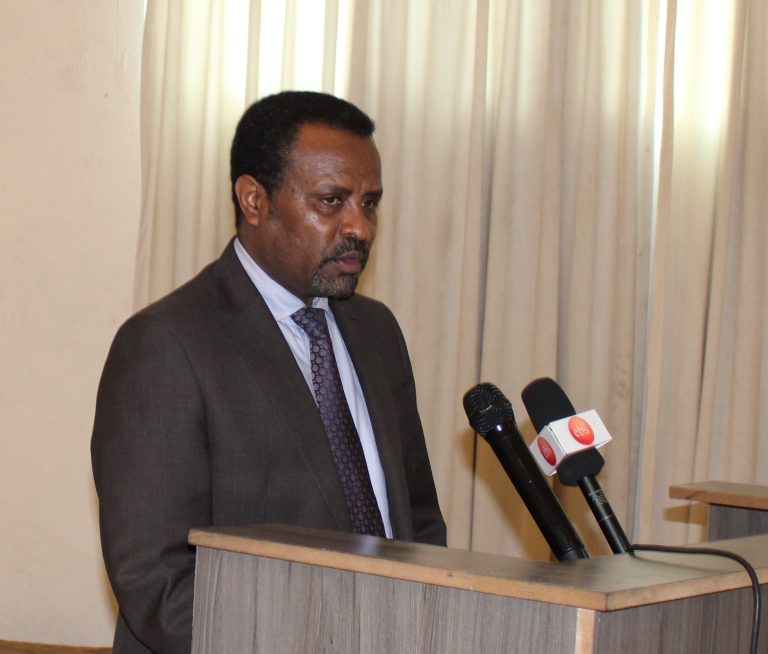
This was announced yesterday by the Minister of Water and Energy, Habtamu Itefa where he underscored that the repairing and erection of drinking water infrastructures which were destroyed due to the war in the northern part of Ethiopia has been well in progress and now expanding to the Tigray regional state.
According to the Minister, the reconstructions over the past one year together with the the Amhara and Afar regions have been successfully completed and now drinking water accessibility is ensured.
As peace has been restored in Amhara and Afar regions over the last year, successful activities of water facilities rehabilitation were carried, the Minister added.
The Ministry has now dispatched an emergency response team to Tigray region following the peace agreement and coordinated activities are well under way to restore drinking water facilities.
The experts and technicians who are deployed in Tigray are expected to replace damaged and looted water pumps and pipes other equipments.
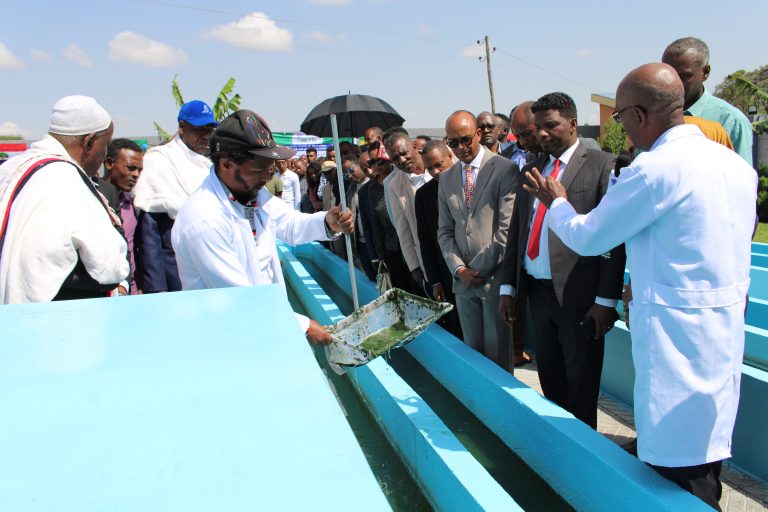
So far, the Minister indicated, the renovation and rebuilding activities of water facilities in Shire, Axum and Adwa towns of the Tigray state have been successfully accomplished.
The Ministry recently sent a team of official to visite Tigray region so as to assist the Water Bureau of the regional state reorganizes by availing various logistical support and equipment including, Habtamu said, adding that the Ministry will keep on its support to build the capacity of Tigray through trainings.
The minister also said that a national committee has been established to study the problems of the Mekele town water project and pointed out that his ministry is committed to address drinking water challenges bit by bit.
5 billion birr required to repair water infrastructure Four Tigray cities
Earlier the Ministry of Water and Energy announced that equal to five billion birr needed to repair the water infrastructure destroyed in the recent Tigray military conflict.
It was indicated that destruction has been huge in the towns of Aksum, Sire, and Shiraro, Aschalew Tesfaye, head of emergency drinking water and special case officer at the Ministry of Water and Energy told the media.
In the region, 75 percent of motorized water infrastructure and 71 percent of non-motorized water infrastructure were destroyed, Aschalew said.
According to a research conducted by then, that oil from 14 transformers in Shire town was looted and used to power generators and cars.
A dam located in Adwa town provides 33 percent of Aksum’s water supply but it has been unable to be functional since the pipeline that transports water from the dam to Axum has been damaged.
“Axum’s residents are now accessing water from five wells. Residents currently receiving only 40 percent of the water, but once the pump is installed, they will be able to receive 60 percent more water,” Aschalewu said.
The Ministry of Water and Energy determined that 301 damaged water facilities in 70 districts in northwestern Tigray needed to be repaired. Except for the motor, the remaining 400 water facilities were also damaged, according to him.
He says that there is a plan in place to reassess the damage to Mekelena and Adigrat’s water infrastructure.
“In total, 4.8 million people in the Tigray region experienced water supply issues. So far, 1.5 million people have received water. However, the remaining 3.2 million Tigrayans require immediate water delivery,” Ashchalaw said.
Ethiopia: Access to water in conflict-affected areas in the Tigray
People in Need (PIN) in partnership with Alliance 2015, has since May 2021, been improving access to WASH (Water Sanitation and Hygiene) services in Samre and Sahrti woredas, in the south-eastern zone of the Tigray region. Communities in this area are highly affected by both the conflict in Tigray and the Covid-19 pandemic.
The conflict in Tigray, the northernmost region of Ethiopia, erupted in November 2020 and continues to affect millions of people. Tigrayans have been subjected to displacement, and the collapse of livelihood opportunities and infrastructure has led people to even greater impoverishment and the threat of violence. This delicate situation has deteriorated further with the outbreak of the COVID-19 pandemic.
Water crisis in Samre and Sahrti woredas
The most critical crisis resulting from both the conflict and the pandemic is water scarcity. In Samre and Sahrti woredas of the South Eastern Zone in Tigray, 103,000people in rural kebeles live with acute water shortages. These shortages are due to the non-functionality of water points (between 56% and 59% of existing water points have been damaged or destroyed during the conflict). Few water points remain functional to serve host communities, internally displaced people (IDPs ), and returnees. The lack of water means that women —culturally responsible for this task— must walk ever longer distances to fetch water. This puts women and girls at greater risk of violence. It also overburdens them further with household tasks. Thus, the cultural demands on women to provide water exacerbate the existing deep-rooted gender inequality in the region.
Azmer Gebru, a mother of four (including a newborn), lives in Nebar Hadinet Kebele, 20 km from Samre. She had to walk 28 kilometres per day to collect water from the Bizen river.* ”I had to travel half a day to fetch water, leaving the baby at home with my ten-year-old daughter; since there was no schooling until recently, I had no choice but to leave my younger ones with her. When I came home from fetching water from the river after hours, most of the time I found my two young children crying from hunger,”* Azmer explains.* “If I had not managed to get to the river, I would have to save the scarce water for drinking only. There were times when I had flour but no water to make food out of it,”* she adds. Furthermore, Azmer notes that she is afraid to fetch water early in the morning or late in the evening for security reasons as there is a heightened risk of rape by soldiers. As Azmer explains, the daily travel is really difficult for both her and her family’s well-being. The journeys for water cause her so much stress, fear, and additional burdens. “The major problem is that water from the river is not clean and safe. Local people wash their bodies and clothes in the river, and shepherds bring their animals to drink water,” she explains.
The lack of access to safe water and health services nearby —virtually all the health posts are non-functioning— and lack of hygiene and sanitation awareness in the area make members of the community especially prone to a wide range of waterborne diseases. There is the additional problem that alternative water sources can be contaminated by the practice of open defecation. Of note, Samre and Sahrti woredas were identified as one of the hotspot areas for Acute Watery Diarrhoea (AWD) and Scabies among children. Additionally, malnutrition is also prevalent in children in the region, a fact attributable to these issues.
Improving sustainable access to drinking water
During the confluence of Covid and conflict, PIN came to perform a life-saving role in these communities. We focussed on improving access to clean water by restoring existing non-functional water sources and seeking to establish and strengthen water source management through an emergency intervention program in Samre and Sahrti Woredas. The project rehabilitated forty-one non-functioning hand pumps in twelve remote kebeles. This allowed 15,000people to regain access to safe water. To ensure the sustainability of the rehabilitated water sources and foster a sense of ownership within the community, WASH committees were also re-established with a focus on women’s participation in selecting the committee members who participated in the renovations. 203 caretakers were provided with theoretical and practical training in the management and maintenance of the water points as well as good hygiene practices.
“We aim to go further than a purely humanitarian response to the crisis. We aim to contribute to providing more durable solutions to problems faced by Tigrayans. We hope that our solutions will support future recovery and development in the region. Our activities are designed to reinforce local capacities and build resilience. “
Specifically, the project has contributed to improving the population’s living conditions, reducing their exposure to water-borne diseases—by restoring safe and equitable access to safe water, and improving their access to primary health care services. The project has strengthened the preparedness of six health facilities serving the vulnerable, displaced, and host populations. It has also facilitated the prevention of infectious diseases—including Covid-19—by improving WASH facilities and enabling health extension workers and health development volunteers.
“We have rehabilitated latrines in two health centres and installed handwashing facilities. These latrines are now serving 8000 people. Hygiene and cleaning kits were provided to six health centres. Routine hygiene promotion activities are also ongoing, including a door-to-door campaign by sixty-seven health extension workers and health development volunteers trained by PIN. This campaign underlines the importance of correct WASH practices, promotes maternal and child health, and reduces the vulnerabilities linked to low access to clean water. 9400 households (52,800 individuals) have been reached through ongoing hygiene promotion activities, including door-to-door campaigns.”