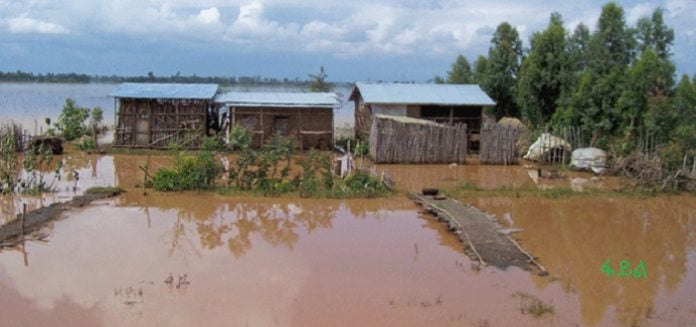
At least 43 fatalities were reported by local authorities due to flooding and landslides while more than 760,000 people have also been affected by flood , according to CRISIS 24.
The report also states that widespread damage to homes, roads, and other infrastructure has been reported in affected areas. Disruptions due to flooding are ongoing across many parts of Ethiopia as of Nov. 21. Heavy rainfall has been ongoing across much of the country since October, with eastern and southern regions worst affected. The heavy downpours have caused rising river levels and widespread flooding in many areas.
Over 600,000 affected by flood in Somali region
“The worst affected areas are in Somali Region; 33 of the fatalities have occurred in this region. More than 600,000 people across the region have been affected and around 240,000 have been displaced. Around 81,000 people have also been displaced across South Ethiopia Regional State, primarily around the overflowing Omo River,” it says.
It further pointed out that more than 67,000 people have been affected in parts of Oromia State, including around 1,600 displaced persons in West Guji Zone and around 900 displaced persons in East Bale Zone. More than 13,000 people have also been displaced in parts of Afar Region around the Awash and Kebena rivers. Further adverse weather is forecast in the region over the coming days. Disruptions in flood-affected areas will likely persist as response and recovery operations continue and river levels rise.
Further sustained heavy rainfall could trigger additional flooding in low-lying communities near rivers, streams, and creeks. Urban flooding is also possible in developed areas with easily overwhelmed stormwater drainage systems. Sites located downstream from large reservoirs or rivers may be subject to flash flooding after relatively short periods of intense rainfall. Landslides are possible in hilly or mountainous areas, especially where heavy rainfall has saturated the soil.
Huge disruptions due to flood
Disruptions to electricity and telecommunications services are possible where significant flooding or landslides impact utility networks.
Ponding on road surfaces could cause hazardous driving conditions on regional highways. Authorities could temporarily close some low-lying routes that become inundated by floodwaters. Flooding could block regional rail lines; freight and passenger train delays and cancellations are likely in areas that see heavy rainfall and potential track inundation.
Localized business disruptions may occur in low-lying areas; some businesses might not operate at full capacity because of flood damage to facilities, evacuations, and some employees’ inability to reach work sites.
Flooding could heighten the threat of disease outbreaks. Backflow from drains mixed with floodwaters can become trapped in open areas when inundations recede. These stagnant pools often become a breeding ground for mosquitoes and bacteria, increasing the incidence of insect- and water-borne diseases. Exposure to contaminated water from inundated industrial sites, sewer systems, and septic tanks also poses a significant health threat.
El Niño Impact In East Africa and Flood
The confirmation of the presence of El Niño conditions and a positive Indian Ocean Dipole by local models have led to wetter-than-normal conditions triggering flooding (riverine and flash floods) in most parts of the region including Somalia, Kenya, Burundi, Ethiopia, Rwanda, South Sudan, Sudan, Tanzania, and Uganda leading to loss of lives and livelihoods and human displacement.
By 15 November, more than 3,100,000 people were affected by the heavy rains and flooding between September and mid-November 2023, with at least 772,000 people displaced in Kenya, Somalia, Uganda, Burundi, and Ethiopia. The most affected countries include Somalia (1.7 million people), Ethiopia (760,000 people), South Sudan (450,980 people), Kenya (122,075 people), and Sudan (89,200 people).
The floods have also reduced access to and caused damage to existing water sources and sanitation infrastructures. The combination of damaged infrastructures including health facilities, and contaminated water sources, may cause water- and vector-borne disease outbreaks, in a region already grappling with outbreaks of cholera – there are 55,400 cases reported as of late October, according to WHO.
Closure of health facilities due to flooding, reduced regular health service delivery and restricted access to healthcare may further exacerbate the risk. Malaria cases are also expected to spike in epidemic-prone areas due to El Niño impacts while displacement, crowding, and lack of access to vaccination are likely to increase the risk of several preventable diseases, such as measles and meningitis. Ethiopia, Kenya, South Sudan, and Uganda are currently battling measles outbreaks.
Meanwhile, the wetter-than-normal conditions will allow communities to recover from the effects of the prolonged 2020-2023 drought, but they are also likely to trigger an upsurge of plant and livestock pests and diseases while floods-displaced populations might be subject to food insecurity, protection, and gender-based violence risks, as well as other humanitarian challenges. El Niño conditions are forecasted to continue through at least early next year