
WMO’s Africa Association Aims to Boost Early Climate Warnings
Addis Ababa (May 15, 2024) – World Meteorological Organization (WMO) Regional Association for Africa met virtually from 13-15 May 2024 to address Africa’s challenges in weather, water, and climate-related issues. The session took place as devastating floods in East Africa and drought in southern Africa highlight the huge impacts on vulnerable societies.
The meeting brought together heads of national meteorological and hydrological services throughout Africa in order to address critical concerns facing the strengthening of observation networks, enhancing climate services, promoting sustainable water management, and fostering regional cooperation.
“The application of meteorological and hydrological knowledge is invaluable in safeguarding lives, protecting property, supporting sustainable development, and fostering community resilience in the face of climate-related challenges,” said WMO Secretary-General Celeste Saulo in an opening address.
“Robust early warning systems for weather-related hazards, such as storms, floods, and droughts, to safeguard lives, livelihoods, and infrastructure is critical as about 60% of the African continent is not currently covered by early warning services,” she said.
In his keynote address, WMO President Abdulla Al Mandous said: “WMO is working to ensure that Africa has the capacity to deliver the weather, climate, and water services that are essential for sustainable development.” This includes investing in education and training and supporting capacity enhancement of national meteorological and hydrological services.
“This Regional Association is conscious of implementing the Early Warnings for All in Africa which seeks to strengthen national multi-hazard early warning/alert systems and to better enable an effective response to risks …. to ensure that every citizen is covered with early warning by 2027,” said Fetene Teshome, President of the Regional Association for Africa (RAI) and Permanent Representative of the Federal Democratic Republic of Ethiopia to WMO.
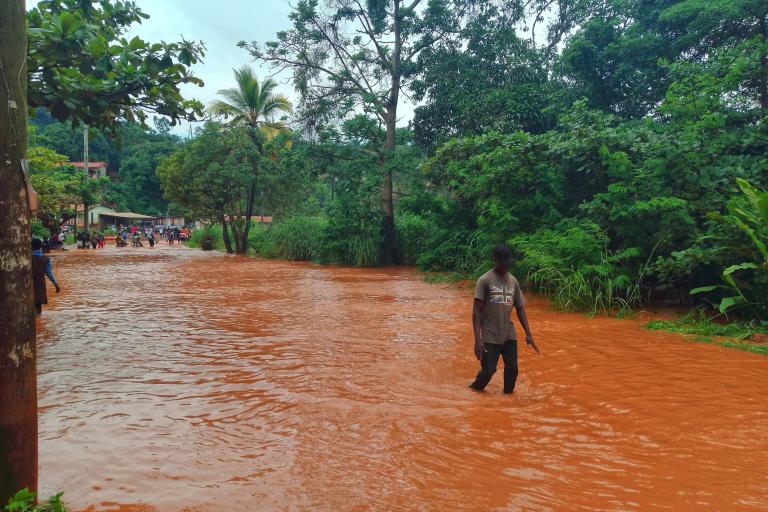
The importance of early warnings has once again been highlighted by extreme weather gripping different parts of the continent. Devastating flooding from exceptionally heavy seasonal rainfall has caused hundreds of casualties in East Africa, destroying infrastructure and crops and killing livestock. Burundi, Ethiopia, Kenya, Somalia and the United Republic of Tanzania are among the worst hit countries.
Southern Africa is currently facing an extreme environmental and humanitarian crisis as a severe drought grip the region, and impacting countries including Zimbabwe, Zambia, and Malawi.
The waning El Niño event, alongside a phenomenon known as the Indian Ocean Dipole, and high sea surface temperatures are playing a role. But the excess energy trapped in the atmosphere and ocean by human-induced greenhouse gases is also having a major influence by turbo-charging the extreme weather.
In view of Africa’s exposure to extreme weather events, the Regional Association meeting discussed the importance of efficient and reliable climate-related services. It adopted resolutions and decisions to strengthen observational networks, improve forecasting systems, and build capacity for climate adaptation and mitigation. It also highlighted the significance of sustainable water management practices, emphasizing monitoring of hydrological systems and promoting transboundary cooperation.
Accurate and timely weather, water, and climate information are essential for informed decision-making. Therefore, investments in observation infrastructure and disseminating relevant information are vital to safety of life and property against hazards such as tropical cyclones, droughts and floods.
Discussions at the three-day session included flood and drought management, capacity development, and integrated health science and services.
Regional collaboration has remained a cornerstone in addressing meteorological, climatological, and hydrological challenges through resolutions and decisions to promote regional networks, share data across borders, and undertake joint research initiatives.
The virtual session focused on implementing the WMO Strategic Plan 2024–2027, addressing key priorities such as the implementation of the Global Basic Observing Network (GBON) and the WMO Information System (WIS), and advancing the WMO strategy for service delivery through digital transformation.
The session also addressed the effective implementation of resolutions and existing gaps and provide input for future WMO activities. Participants, principally permanent representatives, hydrological advisers, and stakeholders, are expected to actively shape strategies for a more resilient and sustainable Africa.
WMO is a specialized agency of the United Nations responsible for promoting international cooperation in atmospheric science and meteorology.
WMO monitors weather, climate, and water resources and provides support to its Members in forecasting and disaster mitigation. The organization is committed to advancing scientific knowledge and improving public safety and well-being through its work.
Likely impediment of food shortage after floods devastate croplands, kill livestock
According to Down To earth, the heavy rainfall and floods that have been battering East Africa since March have submerged thousands of acres of croplands and killed thousands of livestock, leaving the region vulnerable to an imminent food shortage.
Alongside the loss of life, the agricultural devastation is immense and has significant nutritional implications. In Kenya alone, at least 9,973 livestock have been lost and 41,562 acres of cropland, including crucial staple foods like maize, have been swept away, with rice fields submerged, according to authorities.
Moreover, more than 60 roads, many of which connect farmers to fresh produce markets on a daily basis, have been damaged and rendered impassable, according to records from the National Disaster Operations Centre (NDOC) and Kenya Red Cross Society.
The contamination of 1,465 clean water sources, such as ponds, rivers, and streams, which serve as vital sources of aquatic foods, exacerbates the situation. In some instances, these water sources have become breeding grounds for deadly diseases like malaria, further complicating the already dire circumstances.
The World Food Programme and other global humanitarian agencies engaged in responding to the flooding crisis across East Africa — where over 26 million vulnerable people were already facing hunger before the flooding crisis — have expressed concerns about disrupted food production.
Kenyan farmers count their losses
According to humanitarian aid organisation Action Against Hunger, damaged infrastructure and collapsed supply chains will inevitably lead to a food shortage crisis, putting vulnerable populations at risk of hunger and malnutrition.
“Torrential downpours have submerged over 41,000 acres of croplands and thousands of livestock have died or been lost amidst the deluge. In a country where two-thirds of people live in poverty and many depend on agriculture for their livelihoods, a hunger crisis may be imminent,” the organisation said in a statement.
In parts of Central Kenya and the Rift Valley region — the country’s reliable food baskets — farmers have been asked to permit response and rescue teams to create large water diversions or channels on their farms leading to nearby streams.
“I am a rice farmer. Nearly six acres of the crop have been destroyed, amounting to almost Ksh 1 million ($7,633). I don’t know where to begin. The entire field is submerged in floodwater, and the crop is now rotting away,” James Odero, a farmer in Kenya’s Busia County, told local media.
Odero’s sentiments echo those of thousands of other distressed farmers across the country. Speaking to the media, Felix Mutua, a farmer from Eastern Kenya, appealed to the government to compensate those who have lost their crops to aid in their recovery.
“The best thing the government can do for farmers like myself, who have lost over Ksh 2 million ($15,296) worth of investment, is to provide us with free seeds and fertilisers. We are also incurring losses in the dairy sector. Milk aggregators cannot reach us to collect the commodity due to destroyed roads,” said Mutua, adding that some smallholder farmers are stuck with rotting fresh produce like cabbages, tomatoes, and carrots as roads to markets have been severed.
In addition to agricultural losses worth millions of shillings, Kenya’s Ministry of Agriculture revealed that state corporation Kenya Seed Company has also lost over 2,000 acres of seed under propagation.
“Agriculture has suffered greatly due to the flood wrath caused by climate change. Everyone has witnessed the ravages of floods,” said Paul Rono, agriculture principal secretary.
In Tanzania, floods have claimed lives and decimated thousands of farmlands, with the Department of Disaster Management in the Prime Minister’s Office estimating a 30 per cent drop in food production.
“The rains and floods since January have left 155 dead and 236 injured and affected 200,000 people and 51,000 households. In Pwani and Morogoro regions alone, 76,700 hectares of farmland were flooded and 10,800 households were displaced to temporary camps and shelterss,” Prime Minister Kassim Majaliwa said in a recent statement to the Tanzanian Parliament.
With the majority of the Tanzanian population dependent on agriculture and livestock, the relentless floods have exacerbated food insecurity in the country. The ongoing floods in Eastern Africa have thus far affected over one million people in Kenya, Tanzania, Somalia, and Burundi, disrupting regional food production, with experts predicting hunger in the coming weeks.
Climate change disrupting regional food production
The impacts of extreme weather events extend beyond the East Africa region, spreading across Southern Africa, where they pose a significant threat to food security.
Throughout the Southern Africa region, El Nino has exacerbated dry weather conditions and led to decreased rainfall, prompting governments in Madagascar, Malawi, Zambia, and Zimbabwe to declare states of emergency.
The situation in Zambia is particularly dire, prompting the country’s cabinet to approve the suspension of stringent measures, including taxes, on all imported maize last week to address the shortage caused by drought.
In leaked ministerial correspondence between the two countries, the Permanent Secretary in Uganda’s Ministry of Agriculture, David Kyomukama, confirmed receiving a request to supply up to 500,000 metric tonnes of grain to drought-stricken Zambia.
“The Government of Uganda has received an expression of interest for up to 500,000 tonnes of maize to be exported to Zambia. Certain requirements, including quality and available volumes, must be met to enable us to meet the export successfully. The purpose of this letter is to invite you to a stakeholder meeting to discuss the process and requirements for this opportunity,” he stated.
Experts believe this interplay of floods and droughts underscores the urgent need for climate-resilient agricultural practices and cross-border collaboration to mitigate the impacts on food systems.