By Mekonnen Teshome
May 18, 2024 (Adama): The World Meteorological Organization (WMO) expressed its readiness to offers its support to the Ethiopian Meteorology Institute (EMI).
Technical Coordinator for Services at WMO Regional Office for Africa Mr. Zablon Shilenje said that his organization is offering its support to Ethiopia in capacity building of weather forecasters, provision of a global platform for data sharing that enables Global Processing Centers access data and generating various Meteorological products.
These in turn, he said, are used by the Regional Centers from which the Met services in Africa such as Ethiopia benefit for their national forecasts.
WMO Offers Support To Ethiopia
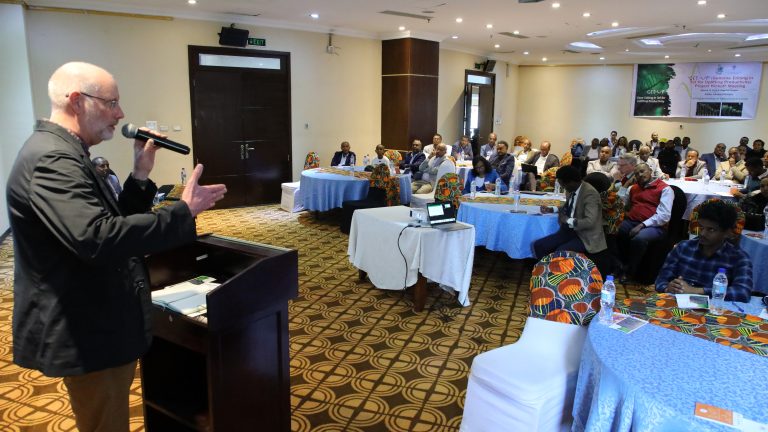
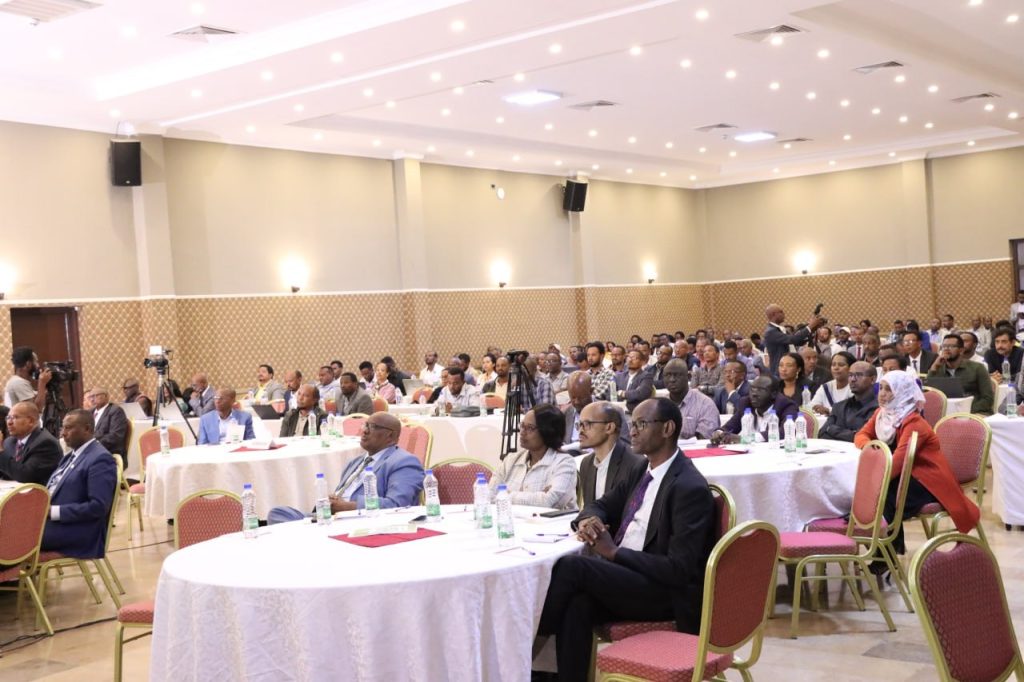
Mr. Zablon was delivering a key note speech today on behalf of the WMO Africa Regional Director at the stakeholders meeting of the Ethiopian National Climate Outlook Forum 2024 (NCOF2024) for the Kiremt Season of this year and said that this year is particularly unique as efforts are in place to strengthen Early Warning Services in the region.
“In this regard we are glad that, with the support of WMO, has Ethiopia already launched this initiative and is in the process of finalizing its roadmap towards achieving early warning. It is worthy noting that the government of Ethiopia has provided EMI with a strong mandate, good inter agency cooperation, and fairly good earth observing network that still needs strengthening,” he added.
According to Mr. Zablon, Ethiopia is set to benefit on strengthening its monitoring systems, feeding into the WMO Global Observing Basic Network the Systematic Observation Financing Facility.
“We in WMO have also been supporting Ethiopia through a number of initiative and projects and we hope to continue doing so in the coming years,” he added.
“Building on all of this, and certainly efforts by other stakeholders, I urge all of yo present today to seize this opportunity to collaborate, share experiences, a commit to act in line with advisories provided by EMI.”
Expressing WMO’s gratitude to Ethiopia, he thanked the Government of Ethiopia for hosting the Regional Office for Africa and indicated that this has enabled us to be closer to African Members and African regional partners, and better support the Continent in provision of Hydrometeorological services.
WMO is also grateful for your contribution and support to the African Ministerial Conference on Meteorology AMCOMET and the RAI Session we held just two days ago and helping to successful hosting many WMO events in the recent past, he underscored.
“We also would like to thank EMI for constant delivery of weather and climate services to the Ethiopian population and regularly organizing the National Climate Outlook Forums, which support National Frameworks for climate services.”
He confirmed that WMO supports the preparation of Reginal Climate Outlook Forums through the Regional Climate Centers to co- produce consensus-based user-relevant climate outlook products in order to reduce climate-related risks and support planning for every coming weather season.
WMO Regional Office
The WMO Regional Office for Africa, headquartered in Addis Ababa, Ethiopia, works with National Meteorological and Hydrological Services (NMHSs) across 53 Members in the region, to strengthen data exchange, operational capacities in monitoring and forecasting and to develop early warnings systems. as well as regional institutions and development partners.
Accorging to WMO regional office, collaboration between Organization’s Regional Office for Africa and regional institutions, development partners, key stakeholders including ECA, AICCRA, AfDB, AU, and various United Nations agencies, is essential for resource mobilization, knowledge enhancement, and expertise exchange.
Africa’s socio-economic landscape is diverse, marked by varying levels of development, economic activities, and social challenges, including extreme poverty rates, inequality, limited healthcare and education access, and political instability in some regions, and rapid urbanization, with potential for growth and innovation. Of significance, as of 2022, the United Nations designated 34 of the 46 globally recognized Least Developed Countries (LDCs) as located within the African continent.
The WMO Regional Office for Africa recognizes the vital role played by NMHSs in safeguarding populations and enhancing socio-economic resilience to climate-related challenges. Through the reinforcement of climate service value chains, we are committed to enhancing early warning systems and facilitating the sustainable development of African communities.
To ensure comprehensive coverage, our Regional Office maintains two Representative Offices: one situated in Abuja, Nigeria, serving 27 countries in North, Central, and West Africa, and the other located in Nairobi, Kenya, catering to the Eastern and Southern African region, encompassing 26 countries.
Africa is one of the world’s most vulnerable regions to climate extremes, with 60% of the population not covered by any early warning systems. Africa is the second largest continent bounded by the Mediterranean and Red seas, the Indian and Atlantic Oceans, straddling both sides of the equator. It continues to face extreme weather events, floods, droughts, heatwaves, tropical cyclones and severe storms, heavy rains, and forest fires.