
- Ethiopia’s Power Generation Hits 10,000 MW
Addis Ababa, Ethiopia — The global transition to renewable energy reached a new milestone in 2025, marked by record-breaking capacity additions and a growing recognition of clean power as a cornerstone of energy security and economic resilience.
According to the latest report and policy advisory by the International Renewable Energy Agency (IRENA), countries worldwide are accelerating the shift toward domestically sourced renewable energy systems amid rising geopolitical tensions and continued volatility in fossil fuel markets.
Globally, renewable power capacity rose to 5,149 gigawatts (GW) in 2025, following an unprecedented addition of 692 GW—representing a 15.5% annual increase. Renewables accounted for 85.6% of all new power capacity added during the year, underscoring their dominant role in the global energy mix, while the relative contribution of fossil fuel-based generation continued to decline.
The surge comes at a time when energy security has become a central global concern. Escalating tensions in the Middle East and instability in fossil fuel markets have exposed the vulnerabilities of energy systems heavily dependent on imported oil and gas. In contrast, renewable energy—being locally sourced, cost-effective, and rapidly deployable—is increasingly viewed as a strategic solution to reduce exposure to external shocks.
Commenting on the findings, Francesco La Camera highlighted the resilience of renewable energy in uncertain times. He noted that the continued expansion of renewables reflects not only market preference but also their structural advantages in building decentralized and robust energy systems. Countries investing in clean energy transitions, he said, are better positioned to withstand economic disruptions while enhancing long-term competitiveness.
Solar and wind energy continued to drive global growth. Solar power alone accounted for 511 GW of new capacity—approximately 75% of total renewable additions—largely driven by solar photovoltaic installations. Wind energy followed with 159 GW in new capacity. Together, these technologies represented 96.8% of all net renewable capacity added in 2025, reflecting significant cost reductions and technological advances over the past decade.
Other renewable sources contributed more modestly. Bioenergy capacity increased by 3.4 GW, while hydropower added 18.4 GW, largely driven by developments in China. Geothermal energy grew by 0.3 GW, and off-grid renewable solutions expanded by 1.7 GW, highlighting their importance in remote and underserved areas.
Despite this progress, the report points to persistent regional disparities. Asia maintained its lead, accounting for 74.2% of new renewable capacity, with a growth rate of 21.6%. Europe followed with a total installed capacity of 934 GW. Africa recorded its highest-ever annual increase, adding 11.3 GW—a 15.9% rise—driven by countries including Ethiopia, South Africa, and Egypt. The Middle East also saw strong growth, expanding by 28.9%, led by Saudi Arabia.
However, regions such as Central America and the Caribbean continue to lag, with a combined total of just 21 GW of renewable capacity. These disparities highlight the uneven pace of the global energy transition and the heightened vulnerability of regions with limited renewable infrastructure.
Complementing the statistical report, IRENA’s policy advisory underscores the strategic importance of renewables in addressing the current global energy crisis. It notes that countries investing in clean energy are already reducing dependence on fossil fuel imports. Examples include European nations such as Spain and Portugal, as well as major Asian economies including China, India, and Pakistan.
A key driver of this transition is the sharp decline in renewable energy costs. Since 2010, the cost of solar power has fallen by 87%, onshore wind by 55%, and battery storage by 93%. Today, more than 85% of newly installed renewable capacity is cheaper than fossil fuel-based alternatives. In addition, the emergence of “firm” renewable systems—combining solar or wind generation with battery storage—now enables reliable, around-the-clock electricity at competitive prices.
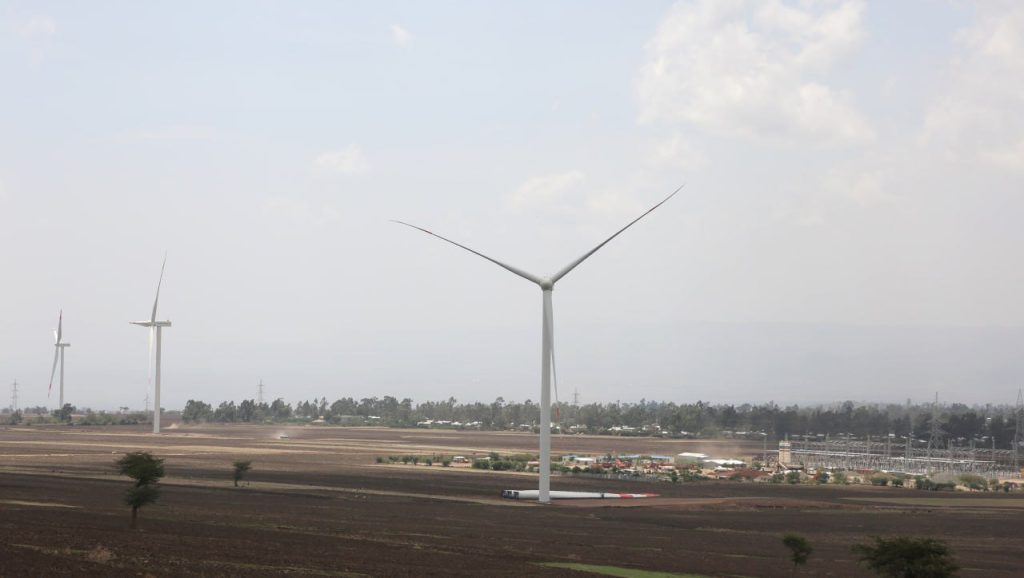
In Ethiopia, the shift toward renewable energy continues to gain momentum. This week, Prime Minister Abiy Ahmed inaugurated the Assela Wind Farm, a project expected to add 100 megawatts of clean energy to the national grid.
Speaking at the ceremony, the Prime Minister described the project as “the next ray of hope,” emphasizing Ethiopia’s commitment to a diversified and sustainable energy future.
“The project adds 100 megawatts of clean energy, strengthening our path toward a diversified and sustainable energy future,” he said, noting its importance in ensuring reliable power supply and supporting economic growth.
The Assela Wind Farm is expected to play a significant role in expanding Ethiopia’s renewable energy capacity and advancing its long-term development agenda.