agri-businesses
Addis Ababa, Ethiopia: A “Climate-Smart Decision Support System Project” has been launched by the African Agricultural Technology Foundation (AATF) and its partners to help African women and youth-led Micro and Medium-sized Businesses (MSMEs) in rice farming inform their agricultural decisions, according to AATF press statement.
The project funded through the Grand Challenges, an initiative of the Bill & Melinda Gates Foundation, intends to use precise climate information and data such as weather patterns, rainfall, temperature changes, and other climate factors to help the MSMEs make right decisions on their agricultural activities, the statement said.
Bringing climate information to women, youth-led agri-businesses
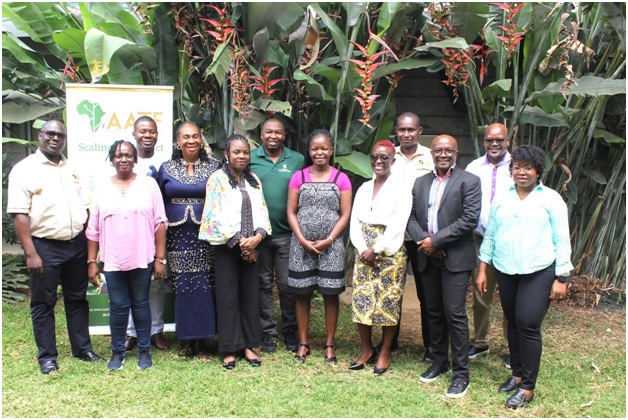
Speaking during the project inception meeting held in Kirinyaga County, Kenya, Dr. Kayode Sanni, the Rice Project and Data Management Lead at AATF noted that the project will determine suitable weather information for users based on assessment of their climate information needs.
“Women and youth-run rice micro, small and medium enterprises (MSMEs) have specific climate information needs that is crucial for decision making across the rice value chain activities that they engage in, such as production, inputs, services, and marketing,” said Dr. Sanni, adding that the rice cultivation cycle has various stages that require specific weather conditions.
“In production, for example, timely information on rainfall patterns, temperature trends, and extreme weather forecasts will guide planting schedules, irrigation management, and pest control strategies in addition to supporting risk management decisions,’ he said.
The climate data would support farmers in making timely and effective choices about planting, irrigation, and other farming activities, to improve productivity and resilience. The information will be turned into easy-to-follow advice and shared with farmers through an internet application or by sending bulk messages on their phones. This will help farmers make smart choices about growing and managing their rice crops, boosting their productivity and improving their income.
The Project will integrate locally generated climate data with satellite systems to offer rice farmers more accurate and relevant weather information to improve their productivity, reduce risks, and support environmentally friendly farming practices in the rice industry.
Other partners of the project include Michigan State University (MSU), the Cereal Growers Association (CGA) of Kenya, the University of Nigeria, Nsukka (UNN), and Benue State University (BSU), Nigeria.
Dr. Cecilia Limera, the Principal Investigator for the project, noted that when farmers know when to expect heavy rainfall or prolonged dry spells, they can adjust their cultivation practices and choose resilient crop varieties, ensuring optimal yields under the prevailing climatic conditions.
“Climate-related information on pest and disease outbreaks and their expected prevalence enables farmers and MSMEs to anticipate and mitigate risks through timely pest management strategies and the use of resistant crop varieties or biological controls,” she stated, adding that the MSMEs include businesses involved in rice milling, processing, value addition, packaging, and distribution.
“To get the most out of farming inputs, climate information is essential for making smart decisions. Farmers need data on rainfall, soil moisture, and water availability to plan irrigation and manage water systems effectively.”
“Knowing temperature changes and seasonal patterns helps farmers apply fertilizers at the right time and in the right amounts, which improves nutrient absorption by rice crops and reduces harm to the environment. Weather forecasts also guide transportation and planning.”
“For example, transport services use this information to predict road conditions and optimize delivery routes, ensuring that inputs reach farms on time and harvested crops are distributed efficiently.”
Speaking at the same meeting, Dr. Daniel Uyeh, the project lead from MSU, noted that reliable climate information is increasingly available through advanced prediction systems and satellite observations that would be deployed in the project to aid farmers make decision.
“Our strategy will equip MSMEs with processed climate information, to facilitate efficient irrigation and a data-driven crop management system, which will boost rice production,” he said, adding that the project will develop a user-friendly climate-smart decision-support system using ground sensors
The Nairobi-based continental AATF, provides farmers in Sub-Saharan Africa (SSA) with practical technology solutions to overcome farm productivity constraints. Founded in 2003, AATF is driven by the vision of a prosperous, resilient, food and nutrition secure Africa, where smallholder farmers’ livelihoods are transformed through agricultural innovations.
Active in 24 countries in East, Southern and West Africa, over the past two decades we have emerged as one of the continent’s foremost technology transfer facilitators, trusted by both private and public sector institutions.