Gavi ‘s Initiative Is Estimated To Benefit 6.7 Million People
Addis Ababa, Ethiopia: As part of a new initiative of a broader $35 million programme that aims to significantly reduce greenhouse gas emissions, increase access to immunization, and broaden primary health care services, Gavi, the global The Vaccine Alliance, is to back Solar Electrification of healthcare facilities in Ethiopia.
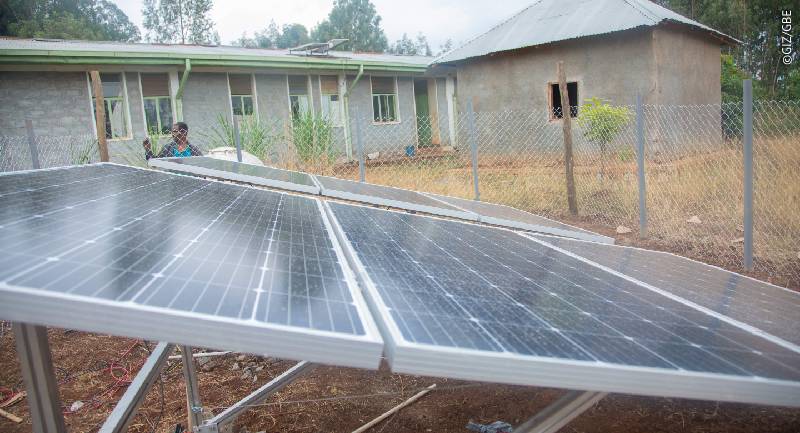
A UNICEF statement sent to African Demystifier, indicated that 300 remote healthcare facilities have been prioritized for solar expansion across all regions in Ethiopia, focusing on facilities that are distant from the main power grid.
The initiative was officially launched today by the Ministry of Health, Gavi, UNICEF, and WHO in response to the urgent demand for reliable energy in healthcare facilities, the statement said.
The programme, which supports the Ministry of Health’s goal to solar power over 1,000 healthcare facilities and enhance maternal, infant, and post-natal care in underserved areas, will be implemented by the Ministry of Health, UNICEF and WHO.
“The deployment of solar energy will significantly improve healthcare outcomes for the estimated 6.7 million people living in the catchment areas of the health facilities by increasing the range of services offered at primary healthcare facilities, including expanded access to immunization services and availability of clean water at health facilities,” it added.
It also aims to strengthen healthcare services by providing decentralized solar energy, contributing to climate-resilient health facilities while simultaneously reducing carbon emissions. This jointly led effort falls under the Ministry of Health’s plan to equip over 1,000 healthcare facilities with solar energy and it will be implemented by December 2025.
“Today, we are powering health and hope across Ethiopia. With solar electrification, our health facilities will deliver reliable care, even in the most remote communities, bringing us closer to a healthier and brighter future for all,” said H.E Dr. Mekdes Daba, Minister of Health.
“Climate change is increasing the burden of diseases in the most vulnerable communities and access to electricity is a core determinant of a country’s ability and readiness to provide quality health services,” said Thabani Maphosa, Chief Country Delivery Officer, Gavi the Vaccine Alliance.
“Establishing and scaling health facility solar electrification, as we are doing here today, represents an unprecedented opportunity to strengthen primary health care systems, contribute to a greener planet, and drive improved health outcomes.”
“This initiative marks a significant step forward in sustainable healthcare and climate resilience, benefiting millions in underserved communities,” highlights Dr. Aboubacar Kampo, UNICEF Representative in Ethiopia.
“By enhancing immunization for children and strengthening health services for mothers and infants, we are promoting safer deliveries and improving post-natal and infant care.”
The energy and health connection
“The connection between energy and health is clear in both homes and healthcare facilities in Ethiopia. Access to clean and reliable energy in healthcare facilities is crucial for providing quality essential services for disease prevention and treatment, particularly for mothers and children in hard-to-reach areas of the country,” highlights Dr. Owen Laws Kaluwa, WHO Representative to Ethiopia. “Access to electricity in healthcare facilities can be a matter of life and death.”
Recognizing the critical role of cold chain equipment in healthcare delivery, the HFSE initiative will leverage the Cold Chain Equipment Optimization Platform (CCEOP) mechanism to deploy solar photovoltaic packages at 1,000 primary healthcare facilities across Ethiopia, Pakistan, Uganda, and Zambia.
With a funding commitment of $35 million from Gavi, the project will enhance the ability of healthcare facilities to power essential cold chain equipment and other vital medical devices in those countries.