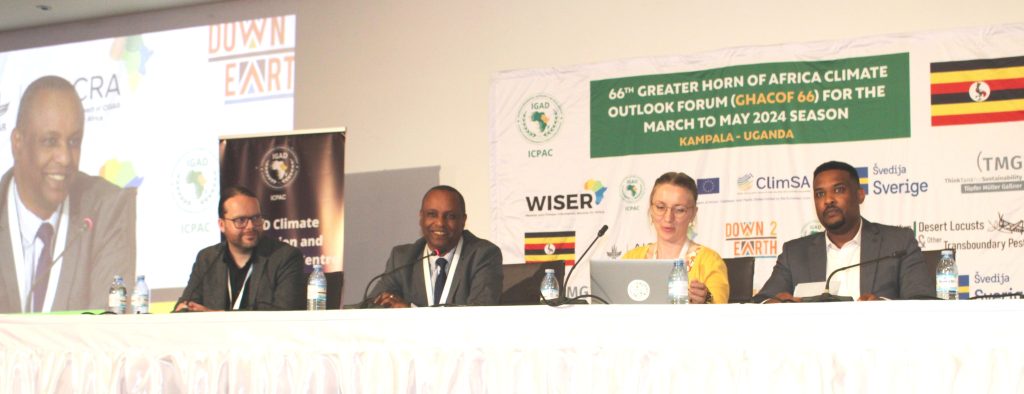
ICPAC ‘s GHACOF 66 Themed “Early Warning for Anticipatory Action”.
Forum Kicks off In Kampala, Uganda Today.
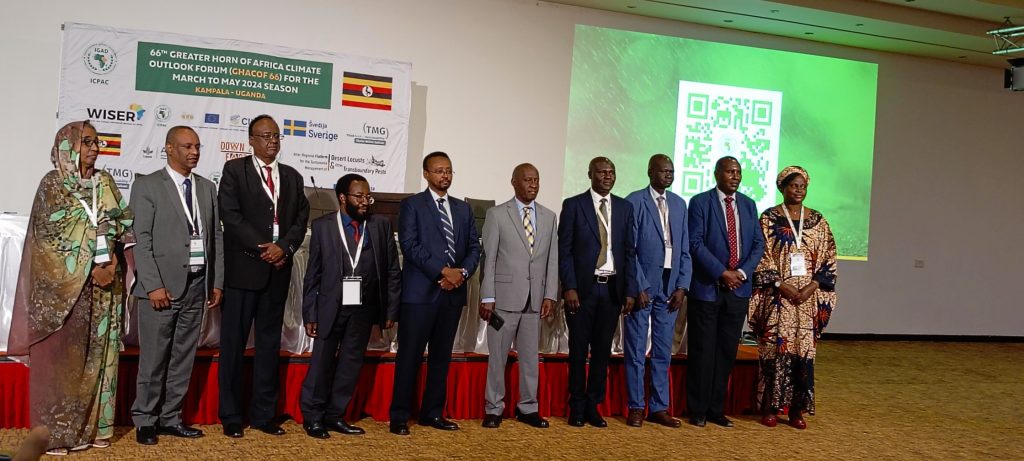

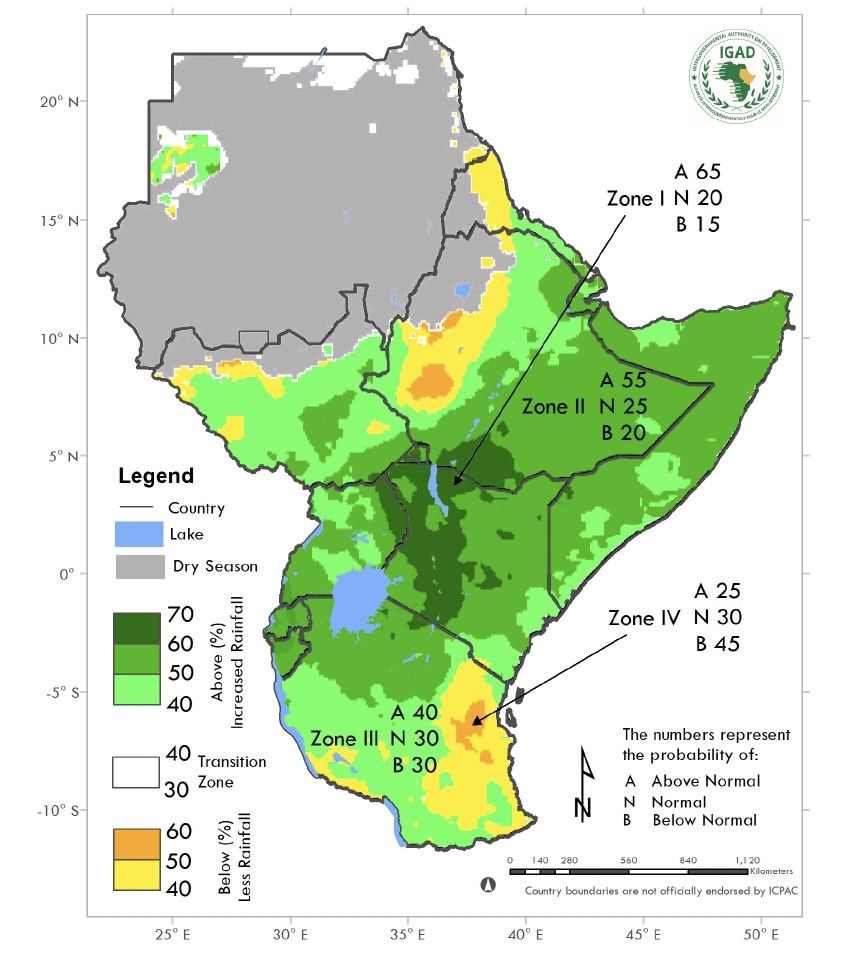
(February 20, 2024 , Kampala , Uganda): Long-term rainfall surplus is expected to dominate over the Greater Horn of Africa region in the March-May 2024 season, the Intergovernmental Authority on Development (IGAD) Climate Prediction and Applications Centre (ICPAC) said.
According to the regional Climate Centre, the rainfall surplus is likely to dictate the weather condition especially over Southern Ethiopia, Kenya, Somalia, Burundi and Tanzania, and this calls for strengthened emergency preparedness and anticipatory actions taking the seasonal forecast into consideration.
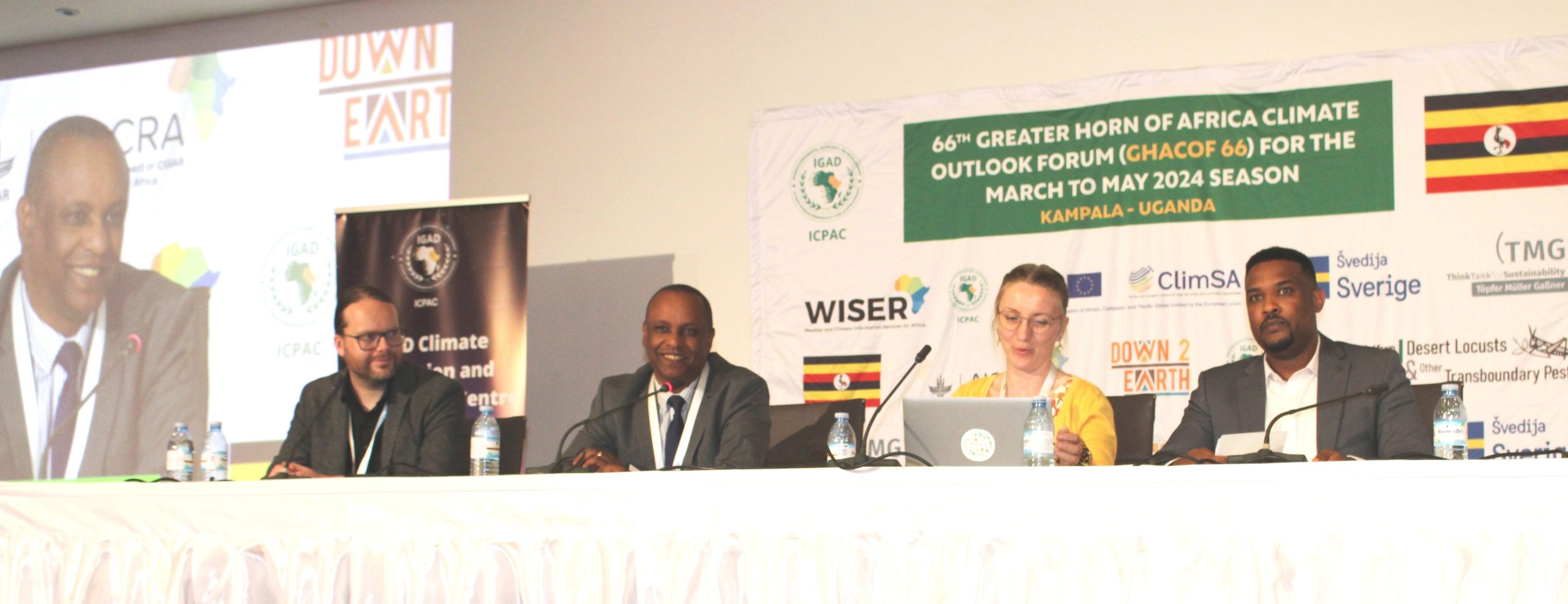
This was announced during the opening of the 66th Greater Horn of Africa Climate Outlook Forum (GHACOF 66) of ICPAC for the March to May 2024 season held with the theme “Early Warning for Anticipatory Action”, 20 – 21 February 2024 in Kampala, Uganda.
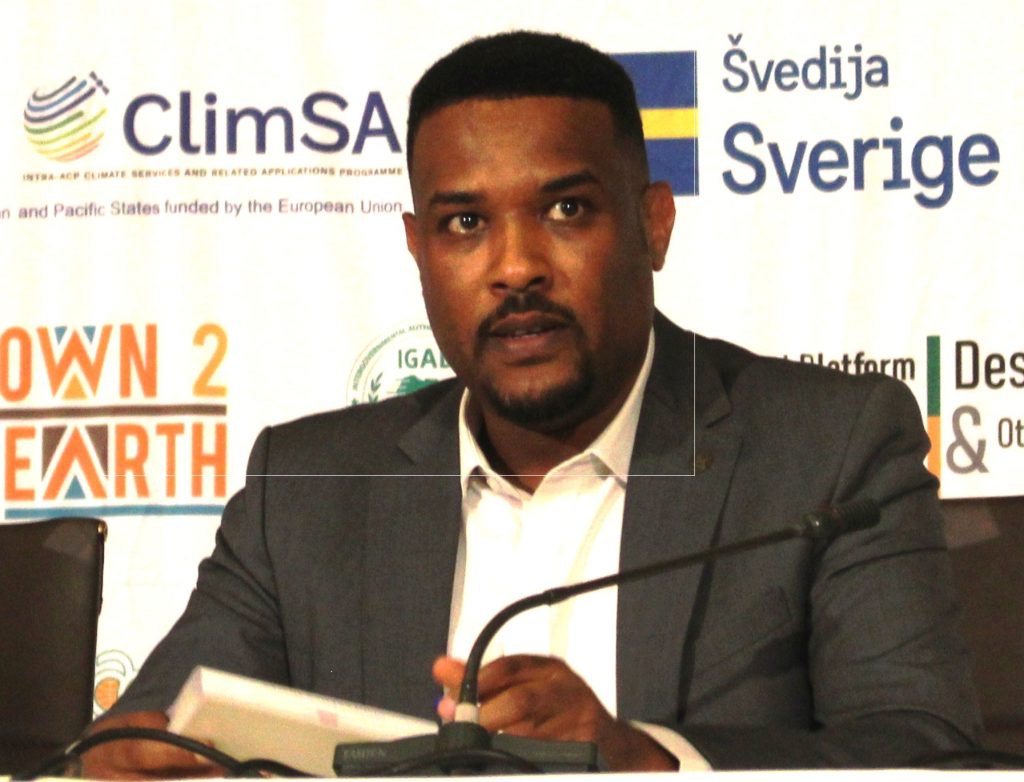
Presenting the regional season’s weather forecast, Dr. Hussen Seid Endris, a Climate Modeling Expert and a researcher of ICPAC, also highlighted that the temperature is expected to be warmer than average all over the region with enhanced probabilities indicated over the northern parts of the region.
“Delayed onset is indicated over localized areas over central Kenya as well as parts of southern and north-western Ethiopia,” Dr. Hussen said.
He added that wetter than usual conditions is expected in most parts of the Greater Horn of Africa, while drier conditions are predicted over parts of eastern Tanzania and localized areas in western South Sudan.
Global Outlook Supplements ICPAC Predictions
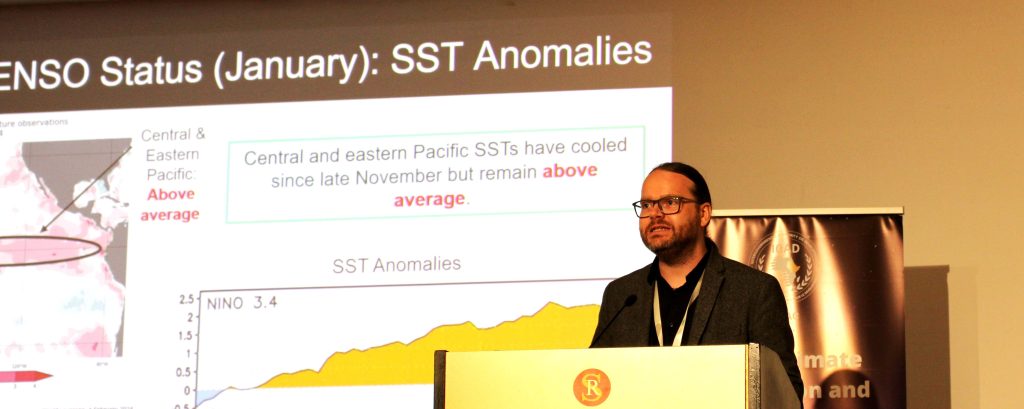
Dr. Stefan Lines (Met Office, UK), was also giving the overview of a worldwide weather forecast at the Easter Africa climate forum, and underlined the atmospheric processes, such as the Madden-Julian Oscillations (MJO) could bring significantly enhanced rainfall on shorter (monthly) timescales.
“It can bring record breaking rainfall in seasons that are forecast to have even drier than normal conditions,” Dr. Stefan asserted.
For this reason, it is critical that the public stay up-to-date on the latest forecasts from our National Meteorological Agency and Regional Body (ICPAC), which will keep track of the MJO, allowing for people to respond accordingly, he added.
Dr. Stefan pointed out that no two long rains seasons are the same – they will vary in rainfall total, intensity and location.
“For some seasons in East Africa (such as the Northern Monsoon in June to September, and the Short Rains in October to December), the El Nino Southern Oscillation (ENSO) and the Indian Ocean Dipole (IOD) play a large role in seasonal rainfall variability from year to year,” he further explained.
As to him, the long rains are traditionally very difficult to forecast accurately on seasonal timescales, ICPAC’s forecasting methodology looks beyond just ENSO and the IOD, and uses the most powerful seasonal forecasting models to make predictions for the season ahead.
He said a major challenge of the Long Rains is that there is no known influence on rainfall from these ENSO or the IOD. So, although it’s likely ENSO will persist into the Long Rains, it is unlikely to affect conditions, Dr. Stefan told the African Demystifier.
“Record breaking global temperatures were observed in 2023, and temperatures are likely to be similar or even exceed this in 2024,” he went on to say.
The reason for this warmth is a combination of human-induced climate change and the strong El Nino event which peaked in December; El Nino events release a significant amount of heat into the atmosphere, Dr. Stefan concluded.
Dr. Asaminew Teshome , Deputy Director General of the Ethiopian Meteorology Institute (EMI) , on his part says that the Ethiopian “Belg Season”, that runs from February to May, which is also the main rainy season for South and South-eastern Ethiopia and the second rainy season for North East, East, Central and Southern portions of the country, is characterized by highly variable and less predictable due to its erratic rainfall nature.
Above normal rainfall is to dominate over the “Belg 2024” season in Ethiopia and above-normal to slightly near-normal temperature is as well expected over most parts of the country, Dr. Asaminew corroborates the regional forecast.
Emergency Preparedness To Cope With Adverse Impacts
The Ethiopian national “Impact Outlook of Belg 2024 on Sectoral Plan and Activities” jointly issued by the Ministry of Agriculture, Disaster Risk Management Commission, Ministry of Health, Ministry of Water and Energy has also suggested for disaster preparedness activities as drought is expected in northern part of the country in the “Belg” season.
According to the sectoral outlook, the possible negative impacts of the extreme weather events of the season include floods in Southern and South Eastern Ethiopia, increased IDPs, occurrence of pest and disease outbreaks, occurrence of unexpected rainfall in some areas and that disrupts harvesting and crop damage, creating favorable conditions for desert locusts in eastern , outbreaks of communicable diseases (malaria, cholera, Dengue) and malnutrition.
Therefore, it recommends possible measures to cope with the situation including strengthening emergency preparedness and response plan that takes seasonal forecast into account, which also helps for prioritization and creating awareness in the health system and promote effective implementation of interventions.
Moreover, enhancing surveillance in areas with history of outbreaks for malaria and other climate related diseases and timely deployment of health commodities in areas with geographical inaccessibility issues related to transportation as well as monitoring and evaluation of co-design and co-production system to maximize its benefits would be vital, it added.
In this Key note addresses at the occasion, ICPAC Director Guleid Artan reiterated the need for Anticipatory Action and timely emergency preparedness to save the lives of citizens in the Greater Horn of African region and ensure common prosperity.
He also called all stakeholders to join hands in mainstreaming Climate Services to bring about Sustainable Development in the entire region.
The United Nations reported that El Niño-induced heavy rains and flooding (riverine and flash floods) heavily affected in parts of the Eastern African region, including Burundi, Ethiopia, Kenya, Rwanda, Somalia, South Sudan, Sudan, Tanzania, and Uganda, leading to loss of lives, livelihoods, and displacement over the last couple of years.
Ove 5.2 million people were affected by the heavy rains and flooding only between September and mid-December 2023, with nearly two million people displaced in Kenya, Somalia, Uganda, Burundi, and Ethiopia.
ICPAC, the climate centre accredited by the World Meteorological Organization, provides climate services to 11 East African countries.