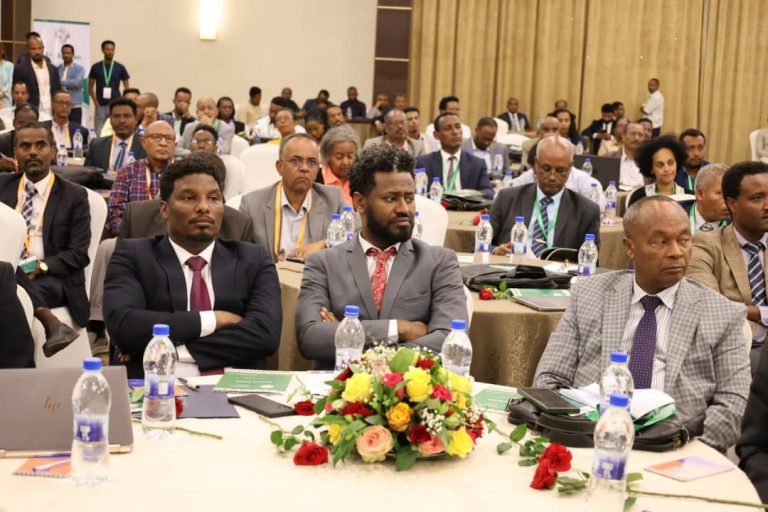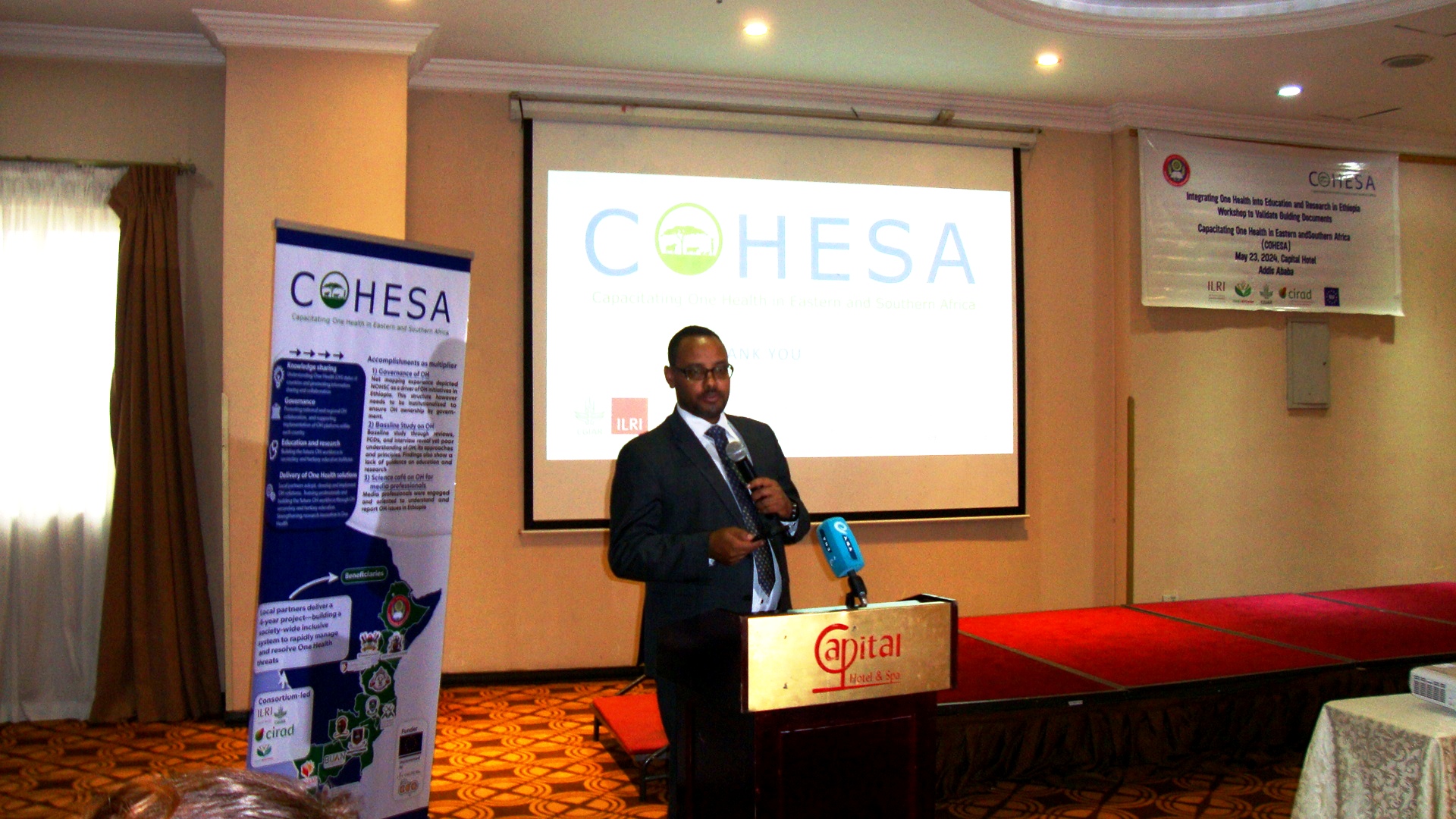
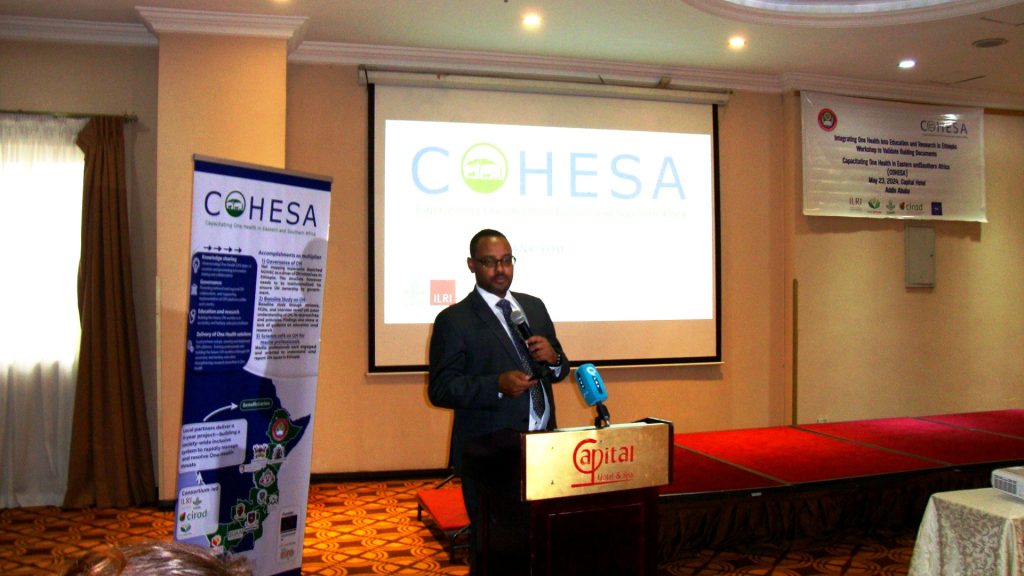

Addis Ababa (May 23, 2024): The integration of ‘OneHealth’ approach into education and research is vital to build a more resilient and interconnected healthcare system in Ethiopia, Dr. Getachew Tollera, Deputy Director General of the Ethiopian Public Health Institute (EPHI) said.
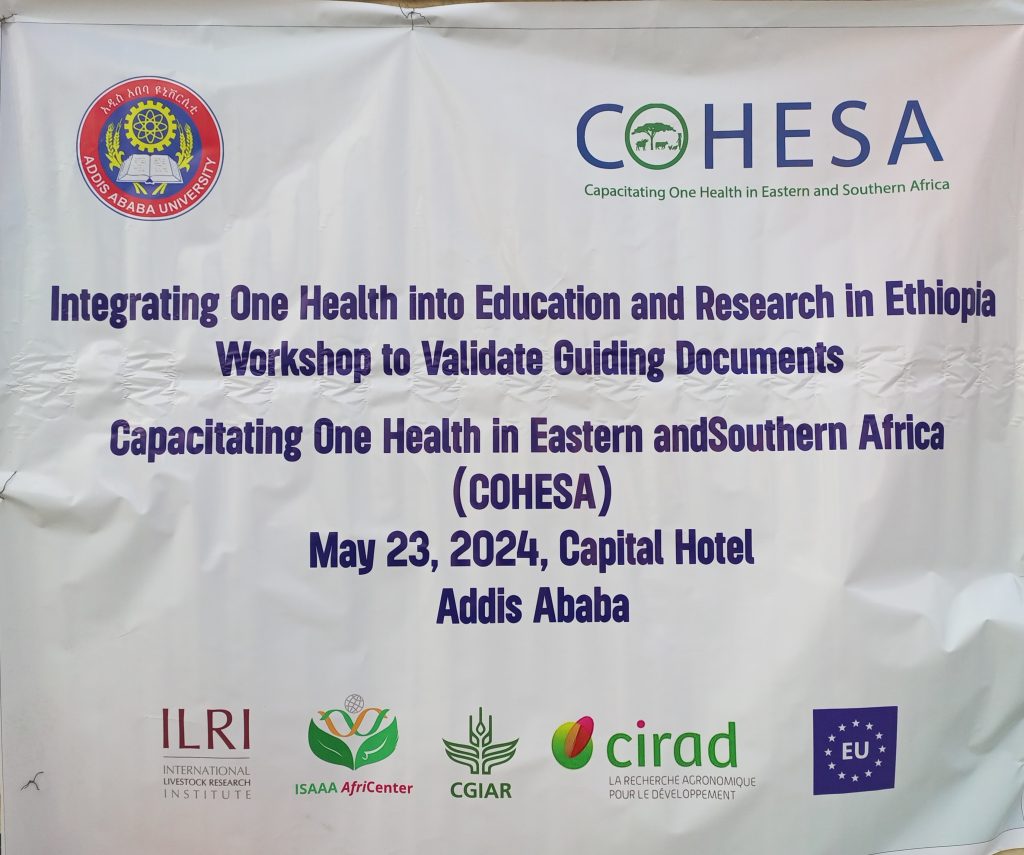
Dr. Getachew stated this today at a half-day “Integration of One Health in education and research validation” workshop organized by the Public Health School of the Addis Ababa University which is a multiplier of Capacitating One Health in Eastern and Southern Africa (COHESA) project in Ethiopia.
According to Dr. Getachew, Ethiopia can pave the way for a more sustainable and resilient healthcare system that benefits both humans and animals by incorporating the principles of One Health into its educational systems and research endeavors.
“In Ethiopia, One Health activities have gained momentum in recent years, thanks to the collaborative efforts of various stakeholders, including government institutions, academic organizations, and non-governmental organizations,” he said.
The Deputy Director General also stated that the One Health activities encompass a wide range of initiatives, such as disease surveillance, outbreak investigation, antimicrobial resistance control, and environmental health monitoring.
He further indicated that the Ethiopian government, last year as of 9th February 2023, issued regulation no. 529/2023 of the Council of Ministers, and mandated the Ethiopian Public Health Institute of the Ministry of Health to serve as the Secretariat of the National Multisectoral and Multi-disciplinary One Health implementation initiative.
He said that health experts in Ethiopia can harness collective expertise and resources to develop innovative solutions to complex health issues by fostering partnerships between medical professionals, veterinarians, environmental scientists, and other stakeholders.
“EPHI plays a pivotal role in coordinating and implementing OneHealth programs”
“One of the key players driving OneHealth activities in Ethiopia is EPHI. It plays a pivotal role in coordinating and implementing One Health programs across the country, “ he added.
Dr. Getachew pointed out that EPHI’s multidisciplinary approach brings together experts from various fields, including medicine, veterinary science, and environmental health, to address complex health challenges through a collaborative lens.
The institute plays a crucial role in disease surveillance and response, conducting research on zoonotic diseases, and promoting antimicrobial stewardship.
Ethiopia is facing a multitude of health challenges that require a comprehensive and interdisciplinary approach, he underscored and added that Zoonotic diseases, which are infections transmitted between animals and humans, are a major concern in the country.
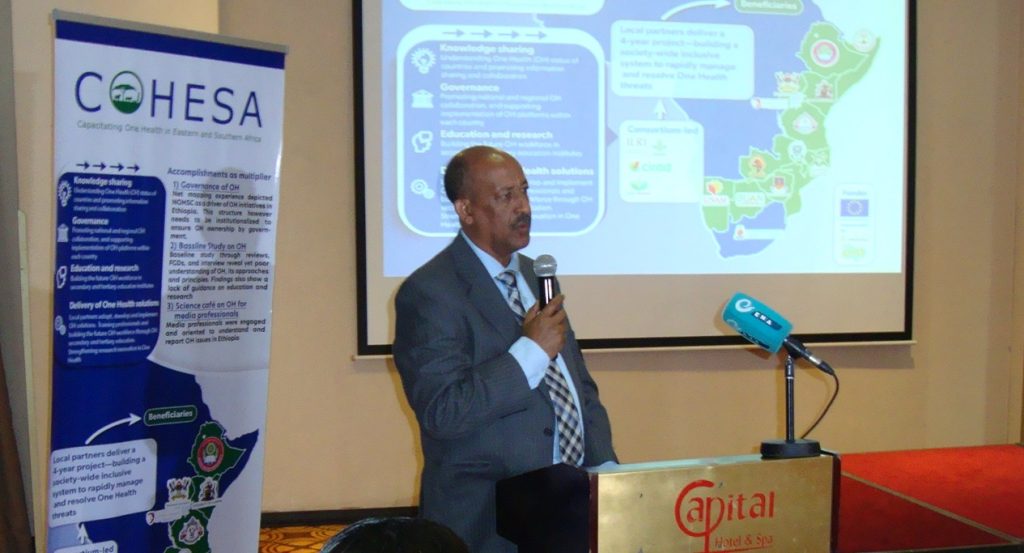
Prosfessor Andualem Deneke of the Addis Ababa University , College of Health Sciences highlighted on the various barriers regarding One Health implementation including challenges in effective leadership, and lack of human, financial and logistics resources as well as lack of coordination between the different sectors at the various levels.
The professor, therefore underscored that effective strategies and interventions must be implemented to address these challenges and thereby ease the burden in the health sector including infectious diseases, zoonotic diseases and antimicrobial resistance.

/ OneHealth /
Dr. Theo Knight-Jones, a Principal Scientist and a Team Leader Herd Health, at the International Livestock Research Institute (ILRI) and the Head of Capacitating One Health in Eastern and Southern Africa (COHESA) project, a 4-year EU funded initiative operating in 11 countries in Africa also said that Hne Health approach dealing with eminent human, animal, plant and environmental health challenges in a bid to help ensure a safe living condition for Africans.
Dr. Theo indicated that ILRI is supporting the Addis Ababa University, implementer of the COHESA project in Ethiopia to promote and advance the One Health approach initiative that deals with human infectious diseases associated with wildlife and One Health focusing on the human-animal health interaction mainly zoonosis and Anti-Microbial Resistance (AMR).
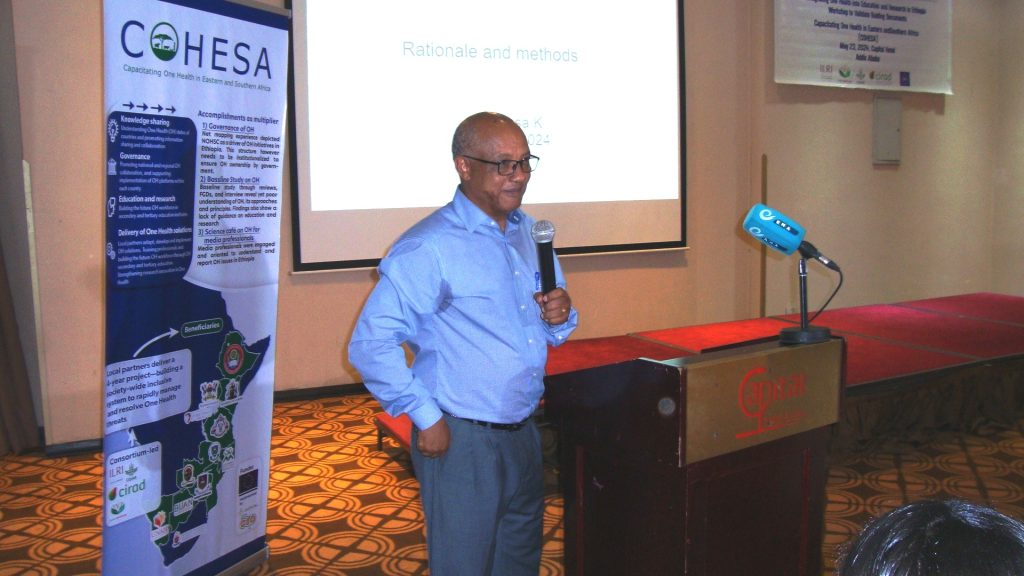
Coordinator of COHESA project at AAU, Dr. Mirgissa Kaba also at the occasion gave a brief account of the project implementation processes and the results achieved so far as well as activities that are expected to be undertaken in the time to come.
Dr. Mirgissa also explained that the COHESA has developed documents that are going to be used as references in the integration of One Health approaches to education and research highlighting the principles of One Health.
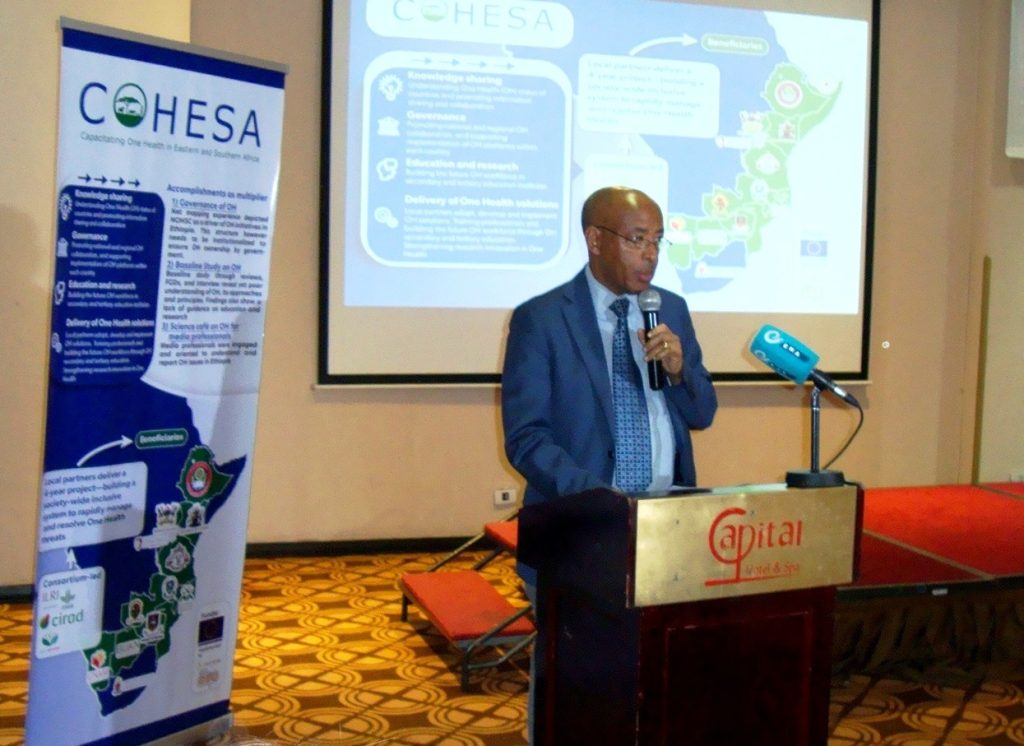
Dr. Fekadu Adugna, WHO Ethiopia Country Office representative, on his part indicated that Zoonotic diseases account for more than one billion cases and a million deaths every year with high costs to respond to emerging and pandemic diseases.
“WHO believes that Ethiopia is on the right track to implement the One Health Initiative, notably by establishing a coordination mechanism and rolling out key activities. We also firmly believe that this initiative to integrate One Health into education and research will significantly enhance the country’s endeavor,” Dr. Fekadu said.
He said that educational institutions are at the center of developing and contextualizing strategic frameworks to teach students in a way that they can practically apply such knowledge in their professional life.
According to Dr. Fekadu, the risk of spreading of these diseases has been increasing by the interactions of human animal ecosystem due to the exponential growth in human and livestock populations, and other factors. Cognizant of this threat to human health WHO has been strongly supporting the One Health initiative from its birth, he added.
“WHO leaves no stone unturned to integrate the OneHealth approach into the global health narrative”
WHO, he indicated , “ leaves no stone unturned to integrate the One Health approach into the global health narrative, grounded in strong political leadership, technical expertise and inclusive implementation led and owned by countries.”
Investing in One Health contributes to WHO’s vision to promote health, keep the world safe and serve the vulnerable, Dr. Fekadu highlighted.
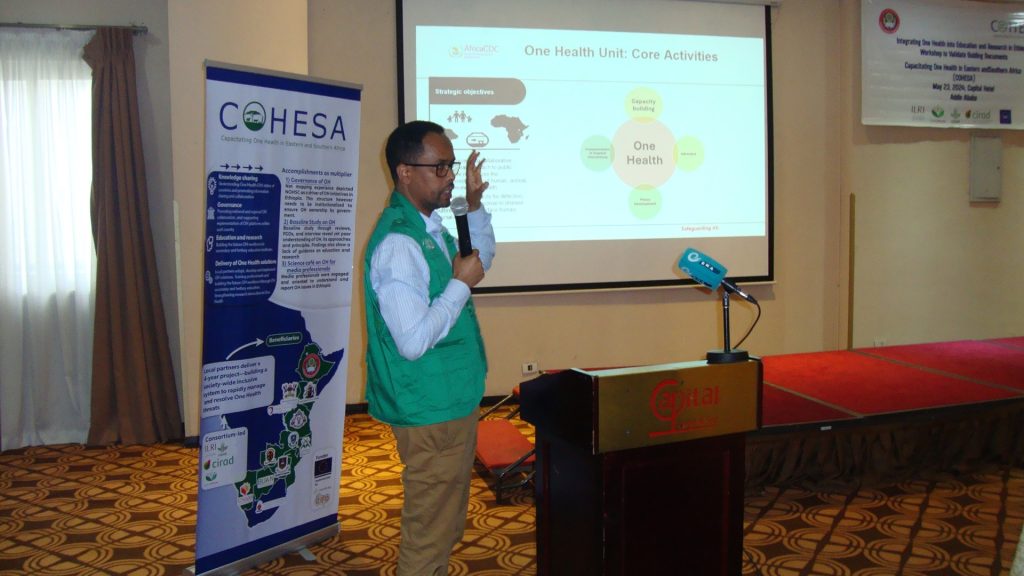
AMR Technical Officer with the One Health Unit of the Africa CDC, Mr. Molla Godif at the accassion said that One Health is all about transdisciplinary approaches and it is vital to make Africa safer and healthier for humans, animal, plants, and their shared environment.
The Officer pointed out that the Africa CDC One Health Programme was launched in 2018 and it comprises of a cross-divisional Technical Working Group (OH-TWG) and technical divisions.
Africa CDC also recognizes that One Health approach is necessary to deliver effective and efficient infectious disease surveillance, disease prevention and control, as well as public health emergency preparedness and response to achieve the“Agenda 2063” designed by AU, he underlined.