Despite the global energy sector challenges including financial pressures, grid integration problems, and chain strains as well as related to policy shifts, world renewables have shown greater expansion led by the rapid rise of Solar Photovoltaics (PV), the International Energy Agency (IEA) confirms.
The medium-term forecast from the IEA has projected that the global renewable electricity capacity would be more than double by 2030.
The agency’s main annual report on the sector, Renewables 2025, forecasts global renewable power capacity will increase by 4,600 gigawatts by 2030. This growth is roughly equivalent to adding the combined total power generation capacity of China, the European Union and Japan.
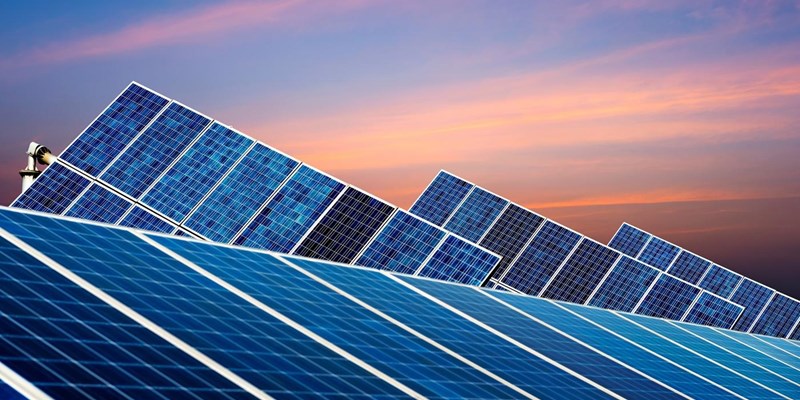
Solar PV is predicted to account for approximately 80% of the global increase in renewable power capacity over the next five years, a surge driven by low costs and faster permitting timeframes. Wind, hydro, bioenergy and geothermal power are also expected to contribute. Geothermal installations are on course to hit historic highs in key markets, including the United States, Japan and Indonesia. Rising grid integration challenges are renewing interest in pumped-storage hydropower, whose growth is expected to be almost 80% faster over the next five years compared with the previous five-year period.
In emerging economies across Asia, the Middle East and Africa, cost competitiveness and stronger policy support are spurring faster renewable growth, with many governments introducing new auction programmes and raising targets. India is on course to become the second-largest renewables growth market globally, after China, and is expected to comfortably reach its ambitious 2030 target.
Confidence in renewables remains strong at the company level, with most major developers maintaining or raising their 2030 deployment targets compared with last year. Offshore wind stands apart with a weaker growth outlook—approximately a quarter lower than in last year’s report—due to policy changes in key markets, supply chain bottlenecks and rising costs.
“The growth in global renewable capacity in the coming years will be dominated by solar PV – but with wind, hydropower, bioenergy and geothermal all contributing, too,” said IEA Executive Director Fatih Birol. “Solar PV is on course to account for some 80% of the increase in the world’s renewable capacity over the next five years…… As renewables’ role in electricity systems rises in many countries, policymakers need to play close attention to supply chain security and grid integration challenges.”
The report’s global growth outlook is revised downward slightly from last year, mainly due to policy changes in the United States and China. The early phase-out of federal tax incentives in the United States lowered growth expectations for that market by almost 50%. China’s shift from fixed tariffs to auctions is impacting project economics, resulting in a reduction in its forecast.
Global supply chains for solar PV and rare earth elements used in wind turbines remain heavily concentrated in China, underscoring ongoing risks to supply chain security. Concentration in China for key production segments is projected to remain above 90% through 2030. The rapid rise of variable renewables is also increasing pressure on electricity systems, with curtailment and negative price events appearing in more markets, signalling a need for urgent investment in grids, storage and flexible generation.
The role of renewables in transport and heating is expected to rise only slightly in the coming years. Their share of energy use in transport is forecast to increase from 4% to 6% by 2030, driven mainly by renewable electricity for electric vehicles in China and Europe.