By Mekonnen Teshome
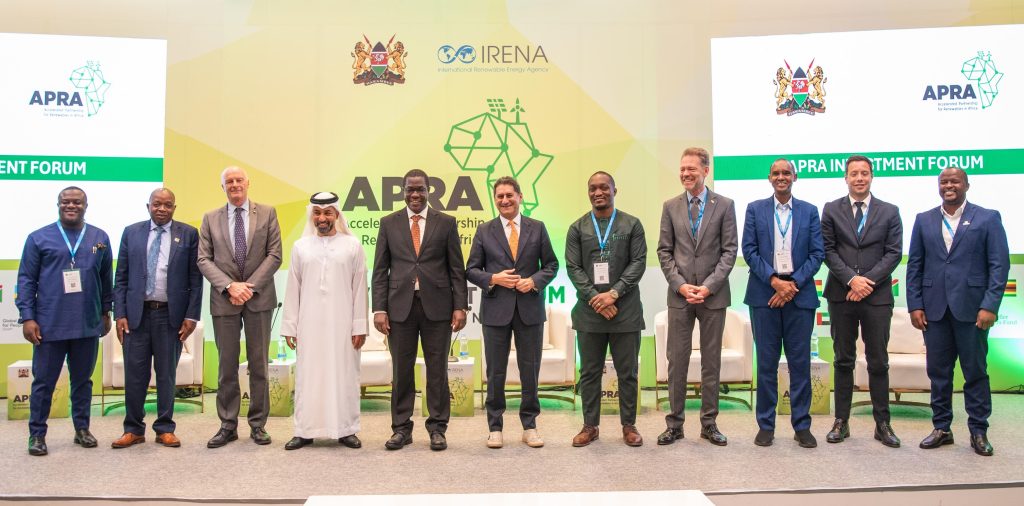
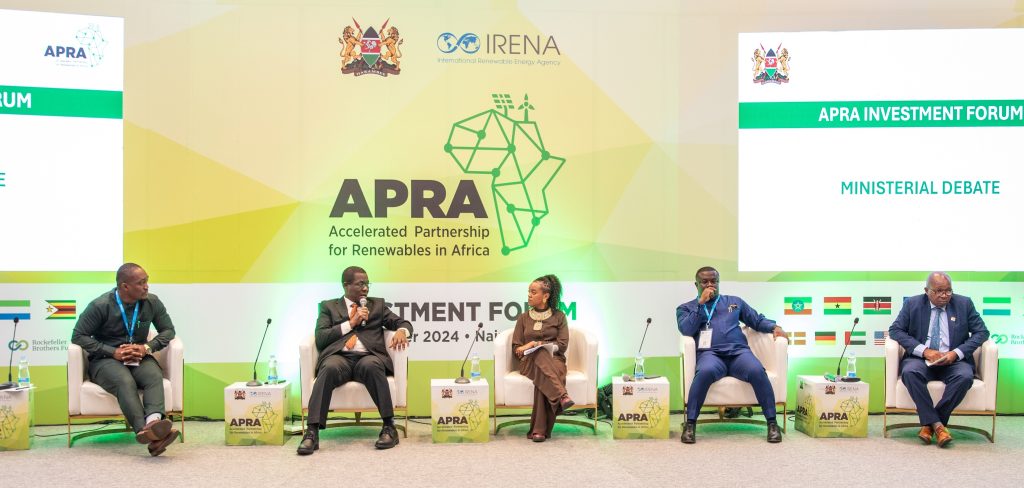
Nairobi, Kenya (October 14, 2024): The Accelerated Partnership for Renewables in Africa (APRA), an African country-led international alliance of governments and stakeholders, that has convened its first forum in Nairobi, Kenya, set to discuss Africa’s renewable energy priorities and investment needs.
According to the International Renewable Energy Agency (IRENA), which is spearheading APRA’s initiative as a secretariat, the forum that brought together APRA’s member countries and partners would play a key role in holding multi-stakeholder discussions and project matchmaking.
IRENA Director General Mr. Francesco La Camera indicated today in Nairobi that official data from his agency shows that 473 GW and 87% of newly installed capacity of renewable was added in 2023 globally of which Africa contributes only 1.6%.
….473 GW and 87% of newly installed capacity of renewable was added in 2023 globally of which Africa contributes only 1.6%..
Therefore, Mr. Francesco said, the high level and expert discussions would focus in enabling frameworks, innovative financing instruments, and the development of supply chains in APRA countries.
IRENA ’s Energy Transition Accelerator Financing (ETAF) Platform is an inclusive, multi-stakeholder climate finance mechanism, aims at advancing the global energy transition in developing economies. Platform, 55% of the projects received are from the sub-Saharan Africa. However, most of the projects face challenges in business development stages, never reaching the stage when financiers can look at them, he added.
Cabinet Secretary of the Kenyan Ministry of Petroleum and Energy J. Opiyo Wandayi, in his opening remark at the occasion highlights the crucial role of Renewables investment in Africa as the continent has received only about 3% of global energy investments despite the fact that the continent is home to 17% of the world’s population, a population that is projected to double in the next 30 years.
Mr. Francesco also pointed out that In 2023 Sub-Saharan Africa energy-transition-related investment was 40 times less than the world average per capita. “This mismatch between investment and need is a clear indicator that we must take bold and deliberate steps to bridge the gap. Moreover,”
Africa holds less than 3% of global renewable energy jobs, and electrification rates in Sub-Saharan Africa remain inadequate, with over 600 million people still lacking access to electricity, Mr. Wandayi said.
He emphasized that climate change and environmental degradation are among the most urgent and formidable global challenges confronting humanity today, and they are progressing at a pace faster than that had been anticipated.
“With less than seven years remaining to adjust our course, we are rapidly running out of time to stay within the 1.5-degree pathway and achieve the Sustainable Development Goals. Tripling the deployment of renewable energy is a crucial part of the strategy to reach these global targets.”
As to him, many countries have embraced renewable energy to accelerate their energy transition efforts. Kenya itself stands as a leader, with over 90% of our electricity coming from renewable sources— primarily geothermal, wind, and solar.
On the other hand, he told participants that despite the progress made, Africa as a whole is still lagging in renewable energy development. This disparity underscores a critical need for targeted, meaningful investment from both the public and private sectors.
Highlighting the need for urgent investment in renewable energy, the Cabinet Secretary underlined that Africa must foster collaborative networks and partnerships, both within Africa and globally, to amplify the impact of these investments.
Renewables Energy Investment
During the forum participants of APRA have highlighted on the need for having instruments that can help Africa to de-risking investments and unlock the capital required to drive renewable energy projects forward.
The continent should also implement risk mitigation instruments that will attract private investors, including partial risk guarantees, concessional financing, and innovative financial mechanisms such as blended debt and grant instruments, it was indicated.
To this end, Mr. Francesco suggested: “We will aim to catalyze further support, attract more stakeholders, and unlock greater funding to fuel Africa’s renewable energy ambitions.” If it is possible to position Africa as a global leader in the energy transition, it must seize every opportunity to build momentum, secure investment, and mobilise the resources needed to scale our efforts, he further elaborated.
According to the General Director, the global investment in energy transition technologies, including energy efficiency, reached a record high of USD 1.3 trillion in 2022. However, annual investments need to at least quadruple to remain on track to achieve the 1.5°C Scenario in IRENA’s World Energy Transitions Outlook 2023.
Investments in Renewables are also not flowing at the pace or scale needed to accelerate progress towards universal energy access; investments in off-grid renewable energy solutions in 2021 – at USD 0.5 billion – fell far short of the USD 2.3 billion needed annually in off-grid solar products alone (not including mini-grids).
Energy Transition
Despite the investment challenges Africa is facing, the continent has a great potential for energy transition from fossil fuel to renewable ones. Africa is home to abundant renewable energy potential—solar, wind, geothermal, and hydropower—which, if properly harnessed, can fuel significant gains in GDP, employment, and human welfare.

Accelerating the deployment of clean energy solutions is not only essential for tackling the climate crisis but also for promoting inclusive economic growth and improving livelihoods across the continent.
The Nairobi Declaration, adopted by Heads of State at the African Climate Summit, has reimagined Africa’s future as a thriving, resilient continent that embraces Climate-Positive Growth. It has positioned the transition to renewable energy as a catalyst for energy access, security, and green growth. The Declaration calls for Africa to increase its renewable generation capacity from 56 GW in 2022 to at least 300 GW by 2030.
This target aims to alleviate energy poverty and contribute to a robust global supply of clean energy, which will play a pivotal role in industrial development.
Founded at the African Climate Summit in September 2023, by Kenya, Ethiopia, Namibia, Rwanda, Sierra Leone and Zimbabwe, with support from Denmark, Germany, the UAE and IRENA, the APRA aims to accelerate energy transitions in respective countries.
African APRA member countries include Kenya, Ethiopia, Ghana, Namibia, Rwanda, Sierra Leone, and Zimbabwe, with Denmark, Germany, the UAE, and the US as partner countries; the Global Energy Alliance for People and Planet and the Rockefeller Brothers Fund as supporting partners; and the IRENA serving as the secretariat.
APRA was founded to have African countries in the driving seat and to rally international cooperation around national priorities which vary so much across countries.
IRENA is a lead global intergovernmental agency for energy transformation that serves as the principal platform for international cooperation, supports countries in their energy transitions, and provides state of the art data and analyses on technology, innovation, policy, finance and investment.
IRENA’s membership comprises 169 countries and the EU. Together, they decide on the Agency’s strategic direction and programmatic activities, in line with the global energy discourse and priorities to accelerate the deployment of renewables-based energy transitions worldwide.