Black Soldier Fly Larvae Could be Rich Source of Protein for Animals, and Even Humans: Expert
Mekonnen Teshome
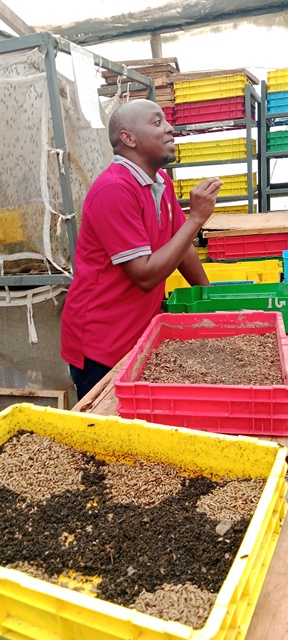
Fredrick Kimathi, the co-founder and Executive Director of Protein Masters, briefing visiting international journalist about BSF in Nairobi , Kenya, October 18, 2025 (Photo: Mekonnen Teshome)
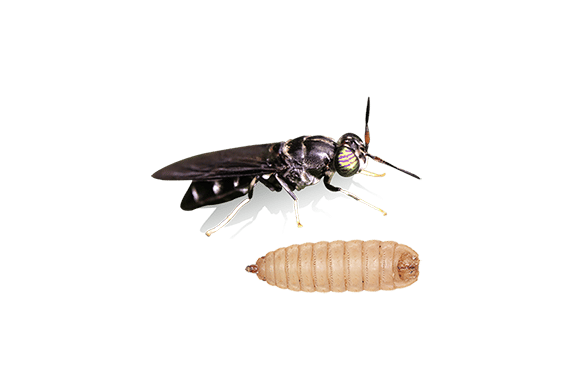
Nairobi, Kenya: Fredrick Kimathi, the co-founder and Executive Director of Protein Masters, highlights the larvae of the “Black Soldier Fly” (BSF) are a rich source of feed protein for animals and even for human nutrition.
Kimathi underlines: “as BSF larvae are so nutritious and a safe protein sources, even humans can eat them blending with Ugali and other foods if reared properly and carefully.”
“…as BSF larvae are so nutritious and a safe protein sources, even humans can eat them blending with Ugali and other foods if reared properly and carefully.”
He says “BSFs are not contaminants and they are not known to carry diseases, rather they are sources of healthy fats, and essential minerals.”
According to him, who is a Kenyan Black Soldier Fly resource, trainer, advocate and farmer, says that BSF is a beneficial and crucial insect in replacing less sustainable options like soy and fishmeal, while the leftover “frass” is a nutrient-rich organic fertilizer.
Kimathi, one of the regions foremost authorities on the beneficial insect production in the eastern Africa, has championed the BSF business since the company’s inception in 2018.
In partnership with academia and researchers, Fredrick is at the forefront of mainstreaming and advocating for the BSF Agenda through training, research, and innovation.
Fredrick has overseen over 3000 BSF training sessions in Kenya, Zimbabwe, Zambia, Rwanda, South Africa and Ethiopia and continues to push the boundary on the barely untapped potential of BSF.
As to Mr. Kimathi, the frass, or excrement, left behind by the larvae is a valuable fertilizer that improves soil health, can increase crop yields, and is rich in nutrients.
BSF-based feed can replace traditional ingredients like soy and fishmeal, which can be subject to overfishing and land-use issues.
BSF larvae have a natural ability to control certain pathogens and have been shown to reduce the presence of harmful bacteria. The chitin found in the insect’s exoskeleton can be used to create bioplastics.
Ensuring Waste Management and Circular economy
Mr. Kimathi underscores that BSF has a critical role especially in efficiently converting organic waste into valuable products and ultimately to realize what we call “Circular economy.”
“BSF has a critical role especially in efficiently converting organic waste into valuable products and ultimately to realize what we call ‘Circular Economy’.”
“BSF also have applications in bioplastics and offer a more sustainable waste management solution with reduced greenhouse gas emissions compared to traditional methods.”
Its larvae effectively consume and break down large amounts of organic waste, such as food scraps, in a short amount of time. By processing waste, BSF systems help divert it from landfills, minimizing the associated environmental impact.
The systems can produce fewer greenhouse gases compared to traditional composting methods. The process effectively reduces unpleasant odors associated with decomposing waste.
Fertilizer and Food for Animals
It also contains antimicrobial peptides that have potential applications in the medical field. BSF larvae are a highly nutritious and cost-effective protein source for livestock (like poultry and pigs), aquaculture (like tilapia and salmon), and pets.